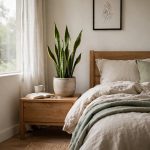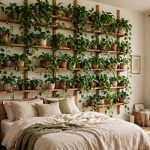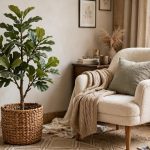
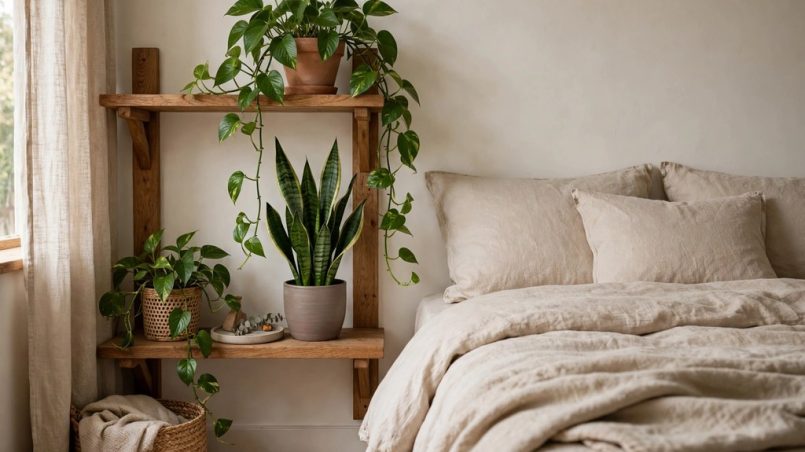
Greenery bedroom ideas turn your sleep space into a calm, nature-inspired retreat. You simply layer indoor plants, natural textures, and soft colors around the bed. Together, these elements create fresh visual depth, gentle color, and relaxing energy nightly.
This complete guide helps you choose, place, and care for plants confidently. First, you will read your light, plan your layout, and set clear priorities. Then, you will build layered displays using shelves, hangers, corners, and walls.
Moreover, you will learn safe choices for pets, children, and busy weekly schedules. You will also discover styling ideas for small rooms and dim spaces. Ultimately, you will create a personal retreat that supports deep rest nightly.
Why Greenery Transforms Your Bedroom
Additionally, plants change a plain bedroom faster than almost any other single update. Their leaves soften hard furniture lines and add living movement to still rooms. Consequently, even one healthy plant makes the whole space feel more welcoming.
Additionally, greenery gives your eyes a restful focal point before sleep each night. You see organic shapes instead of screens, clutter, and flat painted walls. Over time, that gentle view helps your mind settle into slower evenings.
Calm Around Plants
Moreover, people often relax faster in rooms that echo gardens, forests, and sunny porches. Soft leaf shapes, earthy scents, and natural colors quietly signal safety and rest. Therefore, a planted bedroom often feels calmer than a bare, echoing room.
Similarly, caring for plants gives you a small, soothing ritual each week. Furthermore, you water, wipe leaves, and notice new growth during quiet morning minutes. That simple routine anchors your day and rewards your patience very visibly.
Biophilic Design Basics for Greenery Bedrooms
Meanwhile, designers call this nature connection biophilic design, and bedrooms suit it beautifully. Essentially, biophilic design links indoor spaces with light, plants, wood, and fresh air. You can apply biophilic design gradually, starting with plants and natural fabrics first.
Furthermore, biophilic design favors real sensory variety over flat, matching decor sets. Specifically, you combine rough bark textures, smooth leaves, woven baskets, and warm wood tones. This layered mix keeps your retreat interesting without overwhelming your senses nightly.
Set Realistic Greenery Bedroom Expectations
Importantly, plants decorate and comfort a room, yet they never replace ventilation. Indeed, you still open windows regularly and keep your bedroom clean and dust free. Honest expectations help you enjoy greenery without believing exaggerated online claims.
Likewise, you should expect slow, steady growth rather than instant jungle results. Naturally, most indoor plants grow gradually, especially during darker, cooler months at home. Patience protects your budget and keeps your styling plan calm and sustainable.
Plan Your Greenery Bedroom Ideas Retreat First
Clearly, smart planning prevents crowded corners, struggling plants, and wasted money later on. First, you study your room honestly before you buy a single plant. That short pause shapes every greenery bedroom idea you try afterward.
Read Light for Greenery Bedroom Ideas
Importantly, watch your bedroom light across one full day before choosing any plants. Notice where sunbeams land, how long they stay, and which corners stay dim. Then, write brief notes so you remember patterns on shopping day later.
Notably, south and west windows usually deliver the strongest light in most homes. North windows give softer, steadier light, while east windows offer gentle morning sun. Meanwhile, sheer curtains filter harsh rays and protect delicate leaves from scorching.
Crucially, distance from the window changes light levels faster than most people expect. A plant six feet from glass receives far less light than sill plants. Therefore, you should place demanding plants close to windows whenever possible.
Measure and Sketch Your Bedroom Layout Ideas
Next, measure your floor, shelves, and windowsills before you order any pots. In practice, sketch simple zones for sleeping, dressing, reading, and plant display on paper. This quick map prevents oversized plants from blocking drawers, doors, and walkways.
Also, note ceiling height, curtain rods, and sturdy beams for future hanging displays. Over time, you will thank yourself later when you install hooks without guesswork or damage. Careful measuring turns ambitious ideas into safe, practical bedroom projects.
Start Small With Greenery Bedroom Ideas
In turn, beginners succeed faster when they start with three to five forgiving plants. You learn watering rhythms on a small group without feeling overwhelmed daily. Later, you can add statement plants once your basic routine feels easy.
- Start with forgiving plants: Choose hardy starters first, and learn their watering needs during your first month.
- Add one feature plant: Buy a single larger specimen next, and give it your brightest suitable spot.
- Expand in small groups: Add plants in pairs or trios later, and keep your care routine manageable.
Also, this gradual approach also protects your wallet from expensive impulse buying sprees. Later, you discover your real light and habits before investing in rarer plants. Gradually, your collection grows healthier and your confidence grows alongside it.
Choose the Best Plants for Greenery Bedroom Ideas
Additionally, great greenery bedroom ideas always start with plants matched to your conditions. You consider light, humidity, space, pets, and your weekly schedule together.
Matching plants to conditions prevents most early losses and disappointments at home. best indoor plants for bedroom decoration gives you a reliable shortlist before you spend any money. That shortlist helps beginners compare growth habits, sizes, and care needs calmly.
Forgiving Starter Plants
Eventually, a pothos forgives missed waterings and adapts to many bedroom light levels. Its vines trail gracefully from shelves, dressers, and hanging baskets alike. Furthermore, you can propagate pothos cuttings in water very easily at home.
Subsequently, a snake plant tolerates low light and infrequent watering better than most. Its upright leaves suit nightstands, corners, and narrow floor spaces perfectly. However, you must avoid soggy soil, because snake plant roots rot quickly.
Similarly, both plants suit renters, students, and anyone building confidence with indoor plants. You water pothos when its top soil dries, roughly every one to two weeks. Conversely, you water a snake plant sparingly, especially during cool, dim months.
Statement Plant Choices
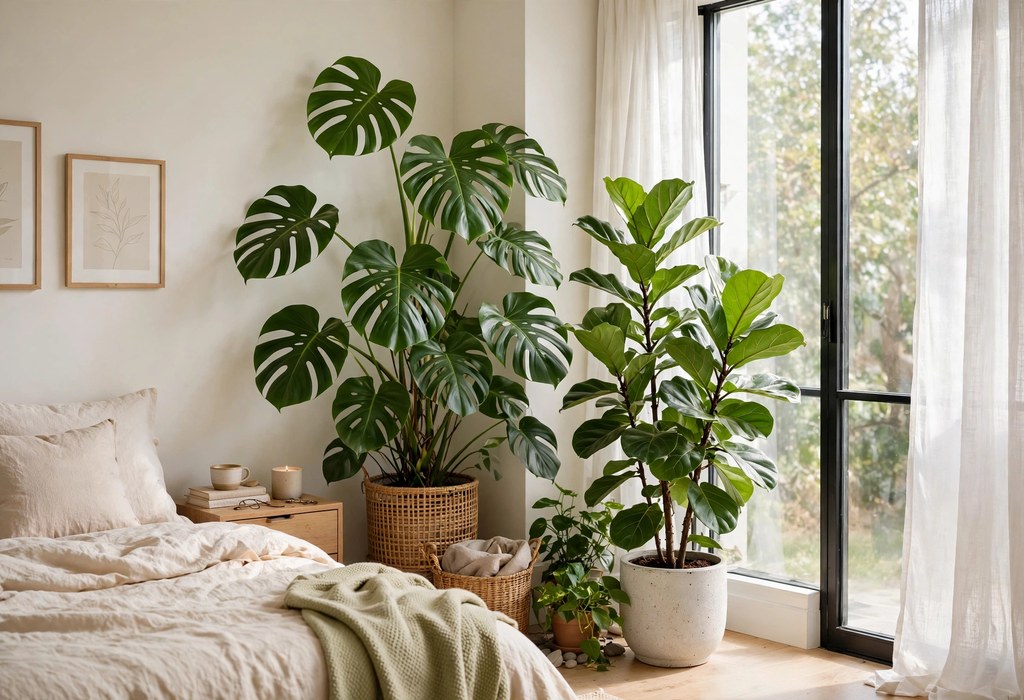
Likewise, a monstera brings bold, split leaves and instant tropical character to bedrooms. It thrives in bright, indirect light and rewards consistent care with fast growth. Notably, a monstera needs floor or stand space as its leaves expand.
Overall, a fiddle leaf fig offers tall structure and large, glossy, violin-shaped leaves. It prefers bright light, steady routines, and protection from cold drafts indoors. Because it dislikes change, you should choose its spot carefully at first.
Moreover, statement plants anchor your design, so you place them before smaller accents. Also, position the largest plant first, then arrange medium and small plants around it. This order creates balance and prevents awkward, crowded groupings later on.
Trailing Plants for Softness
Furthermore, trailing plants soften shelf edges, headboard lines, and tall wardrobe tops beautifully. Additionally, their vines cascade downward and guide your eye through the whole room. Popular trailing plants include pothos, philodendron, and string of pearls varieties.
Moreover, you can train vines along hooks, curtain rods, or simple wall clips. Gentle training creates living lines that echo vines in a forest canopy. Just keep vines away from pillows, lamps, and busy bedside surfaces.
Pet-Aware Plant Choices
Responsible plant parents check toxicity before bringing any new plant home. Importantly, pothos and monstera can harm cats and dogs when chewed. Therefore, pet owners should hang those plants high or choose safer species.
Furthermore, spider plants, parlor palms, and Boston ferns offer safer greenery for pets. You still discourage chewing, because any leaf can upset a sensitive stomach. When in doubt, you can ask a veterinarian before buying new plants.
- Check every plant label: Confirm pet safety before checkout, and keep unknown plants away from pets meanwhile.
- Hang risky plants high: Place tempting vines beyond paw reach, and trim stray tendrils back each month.
- Offer pets alternatives: Give cats safe grass trays nearby, and redirect curious chewing toward approved toys.
Match Greenery to Bedroom Light
Meanwhile, light and humidity decide plant health more than any decorative pot choice. You match each plant to your actual conditions instead of wishful thinking. That honesty keeps your greenery bedroom ideas thriving season after season.
Bright, Indirect Light Basics
Specifically, most tropical indoor plants prefer bright, indirect light near a window. Indirect light means strong daylight without harsh sunbeams striking leaves directly. Sheer curtains, blinds, or a few feet of distance create that protection.
Direct midday sun can scorch thin leaves and fade rich green color. Morning sun usually feels gentler and suits many popular bedroom plants well. Meanwhile, you rotate pots weekly so every side grows evenly toward light.
Low Light, Honestly
Low light slows growth, stretches stems, and fades colorful leaf patterns gradually. Hardy species tolerate those conditions, yet no plant thrives in darkness. Before filling dim corners, study guidance on low light bedroom plants and pick tolerant species first.
Snake plant, pothos, and ZZ plant handle lower light most gracefully. You water them less often in dim spots, because soil dries slowly. Additionally, you move struggling plants closer to windows before adding fertilizer.
Grow Light Support
A grow light rescues plants in north-facing or nearly windowless bedrooms reliably. You hang or clamp the fixture above foliage, following its manufacturer directions. Then, you run it on a timer for consistent daily light exposure.
Indeed, full-spectrum bulbs mimic daylight and support steady, compact growth over time. Start with moderate daily sessions and watch leaves for bleaching or stretching. Adjust distance gradually, and your plants will signal their comfort clearly.
Raise Humidity Safely
Naturally, many tropical plants enjoy moderate humidity around forty to sixty percent. Grouping plants together raises local humidity slightly through natural leaf transpiration. Pebble trays with water beneath pots also add gentle surrounding moisture.
However, you must protect walls, wood, and bedding from constant dampness. Run a small humidifier on a timer and monitor levels with a hygrometer. Good airflow prevents mold, mildew, and fungal problems around your plants.
Design Greenery Bedroom Color and Texture
Clearly, plants look best against a calm backdrop that lets leaves command attention. Color, fabric, and wood choices quietly support your greenery bedroom ideas daily. Thoughtful styling prevents your retreat from feeling like a cluttered greenhouse.
Calm Neutral Color Schemes
Soft whites, warm creams, and gentle taupes make green leaves look richer. If you want a palette, explore neutral color schemes for calm bedrooms and borrow combinations confidently. Neutrals calm busy leaf patterns and suit nearly every furniture style.
Importantly, you can add sage, olive, or deep forest accents for layered depth. Use those deeper tones on cushions, throws, or a single painted wall. Balanced contrast keeps the room restful while plants remain the stars.
Layer Natural Textures
Linen bedding, cotton throws, and woven rugs echo the softness of leaves. Rattan baskets, bamboo trays, and warm wood furniture deepen the nature theme. Together, these textures make a simple plant collection feel intentionally designed.
Notably, botanical prints on cushions or curtains extend the theme without extra watering. Choose prints sparingly so real plants keep the leading role visually. A single leaf-patterned accent often beats a room full of competing prints.
Choose Healthy Pots
In practice, every pot needs drainage holes or a removable inner nursery pot inside. Drainage prevents standing water, root rot, and unpleasant soil odors indoors. Saucers and trays protect your furniture from moisture during every watering.
Over time, terracotta breathes and suits plants that prefer drier soil between waterings. Ceramic and glazed pots hold moisture longer for thirstier tropical species. Whatever you choose, you should match pot size to root growth carefully.
- Repeat pot finishes twice: Use each finish at least twice, and the display will feel cohesive instantly.
- Mix heights with stands: Raise smaller pots on stands, and every plant will receive better light exposure.
- Hide nursery pots smartly: Slip plain grow pots inside baskets, and swap covers whenever styles change seasonally.
Arrange Greenery Bedroom Plants Like a Designer
In turn, placement turns individual plants into a composed, restful bedroom scene overall. Designers layer heights, group odd numbers, and leave breathing room between pots. You can copy those habits easily with your existing furniture today.
Layer Heights on Shelves
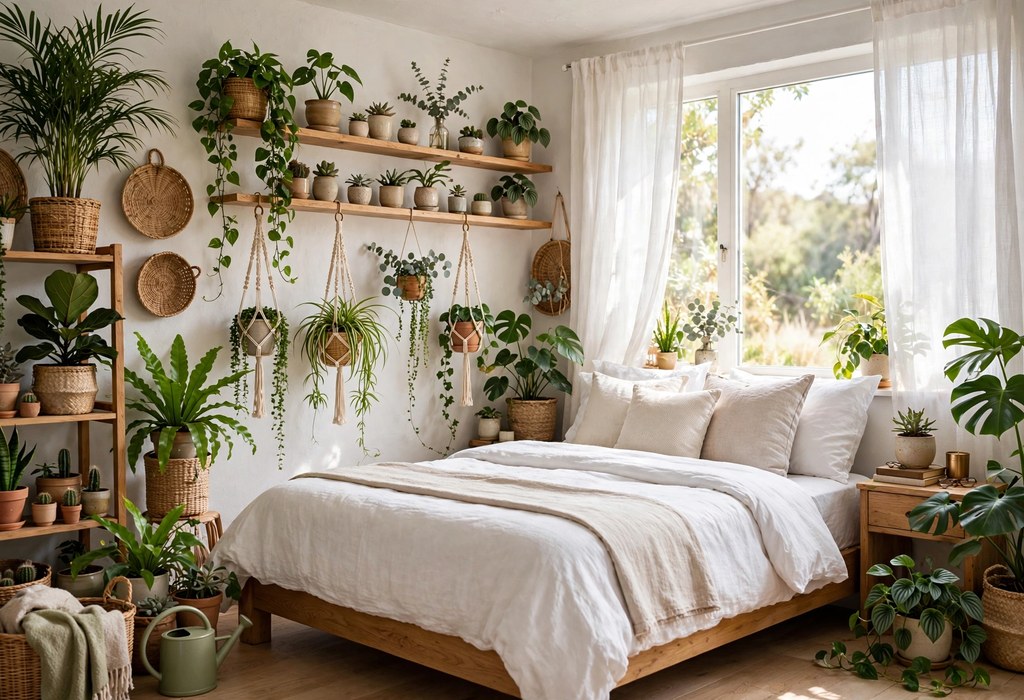
A sturdy plant shelf creates a living gallery along one bedroom wall. When you arrange plants on bedroom shelves, stagger heights and leave small gaps between each pot. That spacing improves airflow, light access, and everyday watering convenience greatly.
Place trailing plants on upper shelves so vines cascade without tangling below. Keep heavy pots low, where shelves hold weight safely and securely. Finally, step back and edit until each plant enjoys visible space.
Create a Plant Corner
An unused corner can become the green heart of your whole bedroom. Browse bedroom plant corner ideas before you shop, and you will spot layouts for every corner size. Then place your tallest plant behind shorter, bushier companions for depth.
Later, a corner grouping benefits from one stand, one floor plant, and one hanger. This trio fills vertical space without covering the floor completely. Add a small chair or lamp nearby, and the corner invites lingering.
Style Nightstands and Dressers
Small plants freshen nightstands without crowding books, lamps, and morning essentials. Choose compact pots and keep leaves away from alarm clocks and water glasses. Similarly, dressers suit low, wide planters that never block mirror views.
Eventually, headboard shelves hold tiny trailing plants that frame your pillows softly. Secure every pot firmly so nothing tips onto bedding during the night. Safety always outranks styling when you decorate above the bed itself.
Avoid Clutter With Editing
Clutter appears when every surface holds plants, pots, and decorative objects together. Instead, you group plants into two or three strong display zones only. Clear surfaces between zones give your eyes rest and emphasize greenery.
Also, remove one item whenever you add a new plant to a zone. This one-in, one-out habit keeps displays fresh and watering routes open. Regular editing protects the calm mood your retreat should deliver nightly.
Use Walls and Ceilings for Bedroom Greenery Ideas
Walls and ceilings offer generous display space in bedrooms of every size. Vertical thinking frees your floor while drawing the eye upward pleasantly. Consequently, even compact rooms can hold a surprisingly lush plant collection.
Hang Plants Safely
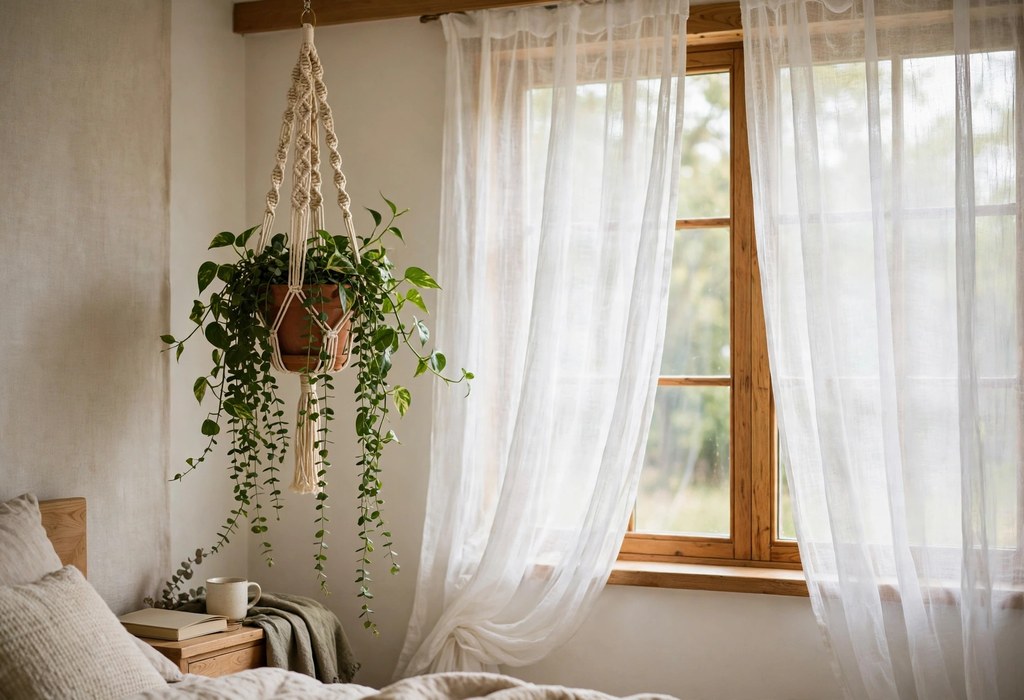
Secure hooks transform bare ceilings into floating gardens above your furniture. For guidance, explore hanging plant ideas for bedroom ceilings and walls before you hang anything. Always anchor hooks into studs or use rated ceiling hardware properly.
Hang trailing plants where vines fall freely without blocking doors or windows. Keep pots above head height along walkways and away from pillows below. Additionally, check cords, knots, and hooks monthly for wear and slippage.
Craft Plant Hangers
Handmade hangers add personality and fit awkward corners perfectly every time. You can learn diy plant hangers for bedroom decoration using simple cord, beads, and sturdy rings. Start with one lightweight pot and practice your knots carefully first.
Subsequently, a classic macrame hanger cradles round pots and showcases trailing vines beautifully. Cotton cord feels soft and natural, while colored cord adds playful contrast. Whatever material you choose, test every finished hanger before hanging it.
Build a Vertical Garden Wall
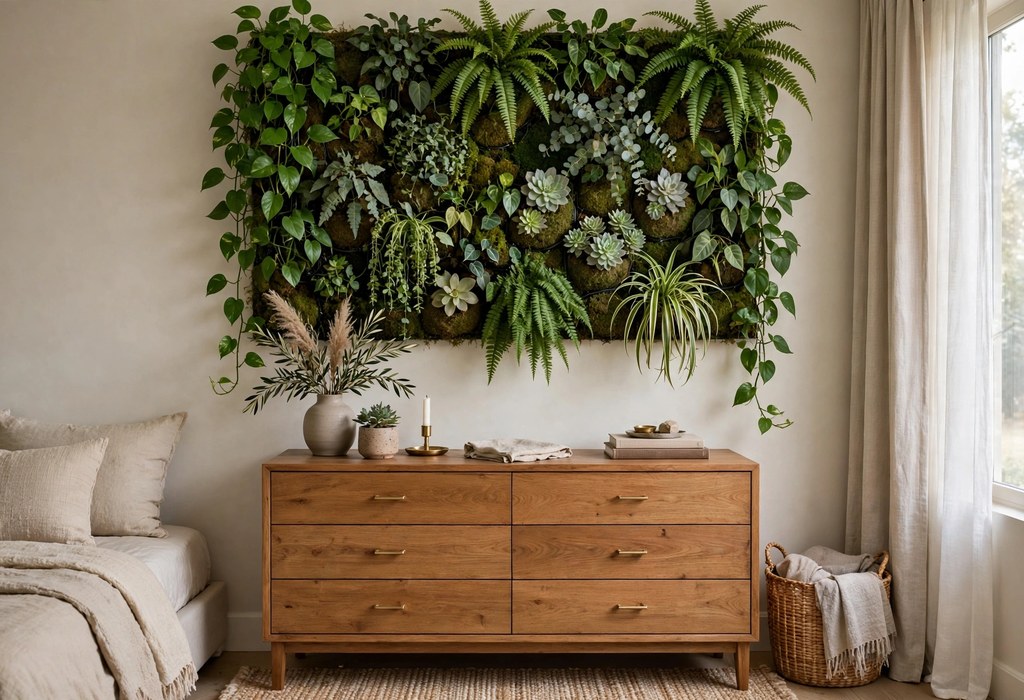
A living wall turns greenery into artwork behind your bed or dresser. You can build a vertical garden in the bedroom with modular pockets, rails, or staggered wall planters. Choose compact, similar-care plants so watering stays simple across the wall.
Vertical garden systems need waterproof backing and easy access for maintenance. Place thirstier plants lower, where you can reach them without a ladder. Meanwhile, keep a small step stool nearby for safe pruning sessions.
- Group wall plants by needs: Cluster similar-care plants together, and watering will stay simple each week.
- Protect walls behind planters: Add waterproof backing behind pockets, and check for drips after every watering session.
- Leave room for growth: Space young plants generously at first, and fuller growth will fill gaps naturally.
Greenery Bedroom Ideas for Small Bedrooms
Compact rooms reward smart vertical choices more than bulky floor planters. Practical compact plants for small bedrooms favor wall shelves, slim stands, and hanging pots over wide containers. Those choices preserve precious floor space while delivering generous leafy impact.
Similarly, one well-chosen plant often transforms a small room more than five tiny pots. Scale matters, so you pick one medium plant and two small accents. This restrained mix looks deliberate and keeps surfaces usable every day.
Think Vertically in Tight Spaces
Likewise, wall shelves, over-door hooks, and tall narrow stands use forgotten vertical inches. You place small pots upward and keep nightstands nearly clear for essentials. Vertical displays also draw attention upward, making ceilings feel higher overall.
Window frames offer another slim display zone for tiny potted plants. A narrow sill shelf holds herbs or small succulents without blocking light. Just secure every pot against bumps from curtains and opening windows.
Mirrors and Light Colors
Mirrors bounce daylight deeper into small bedrooms and double your leafy views. Position a mirror opposite or beside plants to amplify their effect. However, avoid harsh reflected sunbeams that could scorch sensitive leaves nearby.
Overall, light wall colors and simple bedding make small planted rooms feel airier. You can repeat one pot color throughout for calm visual continuity. Fewer competing colors let your greenery provide the main decorative energy.
Artificial Greenery Bedroom Ideas for Difficult Rooms
Some bedrooms simply lack the light or routine that live plants need. In those rooms, artificial greenery ideas for low-maintenance bedrooms deliver color without watering, feeding, or pest worries. Quality faux plants now mimic real leaf shapes surprisingly well today.
Travelers, allergy-sensitive sleepers, and busy beginners often appreciate dependable faux greenery. Faux stems never drop leaves into bedding or attract fungus gnats indoors. Still, thoughtful placement keeps artificial greenery looking believable and tasteful.
Mix Live and Artificial Plants
You can blend real and faux plants across different zones in one room. Place live plants near windows, where they thrive and reward care. Then, use faux stems in dark corners where real plants struggle.
Also, matching leaf tones between real and faux pieces keeps the blend seamless. Vary stem heights and angles, because identical upright stems look artificial instantly. A few imperfect, drooping leaves make arrangements feel far more natural.
Keep Artificial Greenery Clean
Additionally, dust dulls faux leaves quickly, especially on open shelves and headboard ledges. Wipe leaves monthly with a damp cloth or rinse removable stems gently. Clean faux greenery keeps its color and supports a fresher bedroom feel.
Moreover, rotate faux arrangements seasonally to prevent faded patches from window sunlight. Store spare stems flat and away from crushing weight between uses. Simple care extends the life of quality artificial pieces for years.
Follow a Simple Greenery Bedroom Care Routine
Furthermore, healthy plants make greenery bedroom ideas look intentional and polished. A simple weekly routine prevents most common problems before they start. Consistency beats occasional heroic rescue efforts almost every single time.
Water by Soil Moisture
You should check soil moisture with a finger before every watering decision. Water most tropical plants when the top inch of soil feels dry. Then, soak thoroughly and empty saucers so roots never sit wet.
Overwatering harms more indoor plants than underwatering, especially in low light. Yellow leaves, soggy soil, and fungus gnats often signal excess moisture. When you notice those signs, pause watering and improve drainage immediately.
Meanwhile, snake plants and succulents prefer longer dry spells between careful waterings. Ferns and calatheas prefer steadier moisture and dislike drying out completely. Grouping plants by watering needs simplifies your whole routine each week.
Feed, Prune, and Clean Leaves
Specifically, diluted fertilizer during active spring and summer growth supports strong new leaves. You feed sparingly, follow label directions, and skip feeding dormant winter plants. Excess fertilizer burns roots and creates weak, leggy growth over time.
Indeed, pruning removes yellow leaves and encourages bushier, healthier growth on many plants. Use clean, sharp scissors and cut just above a leaf node. Regular pruning also reveals pests early, before infestations spread between plants.
Naturally, dusty leaves photosynthesize poorly and look dull in styled bedroom displays. Wipe large leaves monthly with a soft, damp cloth for shine. Shower smaller plants gently in a sink or tub occasionally instead.
Rotate, Repot, and Refresh Displays
Clearly, quarter turns each week keep growth even and prevent one-sided leaning plants. Repot when roots circle drainage holes or crowd the pot surface visibly. Choose a pot only slightly larger, and refresh the soil gently.
Importantly, seasonal refreshes keep your retreat feeling new without buying everything again. Swap pot covers, move plants between zones, and edit tired groupings. Small changes renew your interest and highlight different plants each season.
Troubleshoot Common Problems
- Yellow leaves signal stress: Check soil moisture first, and adjust watering before you change anything else.
- Brown leaf tips appear: Raise humidity slightly nearby, and keep fertilizer doses modest during active growth.
- Leggy stems stretch out: Move the plant closer to light, and rotate the pot every week.
- Tiny flies hover nearby: Let soil dry longer between waterings, and remove fallen leaves from pots.
Notably, most problems improve when you change one condition at a time carefully. Observe the plant for two weeks before making another adjustment afterward. This patient method reveals the real cause behind most symptoms.
Style Greenery Bedroom Ideas for Sleep and Seasons
In practice, a bedroom retreat must support sleep first and decoration second always. Keep pathways clear, secure tall plants, and avoid strong scents near pillows. Calm routines around your plants reinforce the restful purpose daily.
Over time, scented plants deserve careful placement near your sleeping area each night. Strong fragrances can distract sensitive sleepers, so you choose mild options instead. Unscented foliage plants deliver visual calm without competing with your rest.
Keep the Sleep Zone Calm
Plants near the bed should feel peaceful, never looming or crowded. Choose soft, rounded leaves beside pillows instead of sharp, spiky specimens. Also, keep watering cans and tools stored away from sleeping areas.
In turn, evening light shapes the mood of your planted retreat more than decor. Warm lamps behind large leaves cast gentle shadows across walls nightly. That soft glow helps your body wind down toward sleep naturally.
Refresh With the Seasons
Later, spring invites propagation projects, repotting sessions, and fresh new growth everywhere. Summer growth fills shelves quickly, so you prune and train vines often. Autumn styling welcomes warmer textiles and deeper green accent tones nearby.
Eventually, winter light fades earlier, so you move plants closer to windows then. You also water less often, because growth slows in cooler conditions. A nearby grow light can support your favorite plants through winter.
Blend Greenery With Daily Routines
Subsequently, your plant layout must respect dressing, reading, working, and relaxing habits daily. Keep dresser tops partly clear and protect charging spots from watering drips. Practical layouts survive real life far better than fragile showpiece arrangements.
Similarly, morning plant checks pair nicely with opening curtains and making the bed. You spot dry soil, rotate pots, and enjoy new leaves quickly. These tiny habits keep your collection healthy without extra scheduled effort.
Avoid Common Greenery Bedroom Mistakes
Most plant losses come from a handful of repeatable, preventable beginner mistakes. Learning them now saves money, plants, and frustration in coming months. Fortunately, every mistake below has a simple, practical fix attached.
- Buying plants before checking light: Read your windows first, and match purchases to real conditions.
- Watering on a fixed schedule: Test soil moisture first, and let each species set its pace.
- Crowding every available surface: Group plants into clear zones, and leave calm empty space between display areas.
- Ignoring drainage in decorative pots: Use nursery pots inside covers, and empty saucers after watering.
- Forgetting pet safety checks: Verify toxicity before buying, and hang risky plants beyond reach of curious pets.
Likewise, another common mistake involves chasing trends instead of personal comfort daily. Your bedroom should reflect your taste, not a social media template exactly. Choose plants and colors that genuinely help you relax each night.
Finally, many beginners quit after losing one difficult, unsuitable plant early. Treat that loss as information about light, water, or plant choice instead. Then choose a hardier species and rebuild your confidence step by step.
Build Your Greenery Bedroom Retreat: Starter Plan
Overall, a short plan turns inspiration into a finished corner within one week. You will work in small steps and enjoy visible progress daily. Gather basic supplies first so each step flows without interruption.
- Day one assessment: Measure your room carefully today, and record light patterns from morning until evening.
- Day two shortlist: Pick three forgiving plants tomorrow, and confirm sizes, prices, and pet safety first.
- Day three setup: Place stands and shelves next, and test layouts before you hang anything heavy.
- Day four planting: Pot your plants carefully afterward, and water each one according to its needs.
- Day five styling: Add textiles and baskets then, and step back to edit the overall scene.
- Day six hanging: Install hangers and hooks safely, and double-check every anchor before adding weight.
- Day seven review: Photograph the finished retreat finally, and note care tasks in your weekly calendar.
Also, this plan works for renters, homeowners, students, and complete beginners alike. You can stretch each step across weekends if your schedule demands flexibility. Momentum matters more than speed when you build a lasting retreat.
Frequently Asked Questions
What is the best plant for a bedroom?
A snake plant suits most bedrooms because it tolerates low light and needs infrequent watering.
How many plants should you have in a bedroom?
Most bedrooms look balanced with three to seven plants grouped into two or three display zones.
Can plants really improve sleep quality?
Plants support sleep indirectly by creating a calmer, more relaxing bedroom environment before bedtime each night.
Which bedroom plants are safe for cats and dogs?
Spider plants, parlor palms, and Boston ferns offer safer greenery choices for homes with pets.
Do bedroom plants need direct sunlight?
Most bedroom plants prefer bright, indirect light and suffer leaf scorch under harsh direct midday sun.
Conclusion
Greenery bedroom ideas give you a practical path toward a calmer bedroom. You now understand light, humidity, plant choices, styling, and simple weekly care. Together, those basics turn ordinary rooms into restorative, nature-inspired retreats at home.
Start your transformation today by choosing one forgiving plant for your brightest corner. Then add a plant shelf, a hanger, or a trailing vine next week. Take that first step now, and let your retreat grow leaf by leaf.