
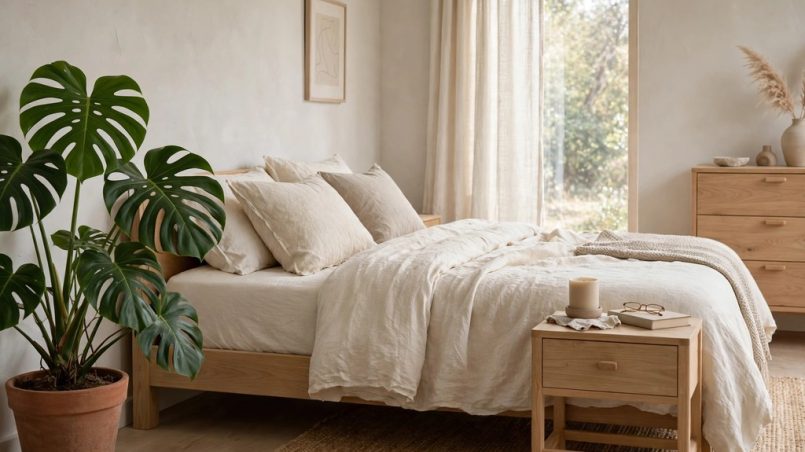
Greenery bedroom ideas with neutral color schemes pair soft neutrals with living green for calm sleep. Additionally, warm whites, beige, and gray let indoor plants become the natural focal point. Consequently, the room feels fresh and restful without bold paint or busy patterns.
Moreover, layered textures keep neutral bedding, wood, and linen from feeling flat or cold. Meanwhile, varied leaf shapes add depth while the palette stays quiet and cohesive. For example, strong greenery bedroom ideas start with placement, light, and simple care routines. Ultimately, thoughtful styling turns an ordinary bedroom into a relaxed, nature-inspired retreat nightly.
Why Neutral Color Schemes Let Greenery Shine
First, neutral walls reflect light softly and help foliage look richer and more defined. However, plain surfaces alone can feel stark without texture, warmth, or living contrast nearby. Therefore, biophilic design connects bedding, natural materials, and plants into one calming system.
Specifically, cream and warm gray suit green leaves better than cool blue-gray tones. Besides, light wood and woven baskets echo nature without competing with leaf color. Overall, neutrals provide balance while plants supply movement, shadow, and organic shape.
Best Plants for Neutral Color Schemes
Statement Plants for Corners and Floors
Notably, a fiddle leaf fig creates height and drama beside a dresser or window. Similarly, a monstera adds bold, sculptural leaves that contrast beautifully with simple bedding. Yet both plants need bright indirect light and regular checks for dry soil.
Compact and Trailing Options
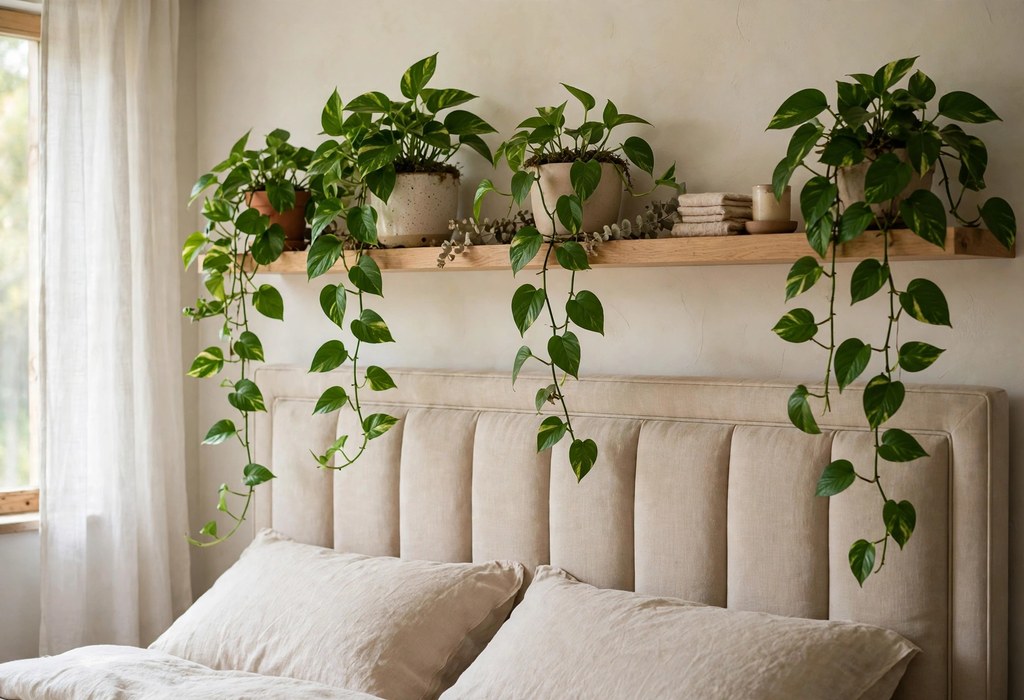
Fortunately, a snake plant fits narrow corners and tolerates missed waterings very well. Likewise, pothos trails gracefully and softens hard edges on shelves and headboards. As a result, trailing plants work especially well where floor space stays limited.
- Corner impact: Place one tall plant where it gets clear breathing room.
- Shelf softness: Trail pothos downward and balance glossy leaves with matte pots.
- Nightstand scale: Pick compact foliage and keep leaves clear of pillows daily.
- Color harmony: Repeat deep green tones and avoid neon or variegated overload.
Layer Plants With Neutral Color Schemes
Build a Vertical Display
To start, install a plant shelf above a dresser and stage plants at staggered heights. Then, hang a macrame hanger near a window and avoid blocking precious daylight. In addition, a slim vertical garden suits small bedrooms and keeps floors completely clear.
At floor level, floor plants anchor corners while smaller pots fill bookcase gaps. By contrast, crowded groupings block airflow and make watering harder than necessary. Practically, leave space between pots and rotate plants regularly for even growth.
Mix Textures, Pots, and Fabrics
Texturally, matte stone pots calm glossy leaves and suit linen bedding beautifully. Woven baskets hide plain nursery pots and add warm, natural texture instantly. Across surfaces, repeated materials create cohesion while varied leaf sizes prevent boredom.
Gently, sage and olive accessories bridge green foliage and beige textiles very softly. Deeper tones help forest cushions add contrast while cream bedding keeps brightness intact. Preserve calm by using limited accents and protecting the neutral base from clutter.
A Simple Layout Plan With Neutral Color Schemes
Starting small, place one statement plant beside the bed and build outward slowly. Building outward, add one trailing plant opposite the statement plant for visual balance. Near mirrors, place one small plant and reflect its leafy shape beautifully.
Small rooms benefit from wall-mounted planters and narrow stands beside windows daily. Large rooms handle grouped floor plants and fill corners without feeling sparse. Along walkways, keep clear paths and easy access for watering cans daily.
Light, Humidity, and Simple Care
Most importantly, match each plant to indirect light before you choose its final spot. For instance, reliable low light bedroom plants tolerate shade but still grow slowly. During midday, move sensitive plants back from harsh sun and scorching window glass.
Regarding humidity, moderate levels help many tropical leaves stay supple through dry heating. Without care, constant misting wets bedding and encourages mold on soil and leaves. Instead of misting, group plants together or place a humidifier nearby carefully.
Timed carefully, a grow light supports plants in dark rooms very consistently. Before watering, check snake plant soil and water only when completely dry. Safety-wise, pothos, monstera, and snake plant foliage can harm pets if eaten. Out of reach, place toxic plants on high shelves away from curious pets.
Styling Moves That Keep Neutral Schemes Warm
Layer by layer, a cream throw, oatmeal cushions, and wood add cozy warmth. Aged brass and black accents sharpen soft neutrals without adding color clutter. Under lighting, many beige tones can look muddy beneath cool artificial bulbs.
Busy schedules benefit from realistic artificial greenery ideas for low-maintenance bedrooms filling dark corners convincingly. Blended carefully, one faux stem among live plants stretches your budget sensibly. Restrained styling keeps the scheme calm while greenery adds necessary living energy.
Frequently Asked Questions
What neutral color schemes go best with greenery in a bedroom?
Warm white, beige, warm gray, and light wood complement green foliage without overwhelming it.
How many plants should a bedroom with neutral color schemes have?
Typically, three to five plants create lush impact while keeping surfaces calm and uncluttered.
Can greenery work in a bedroom with low light?
Yes, snake plant and pothos tolerate lower light, although growth slows without brightness.
How do you keep a neutral bedroom from looking boring?
Layered carefully, linen, woven baskets, wood grain, and varied leaves add texture and depth.
Are bedroom plants safe for cats and dogs?
Importantly, many popular plants are toxic, so place them beyond pets’ reach always.
Conclusion
Finally, neutral tones give greenery space to shine and keep sleep areas serene. Chosen well, plants, heights, and textures make simple rooms feel intentionally finished. Start today, add one statement plant and build your calm retreat gradually.