
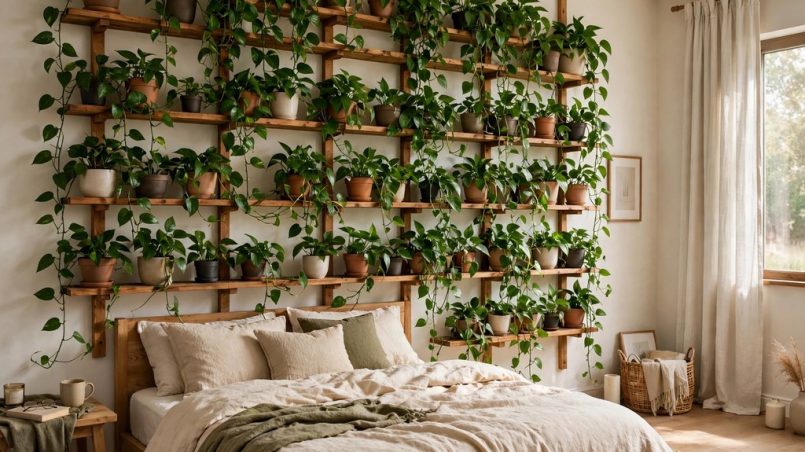
You create a vertical garden in the bedroom by mounting shelves or pockets on a sturdy wall. Next, you fill each tier with indoor plants that match your light. Then, you protect the wall and water plants without soaking the surface.
Additionally, this guide walks you through planning, planting, and safe mounting step by step. Moreover, you will learn smart layouts that support strong biophilic design in small rooms. For example, you can combine these steps with broader greenery bedroom ideas to refresh your sleep space. Ultimately, you gain calm greenery without sacrificing precious floor space at all.
Choose the Right Wall and Light
First, you should observe sunlight patterns across each wall for two full days. Meanwhile, you note which areas receive bright indirect light during the morning hours. Also, you check nearby windows, curtains, and furniture for shade and airflow.
However, you avoid placing thirsty plants directly above your bed or pillows. Instead, you position the garden beside the bed or around a reading nook. Furthermore, you leave clear access for watering, pruning, and rotating every pot.
Add Light Where the Room Falls Short
When natural light stays low, you add a full-spectrum grow light above the top tier. Similarly, you run the grow light on a timer for consistent daily coverage. Consequently, lower tiers still receive enough light when you angle fixtures carefully.
Pick a Structure That Fits Your Room
Initially, you compare a plant shelf system, pocket panels, and grid frames carefully. For renters, a leaning plant shelf offers height without drilling into walls. Alternatively, you extend the display using hanging plant ideas for bedroom ceilings and walls above shelves.
- Plant shelf: You stack narrow shelves and arrange pots in staggered rows. Additionally, you anchor the unit securely before adding any plants.
- Pocket panels: Fabric pockets hold lightweight soil and small trailing plants easily. However, you add liners that block moisture from reaching the wall.
- Grid frames: A metal grid supports clipped pots along sturdy horizontal bars. Moreover, you rearrange clips easily as plants grow taller.
- Macrame hanger: One macrame hanger adds soft texture beside the structured frame. Meanwhile, you balance the hanger with structured shelves below.
Afterward, you can personalize the frame with diy plant hangers for bedroom decoration that match your bedding. Likewise, you repeat wood, metal, or cord finishes for a cohesive look.
Select Plants for Every Tier
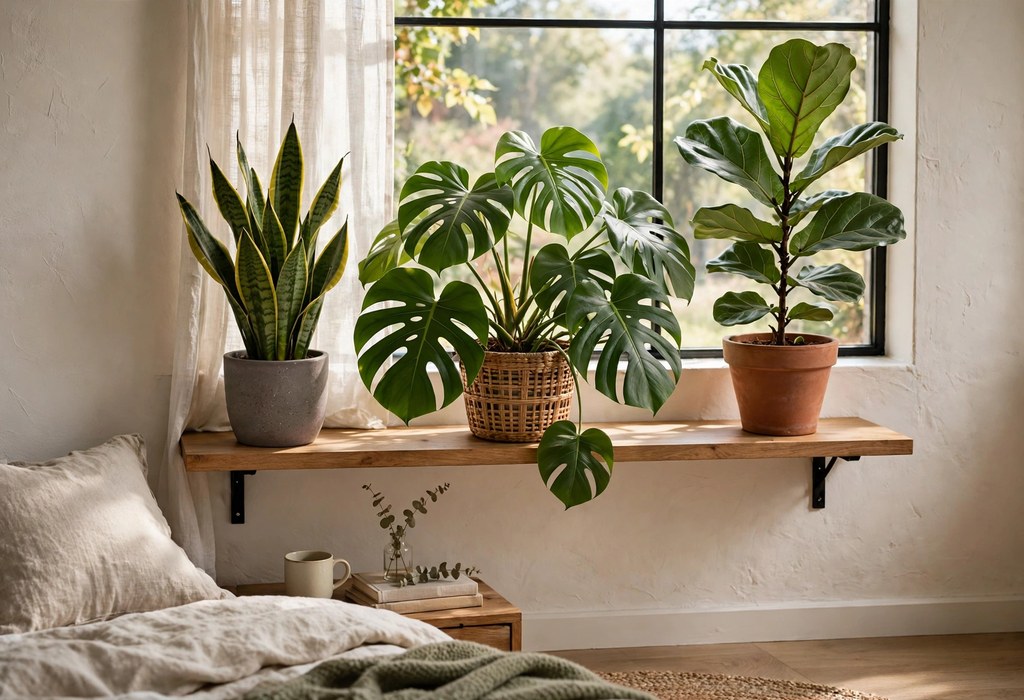
At the top, you place compact plants that love the brightest light available. Specifically, you choose a small monstera or a young fiddle leaf fig there. Carefully, you leave growing room because both plants expand quickly over time.
In the middle, you arrange a snake plant for upright structure and contrast. Along the edges, you trail pothos and other trailing plants over each shelf. Finally, you tuck shade-tolerant pothos cuttings into lower pockets with less light.
Importantly, you group plants with similar water and humidity needs together. Since pothos leaves contain toxins for pets, you place every pot beyond reach. Plus, you keep monstera and fiddle leaf fig away from pets too.
Mount Everything Safely and Protect Walls
Before drilling, you locate studs with a finder and mark each point. Securely, you drill into studs and use anchors only for lighter loads. Crucially, you check total wet weight because soaked soil adds serious strain.
- Waterproof barrier: A waterproof membrane or sealed board shields the wall behind planters. Thus, you shield paint and drywall from splashes and lingering dampness.
- Drainage trays: Trays and saucers catch runoff beneath every single pot. After watering, you empty trays promptly and dry the wall surface.
- Lightweight pots: Fiberclay and plastic pots reduce weight versus heavy ceramic options. As a result, you reduce strain on brackets, shelves, and wall anchors.
Ahead of planting, you test each bracket by pressing down with firm pressure. If anything shifts, you reinforce the mount before adding soil or water. Periodically, you inspect screws and check the barrier for hidden moisture.
Water, Feed, and Maintain Your Garden
On watering days, you water slowly from the top of each tier. Subsequently, you let excess water collect in trays instead of dripping downward. Between waterings, you check soil moisture with your finger before adding more.
To raise humidity, you cluster plants closely and mist leaves during dry weeks. During growth, you feed plants monthly with diluted fertilizer per label directions. Regularly, you prune trailing stems, remove yellow leaves, and rotate pots evenly.
As plants grow, you move light-hungry plants upward toward brighter tiers. Conversely, you shift shade-tolerant plants downward when upper leaves look scorched. Over time, you adjust the grow light height as foliage fills in.
Each month, you inspect leaves for pests and wipe dust away gently. Whenever growth slows, you refresh the top soil layer and check roots. Seasonally, you swap tired plants for fresh cuttings and revive the display.
Frequently Asked Questions
What plants work best in a bedroom vertical garden?
Generally, you succeed with pothos, a snake plant, monstera, and trailing plants.
Can a vertical garden damage bedroom walls?
Fortunately, you prevent damage by adding a waterproof barrier and drainage trays.
How do you water a vertical garden indoors?
Slowly, you pour water into top pots and empty every tray afterward.
Do bedroom plants need a grow light?
Often, you need supplemental light when windows provide weak indirect light daily.
Are vertical garden plants safe for pets?
Sadly, pothos and monstera harm pets, so you place them beyond reach.
Conclusion
In short, you build a lasting vertical garden by planning light, structure, and safety first. Start small this weekend, mount one plant shelf, and add your first pothos today. Gradually, you will expand tier by tier and create a calmer, greener bedroom.