
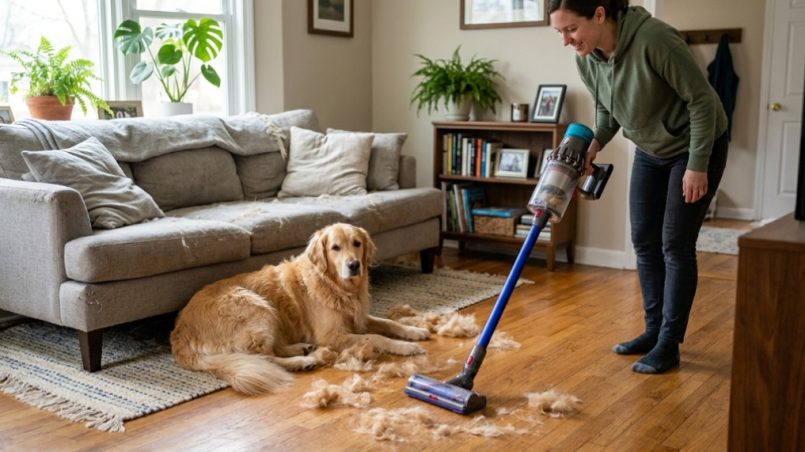
You vacuumed yesterday, yet somehow a fresh layer of fur is already drifting across the floor. That is the reality of living with a shedding dog or cat: pet hair does not settle politely, and waiting until the carpet looks dirty means allergens have already built up. Choosing a vacuum that handles fur well matters, and many owners find the Shark Navigator vacuum fits that job. Still, even the best tool only works if you use it often enough. The right schedule depends on your pets, your flooring, and a few health factors most owners never consider.
Quick Answer
Most pet owners should vacuum high-traffic areas and pet-favorite spots two to three times per week, and do a full-home vacuum at least once a week. Homes with heavy shedders, multiple pets, allergies or asthma, or mostly carpet need daily or near-daily attention. Homes with one short-haired pet and mostly hard flooring can often get by with weekly whole-home cleaning plus spot cleaning of furniture.
Key Takeaways
- A good baseline is two to three quick cleanings per week plus one full-home vacuum weekly.
- Heavy shedders, multiple pets, allergies, and wall-to-wall carpet push the schedule toward daily.
- Pet hair collects fastest on sofas, pet beds, stairs, and entryways even when floors look clean.
- Vacuuming frequency matters more than vacuuming duration for controlling dander and fur.
- Not all vacuums handle pet hair equally, so match your schedule to what your machine can realistically pick up.
Why Pet Owners Need a Different Vacuuming Schedule
Pet hair is not just visible clutter. It carries dander, a protein found in saliva, urine, and skin flakes that cats and dogs shed continuously. Dander particles are tiny enough to stay airborne for hours and to settle deep into carpet fibers and upholstery, which is why allergy symptoms often persist even in homes that look tidy. Regular vacuuming removes both the hair you can see and much of the allergen load you cannot.
Pets also shed differently than humans. Many breeds go through seasonal coat blows where shedding multiplies for several weeks, while indoor pets in climate-controlled homes may shed steadily year-round instead of in two big cycles. That variability is why a fixed “once a week” rule rarely holds up. Your schedule has to flex with the animal, not the calendar.
How Often to Vacuum Based on Your Situation
Use your household’s specific mix of factors rather than a single universal number. The table below gives practical starting points you can adjust based on how much hair you actually see.
| Household Situation | Suggested Frequency |
|---|---|
| One short-haired pet, mostly hard floors | Once or twice weekly, plus spot cleaning |
| One or two medium shedders, mixed flooring | Two to three times weekly |
| Heavy shedders (Huskies, Labs, Maine Coons) | Daily or every other day |
| Allergy or asthma sufferer in the home | Daily, including upholstery |
| Multiple pets | Daily in high-traffic zones |
| Wall-to-wall carpet throughout | At least every other day |
Treat these as starting points. If you run a vacuum pass and the canister fills quickly, you are likely under-vacuuming rather than over-vacuuming.
Which Areas Need the Most Attention
Not every square foot of your home collects hair at the same rate. Focusing effort on the highest-traffic zones gives you most of the benefit with less time spent cleaning.
Pet beds and sleeping spots
Pets shed heavily where they rest because they spend hours there and their body heat loosens fur. Vacuum pet beds, blankets, and the floor around them at least twice a week, and more often if your pet has a favorite chair or corner.
Upholstery and sofas
Fabric sofas trap hair the way carpet does, and a standard floor pass misses them entirely. Use a brush or upholstery attachment on cushions weekly. This is also where dander concentrates most, so it matters more for allergy sufferers than the floor does.
Stairs, entryways, and doorways
These narrow, high-traffic zones collect hair from every trip your pet makes in and out. They are easy to overlook because the total area is small, but a quick pass here often makes the biggest visible difference.
Under furniture and along baseboards
Hair drifts into edges and corners where airflow is low. A crevice tool along baseboards once a week prevents the buildup that eventually turns into visible dust bunnies.
Signs You Are Not Vacuuming Often Enough
Rather than guessing, watch for practical warning signs that your current schedule is falling short:
- Fur reappears on the floor within a day of vacuuming
- You or a family member wakes up congested or sneezing
- The vacuum canister fills before you finish one room
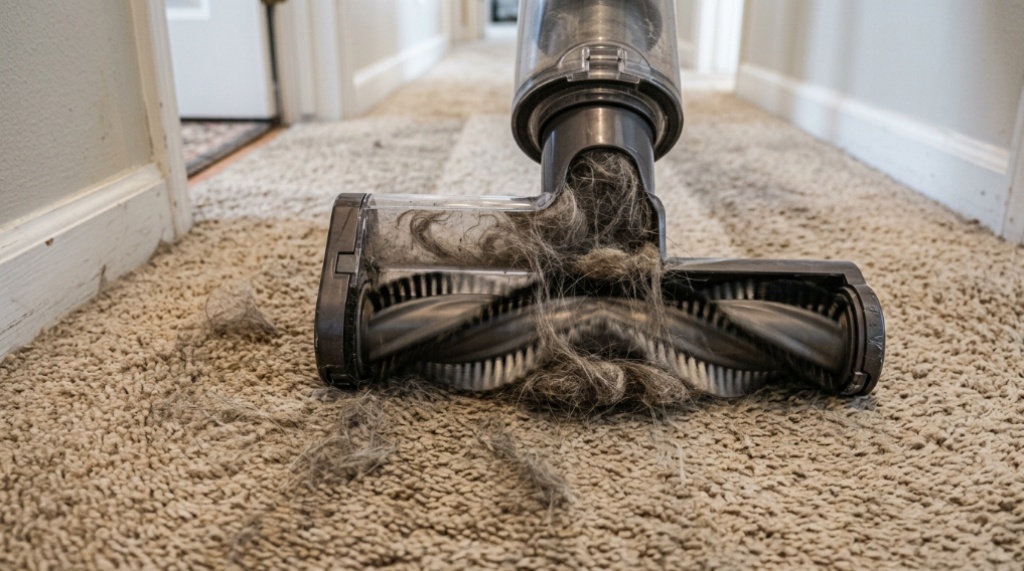
- Hair is visibly woven into carpet fibers and resists a normal pass
- Pet beds and sofas feel gritty when you run a hand across them
Any of these indicates it is time to increase frequency, not just vacuum longer in a single session, if you need a portable option for quick cleanups, check out this armor all vacuum 5 pros & cons of compact wet dry vacuum for deep cleaning tight spaces.
Does Vacuum Type Change How Often You Should Clean?
Yes. A vacuum with strong suction, a motorized brush roll, and effective filtration removes more hair per pass than a basic model, so you can sometimes clean less often and still get better results. Bagless uprights with sealed HEPA filtration tend to handle pet hair and dander more effectively than lightweight stick vacuums with weak airflow, though the trade-off is weight and storage space.
The counterpoint is maintenance. A vacuum clogged with hair loses suction and stops picking up fine dander, which defeats the purpose. Empty the canister after every pet-heavy session, clear hair from the brush roll regularly, and check filters according to the manufacturer’s guidance. A well-maintained mid-range vacuum will outperform a neglected premium one almost every time.
Does Daily Vacuuming Cause Any Problems?
Vacuuming daily is safe for most carpets and hard floors, and it is the recommended approach for allergy households. The main risks are wear on the vacuum itself and noise stress for anxious pets. Rotating between a full vacuum and a quick targeted pass keeps the workload reasonable, and giving nervous pets a quiet room to retreat to during cleaning reduces stress without sacrificing cleanliness.
Frequently Asked Questions
Is once a week enough if I only have one cat?
It can be, if your cat is short-haired and your home is mostly hard flooring. If you notice hair returning within a day or anyone in the home has allergies, increase to two or three times weekly.
Should I vacuum more in spring and fall?
Yes. Many pets shed heavily during seasonal coat changes, so temporarily increasing frequency during those weeks prevents hair from building up faster than your normal schedule can handle.
Do I need to vacuum hard floors as often as carpet?
Hard floors show hair less, but they still collect dander and fur that can be kicked back into the air. A quick pass two to three times weekly is usually enough, with spot cleaning as needed.
Can vacuuming too often damage my carpet?
Normal household vacuuming does not damage carpet. Problems usually come from a worn brush roll, a clogged filter, or a beater bar set too low, not from cleaning frequency itself.
What if my pet is scared of the vacuum?
Try short sessions in a different room, reward calm behavior, and consider a quieter model for routine touch-ups. Frequency still matters, so consistency helps pets adjust over time.
Conclusion
For most pet owners, two to three targeted cleanings per week plus one full-home vacuum is a realistic and effective baseline. Adjust upward for heavy shedders, multiple pets, allergies, or wall-to-wall carpet, and pay extra attention to pet beds, sofas, and entryways where hair builds fastest. Keep your vacuum well maintained so it actually removes dander rather than just stirring it up. If hair reappears quickly after cleaning, that is your signal to increase frequency rather than effort.