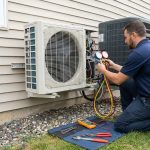
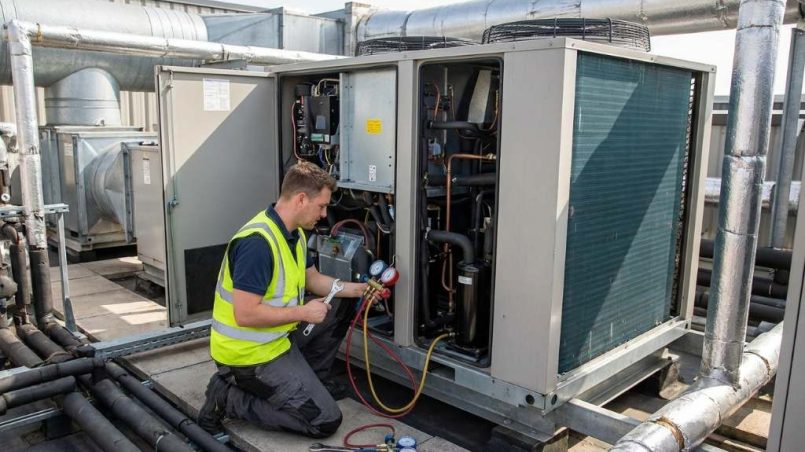
Commercial heat pump repair involves larger systems, higher stakes, and stricter compliance requirements than residential service. A single rooftop failure can affect dozens of tenants or employees at once. Building owners need brand-certified technicians who understand multi-zone systems and building automation integration.
Facility managers who understand the commercial repair landscape make faster, more confident decisions when systems fail. The scale and complexity here differ significantly from a single-family home setup. This guide breaks down exactly what sets commercial work apart.
How Commercial Systems Differ From Residential Ones
Commercial buildings rely on several heat pump configurations rarely seen in homes. Each type demands different diagnostic tools and specialized technician training.
Variable Refrigerant Flow systems use variable-speed compressors to serve multiple zones simultaneously. A single outdoor unit might connect to 20 or more indoor units across several floors. Water-source heat pumps instead use a shared central water loop connecting many individual zones together.
Rooftop units combine the entire refrigerant circuit into one packaged cabinet. These remain common in retail spaces, schools, and light commercial buildings. Larger facilities sometimes use chiller-based systems with heat recovery functioning on similar heat pump principles at scale.
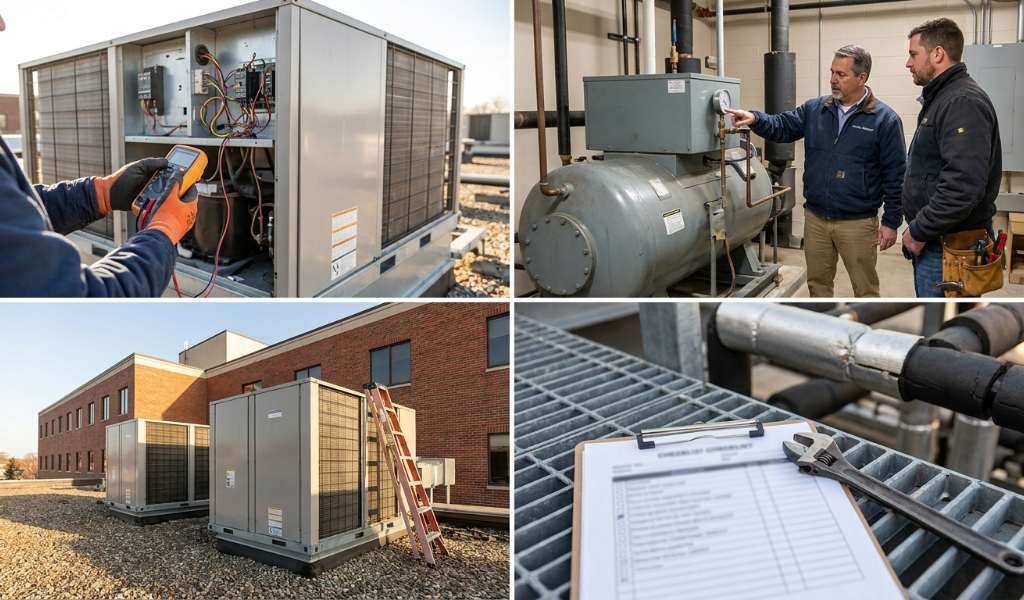
Why the Stakes Are Simply Higher Here
A residential heat pump failure leaves one family uncomfortable for a day. A commercial failure creates consequences that ripple much further across the entire building.
Consider these specific risks tied to commercial system downtime:
- Employees losing productivity in uncomfortable working conditions
- Tenants invoking lease clauses requiring habitable indoor conditions
- Perishable goods at risk in food service or pharmaceutical storage areas
- Server rooms facing equipment damage from temperature fluctuations
- Schools and healthcare facilities triggering mandatory evacuation protocols
These elevated stakes justify investing in proactive maintenance contracts upfront. Waiting for a reactive emergency call almost always costs more in the end.
Common Commercial Heat Pump Failures
Commercial systems share several failure modes with residential equipment generally. Refrigerant leaks, worn capacitors, and failing fan motors all appear across both settings equally. Several failure types, however, show up more often or carry greater consequences commercially.
Variable-Speed Drive Failures
VRF and other variable-capacity systems rely on electronic drives to control speed precisely. These drives can fail from power quality issues, overheating, or firmware glitches. Replacement demands both HVAC expertise and electronics knowledge combined, often costing 1,000 to 5,000 dollars per unit.
Electronic Expansion Valve Failures
These precision components meter refrigerant flow to each connected zone individually. A failed valve causes one specific zone to lose capacity while others keep running normally. Diagnosing exactly which valve has failed requires brand-specific diagnostic software tools.
Building Management System Communication Failures
Commercial heat pumps communicate with building automation through protocols like BACnet or Modbus. Communication failures can cause the system to default into an inappropriate fallback state. This might mean full heating or full cooling regardless of actual conditions.
Refrigerant Oil Return Issues
In large multi-zone systems, compressor oil circulates alongside refrigerant through long line sets. Poor line set design or operation outside design parameters causes oil to pool improperly. This starves the compressor of lubrication and often leads to early failure.
Maintenance Standards Worth Insisting On
Commercial maintenance intervals should be shorter than typical residential schedules. These systems often run continuously and serve far more critical functions than a home ever does.
A solid commercial maintenance contract should specify these elements clearly:
- Quarterly inspections for high-use systems, with monthly checks for critical applications
- Annual comprehensive refrigerant testing including pressure checks and leak detection
- Annual coil cleaning across all indoor and outdoor units
- Bi-annual filter replacement or thorough cleaning
- Annual electrical inspection covering drives, motors, and control circuits
- Building management system integration testing for accurate control signals
Preventive contracts typically cost between 500 and 3,000 dollars annually based on system complexity.
Choosing a Qualified Commercial Contractor
Commercial heat pump repair demands credentials that go beyond standard residential licensing. Verify these specific qualifications before signing any service agreement.
Major VRF manufacturers offer brand certification programs for qualified contractors. A certified technician gains access to brand-specific training and diagnostic software unavailable elsewhere. Ask for references from similar building types rather than general residential work.
Confirm the contractor carries appropriate insurance and bonding for commercial-scale liability. A service contract should also specify maximum emergency response times clearly. These details matter far more in commercial settings than they typically do at home.
The same foundational principles behind quality residential heat pump repair still apply here. EPA certification remains mandatory for refrigerant handling regardless of system size. Written estimates and clear warranties on parts and labor matter just as much commercially.
Service Contracts Versus Pay-As-You-Go Billing
Building owners generally choose between preventive maintenance contracts and time-and-materials billing arrangements. Contracts offer predictable budgeting along with prioritized response during emergencies. Pay-as-you-go billing avoids paying for services that might not be needed yet.
For any building with multiple HVAC systems or critical temperature requirements, contracts usually win. A single mid-winter system failure often costs more than an entire year of contract fees. Weigh that comparison carefully before deciding which approach fits your building.
Conclusion
Commercial heat pump repair carries real complexity that residential service simply does not match. Understand your system type, insist on brand-certified technicians, and commit to a solid maintenance schedule. These steps protect tenants, employees, and your bottom line simultaneously. Review your current maintenance contract today, and confirm it actually covers everything your building genuinely needs.
Frequently Asked Questions
How often should commercial heat pumps be serviced?
Quarterly inspections work well for most buildings, with monthly checks recommended for critical environments.
What is VRF and why is it harder to repair?
Variable Refrigerant Flow systems use sophisticated electronic controls that require brand-specific diagnostic software and training.
How much does commercial heat pump repair typically cost?
Single-component repairs run 500 to 3,000 dollars, while major compressor failures can exceed 10,000 dollars.
Can a residential HVAC contractor handle commercial repair work?
Simple rooftop units work fine, but VRF or water-source systems need certified commercial specialists instead.
What should a commercial service contract actually include?
Quarterly inspections, annual refrigerant testing, coil cleaning, electrical checks, and a defined emergency response commitment.