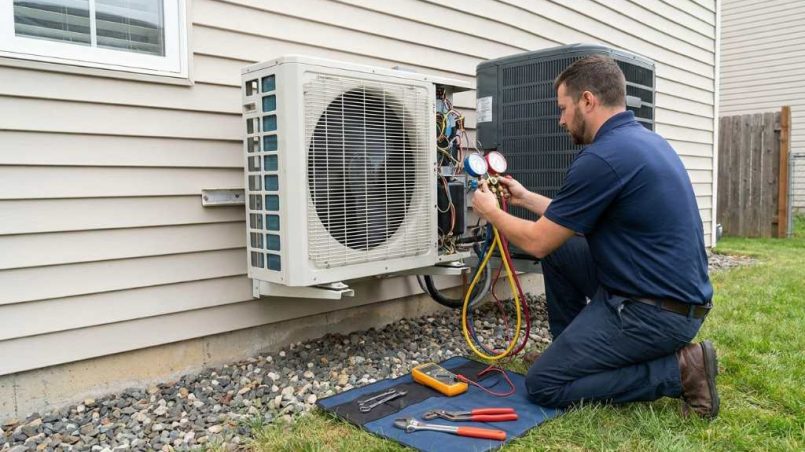
Ductless heat pump repair usually comes down to three categories: dirty components, refrigerant issues, or electrical faults showing up as error codes. Cleaning filters and blower wheels solves many problems yourself. Refrigerant leaks and wiring faults always need a licensed technician.
Mini-split systems eliminate ductwork, but they introduce their own unique parts and failure points. Each indoor unit works almost independently while still connecting back to a shared outdoor compressor. Understanding that layout makes troubleshooting far less intimidating.
How Ductless Systems Differ From Ducted Ones
Ductless mini-splits deliver conditioned air directly from a wall or ceiling cassette into the room. There is no central ductwork carrying air between rooms. Each indoor unit has its own coil, blower wheel, and condensate drainage system.
Multiple indoor units often connect to one outdoor compressor in multi-zone setups. This means one zone can fail while others keep running normally. A shared refrigerant leak, however, typically affects every connected zone at once.
Common Ductless Heat Pump Problems
Dirty Air Filter in the Indoor Unit
Every ductless cassette has a washable mesh filter behind its front panel. This filter traps dust and pet dander before it reaches the coil. A clogged filter drops airflow quickly and can cause the coil to freeze.
Cleaning takes about five minutes total. Open the front panel and slide out the mesh screens carefully. Rinse them under cool water, let them dry fully, then reinstall.
Dirty Blower Wheel
The blower wheel sits just behind the filter and pulls air across the coil. Dust and moisture build up on each blade over time. This buildup reduces airflow and often causes a musty smell during operation.
Cleaning a blower wheel properly means removing the front panel and protecting nearby electrical parts first. Most homeowners prefer leaving this task to a technician. Request it as part of your annual maintenance visit instead.
Condensate Pump Failure
Unlike ducted systems that drain by gravity, many wall-mounted units rely on a small internal pump. This pump pushes collected water out through a drain line. Debris or motor wear can cause it to fail over time.
Watch for these signs of a failing condensate pump:
- Water dripping steadily from the bottom of the indoor unit
- A gurgling or humming sound during normal operation
- The unit shutting off unexpectedly due to a safety float switch
- Visible water staining on the wall beneath the cassette
A technician can usually replace this pump in under an hour.
Error Codes on the Remote or Display
Ductless systems communicate problems through alphanumeric codes shown on the remote or unit display. Each manufacturer uses a different numbering system for these alerts. Most codes point to refrigerant pressure, sensor faults, or communication errors.
Look up your specific model’s code list in the owner’s manual first. Some codes clear after a full power reset at the breaker. Codes that return quickly after resetting usually require professional diagnosis.
Refrigerant Leaks in the Line Set
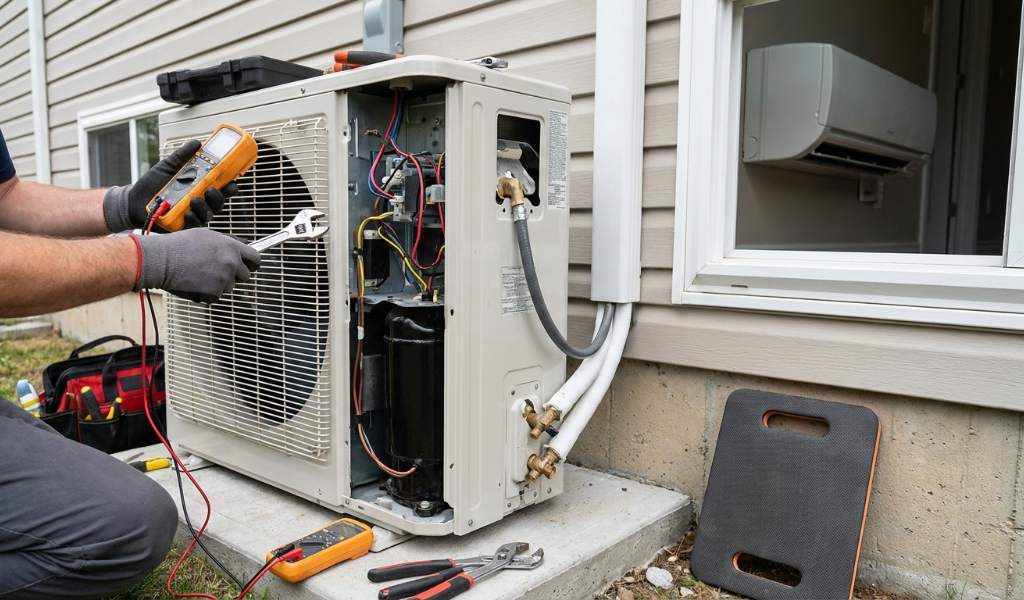
The line set connecting indoor and outdoor units is a common leak point over time. It runs through a small wall opening and includes insulated flare connections at each end. These connections can loosen or degrade with age.
Signs of a refrigerant leak include reduced heating or cooling output and ice forming on the outdoor unit. You might also notice a faint hissing sound near the line set. Refrigerant diagnosis and repair always require a licensed technician.
Communication and Wiring Faults in Multi-Zone Systems
Multi-zone ductless systems use digital wiring to let the outdoor unit communicate with each indoor cassette. Damaged wiring or loose connections can trigger communication error codes. This often takes just one zone offline while others continue working fine.
These faults require a technician familiar with your specific brand’s wiring protocol. Not every HVAC technician has training across every ductless manufacturer. Ask specifically about brand experience before scheduling this type of repair.
Annual Ductless Maintenance Checklist
A proper yearly tune-up keeps most ductless systems running smoothly for years. Request these specific tasks during your service visit:
- Cleaning every indoor unit’s washable filter thoroughly
- Cleaning the blower wheel inside each indoor cassette
- Flushing and testing the condensate pump in each zone
- Cleaning the outdoor coil to maintain proper airflow
- Checking refrigerant charge using manifold gauges
- Inspecting line set insulation and flare connections for wear
Staying consistent with this list prevents most major repairs before they start.
When to Call a Professional Instead of DIY
Some ductless issues are simply beyond safe homeowner repair. Recognizing these boundaries protects both you and your system.
Refrigerant work always requires EPA certification regardless of system type. Electrical component replacement similarly demands proper training and discharge tools. Blower wheel cleaning, while technically possible at home, carries real risk of damaging delicate electronics nearby.
Standard heat pump repair guidelines apply here just as they do with traditional split systems. Diagnosis comes before parts ordering, and written estimates come before any work begins. These same principles protect you whether your system uses ductwork or not.
Conclusion
Ductless heat pump repair becomes far less confusing once you understand each unit’s unique parts. Filter and panel-level cleaning stays safely in DIY territory. Refrigerant, wiring, and blower wheel work belongs with a trained technician. Schedule your annual maintenance now, and keep this guide handy the next time your system throws an unfamiliar error code.
Frequently Asked Questions
Can I clean a ductless mini-split myself?
You can clean the filters and wipe down the outer panel safely without professional help.
Why is my mini-split dripping water indoors?
The condensate pump has likely failed, or the drain line has become clogged with debris.
What does an error code on my mini-split remote mean?
Codes vary by brand, but most point to refrigerant pressure or communication faults between units.
How long do ductless mini-splits typically last?
With proper maintenance, most systems last between 15 and 20 years reliably.
Is ductless repair more expensive than repairing a ducted system?
Labor costs are similar, though ductless control boards and pumps can carry higher parts pricing.