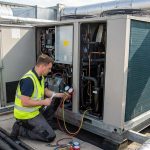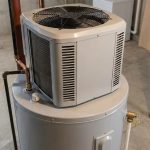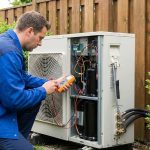
Geothermal heat pump repair covers two entirely separate systems that can each fail independently. The indoor unit works much like a standard heat pump and most HVAC technicians can service it. The buried ground loop, however, requires specialized contractors with specific geothermal training.
This split matters because many homeowners assume one technician handles everything. Separating indoor unit repairs from ground loop repairs clarifies exactly who to call. This guide walks through both categories so you know what to expect.
How Geothermal Systems Differ From Air-Source Units
A geothermal heat pump extracts heat from the earth rather than outdoor air. The ground beneath the frost line stays relatively constant year-round, typically between 50 and 60 degrees. This stability makes it a far more reliable heat source than fluctuating outdoor air.
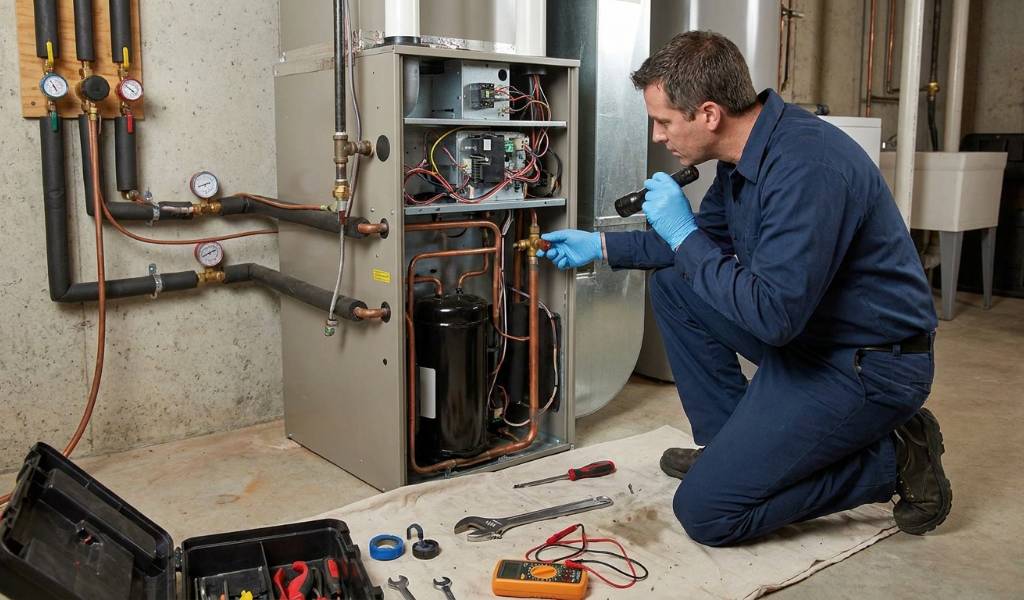
The ground loop consists of buried polyethylene pipes filled with an antifreeze and water mixture. This fluid circulates between the earth and the indoor heat pump unit continuously. The indoor unit pulls heat from the loop fluid in winter and rejects heat into it during summer.
Three loop configurations exist depending on available land and local conditions:
- Horizontal loops: buried 6 to 10 feet deep in long trenches across open land
- Vertical loops: inserted into boreholes drilled 150 to 300 feet deep where space is limited
- Pond or lake loops: submerged coils in a suitable nearby body of water
Each configuration carries its own repair accessibility and typical failure patterns.
Indoor Unit Repairs Follow Familiar Territory
The indoor geothermal unit contains a compressor, reversing valve, heat exchanger, and refrigerant circuit. These components mirror what you would find in any standard air-source heat pump closely. The main difference involves a heat exchanger that transfers heat with loop fluid instead of outdoor air.
Most indoor unit failures follow the same diagnostic path used in standard heat pump repair. Capacitors, contactors, control boards, and reversing valves can all fail using identical patterns. Any qualified HVAC technician with geothermal experience can typically handle these repairs confidently.
The refrigerant used inside most geothermal units is the same R-410A found in conventional systems. Standard EPA 608 certification fully covers this refrigerant work without additional requirements.
Ground Loop Problems Require Specialized Expertise
Ground loop failures represent where geothermal repair truly diverges from standard HVAC work entirely. These failures often require specialized diagnostic tools and sometimes excavation to resolve properly.
Low Loop Flow Rate
A circulation pump moves antifreeze solution continuously through the buried ground loop. If this pump fails, flow drops sharply and the system loses its heat source entirely. Watch for entering water temperatures that stay unusually stable rather than shifting seasonally.
Replacing the circulation pump remains a straightforward repair accessible inside the mechanical room. Most qualified contractors can handle this specific task without specialized training.
Antifreeze Concentration Degradation
The antifreeze solution inside the loop degrades gradually from age and contamination over time. Low concentration risks the loop fluid freezing during particularly cold weather conditions. A technician tests concentration using a simple refractometer during routine maintenance visits.
Ground Loop Leaks
Leaks can occur at fittings, header connections inside the mechanical room, or within buried pipe joints. Header leaks remain relatively simple to repair since the pipes stay accessible. Leaks within the buried network present a much greater diagnostic and repair challenge.
Detecting a buried leak requires pressurizing the loop with nitrogen and monitoring for pressure drops. Locating the exact leak sometimes requires thermal imaging, acoustic detection, or tracer gas injection. Repairing it may require partial excavation depending on the loop’s specific configuration.
Air Trapped in the Ground Loop
Air pockets inside the loop impede both fluid flow and heat transfer efficiency. This typically enters during previous maintenance work and needs proper purging afterward. A technician purges air by running the circulation pump at high speed while venting system high points.
Confirming Real Performance Decline First
Before committing to a major repair, confirm the system is genuinely underperforming rather than operating normally. A technician should measure several specific values during this evaluation process.
Consider these key measurements worth requesting during diagnosis:
- Entering water temperature: should measure 40 to 55 degrees during heating season typically
- Leaving water temperature: should differ from entering temperature by 5 to 12 degrees
- Loop flow rate: should match the system’s original design specification closely
- Refrigerant pressures: measured with gauges to confirm proper indoor unit function
Comparing these readings against original design specifications reveals whether the loop or the indoor unit needs attention.
Finding a Truly Qualified Geothermal Contractor
This remains the single most important practical challenge in geothermal heat pump repair overall. The pool of genuinely qualified contractors stays much smaller than for standard air-source systems.
Look specifically for IGSHPA certification, which stands for International Ground Source Heat Pump Association training. A Certified GeoExchange Designer or Accredited Installer has documented geothermal-specific training. Contact the original installing contractor when possible, since they retain your loop’s design specifications.
Manufacturer service networks also offer another reliable path toward finding qualified help. Contact your system’s manufacturer directly with your model number for certified local technicians. This approach often connects you with contractors genuinely experienced in your exact equipment.
Annual Maintenance Worth Scheduling
An annual geothermal maintenance visit should cover both the indoor unit and the ground loop thoroughly. Request these specific tasks during every scheduled service appointment.
The visit should include filter replacement, coil cleaning, and refrigerant pressure checks indoors. It should also cover loop fluid testing, circulation pump inspection, and header connection checks. Expect annual maintenance costs between 150 and 300 dollars, reflecting the added loop-side work involved.
Conclusion
Geothermal heat pump repair genuinely splits into two distinct categories worth understanding clearly. Indoor unit problems follow familiar HVAC diagnostic patterns that most technicians handle well. Ground loop problems demand specialized contractors with real geothermal training and proper equipment. Schedule your annual maintenance now, and keep an IGSHPA-certified contractor’s number saved for whenever loop issues arise.
Frequently Asked Questions
Can a regular HVAC technician service a geothermal heat pump?
Yes for indoor unit repairs, though ground loop work requires specific geothermal training and certification.
How do I know if my ground loop is leaking?
Declining performance along with dropping loop pressure and repeated fluid top-offs both suggest a leak.
How long do geothermal ground loops typically last?
Properly installed polyethylene loops are rated for 50 years or more under normal conditions.
What is the most common geothermal heat pump repair needed?
Circulation pump failure and low antifreeze concentration rank among the most frequent non-refrigerant issues.
Is geothermal heat pump repair expensive compared to other systems?
Indoor repairs cost similarly to air-source systems, while excavation-related loop repairs can run much higher.