Heat pump repair cost typically falls between 150 and 2,500 dollars depending on the component involved. A simple capacitor swap sits at the low end. A full compressor replacement sits at the high end. Knowing these ranges in advance helps you evaluate any quote fairly.
Most heat pump failures trace back to a predictable list of parts. Each part carries its own typical price range for parts and labor combined. Understanding that breakdown changes how confidently you approach any service call.
What Actually Drives the Final Price
Every repair invoice combines three separate elements. Breaking them apart helps you judge whether a quote makes sense.
The diagnostic or service call fee typically runs 75 to 150 dollars. This covers the technician’s travel time and the first portion of troubleshooting. After-hours or emergency visits usually add another 100 to 200 dollars on top.
Parts pricing varies significantly based on component complexity and brand availability. Simple electrical parts cost far less than refrigerant-circuit components. Labor rates generally run 75 to 150 dollars per hour depending on your local market.
Heat Pump Repair Cost by Component
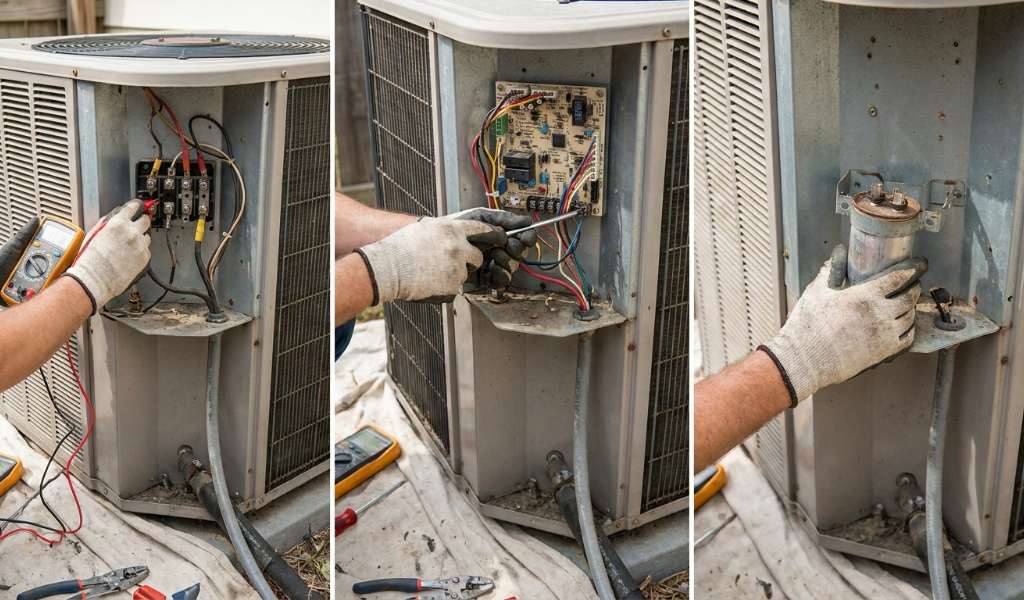
Capacitor Replacement: 150 to 300 Dollars
The capacitor provides starting power for both the compressor and fan motors. It fails more often than almost any other single part. Parts themselves cost only 10 to 50 dollars, with most of the bill covering labor and the service call.
Contactor Replacement: 150 to 350 Dollars
The contactor is an electrical relay that switches power to the compressor. Pitted contacts create resistance over time, eventually causing failure. Parts run 20 to 75 dollars, and replacement typically takes under an hour.
Defrost Control Board: 200 to 600 Dollars
This board manages the automatic defrost cycle during cold weather. Parts cost 50 to 200 dollars depending on your system’s brand. Labor usually adds one to two hours to the total bill.
Fan Motor Replacement: 250 to 700 Dollars
Both the indoor and outdoor units contain dedicated fan motors. Outdoor motors cost 75 to 250 dollars in parts alone. Indoor blower motors run higher, typically 150 to 450 dollars before labor.
Reversing Valve Replacement: 400 to 700 Dollars
This valve switches the system between heating and cooling modes. Replacing it requires refrigerant recovery, brazing work, and a full recharge afterward. Parts run 100 to 300 dollars, with two to four hours of skilled labor involved.
Refrigerant Recharge With Leak Repair: 300 to 1,000 Dollars or More
This range varies the most because leak location affects everything. A simple fitting leak near a service port costs far less to fix. A leak deep inside the coil can push total costs toward 1,500 dollars.
Compressor Replacement: 1,200 to 2,500 Dollars
The compressor remains the single most expensive component in any heat pump. Parts alone range from 400 to 1,500 dollars depending on system size. Labor runs four to six hours once refrigerant recovery and recharge are included.
Thermostat Replacement: 100 to 400 Dollars
A basic thermostat costs 25 to 75 dollars before installation. Smart thermostats compatible with heat pumps run 150 to 300 dollars instead. Installation generally takes 30 to 60 minutes for a technician.
How to Know If a Quote Is Actually Fair
These simple checks help you evaluate any estimate with real confidence. Use them before authorizing significant repair work.
Consider these specific steps when reviewing a repair quote:
- Request an itemized breakdown separating parts cost from labor cost
- Compare parts pricing against published distributor prices online
- Ask for a clear explanation if markup exceeds 30 to 40 percent
- Get a second opinion on any repair quote above 600 dollars
- Confirm the diagnosis names a specific failed component clearly
A vague answer like your system needs cleaning is not a real diagnosis. Insist on a specific component name along with supporting evidence. This standard alone filters out a surprising number of unreliable contractors.
When a High Repair Cost Actually Signals Replacement
Sometimes the smartest financial move is replacing the system rather than repairing it. A widely used industry guideline helps make this call objectively.
Multiply your unit’s age in years by the repair cost in dollars. If that number exceeds 5,000, replacement is usually the stronger choice. A 14-year-old unit facing an 800 dollar repair scores 11,200, clearly favoring replacement.
Several other factors strengthen the case for replacement as well. Systems using older R-22 refrigerant face extremely high recharge costs now. Multiple repairs within the past two years also suggest deeper underlying problems.
Home Warranty Coverage for Heat Pump Repairs
Home warranties vary widely in what they actually cover for HVAC systems. Most plans cover expensive components like compressors, fan motors, and control boards. Most exclude pre-existing conditions and damage from poor maintenance history.
Check your warranty’s specific HVAC coverage before calling an independent technician. Using an out-of-network contractor can sometimes void a covered claim entirely. Warranty-approved contractors are not always the fastest option, though, so weigh that tradeoff carefully.
Tips to Reduce Heat Pump Repair Costs Over Time
Preventive maintenance remains the single most effective cost control available. An annual tune-up costing 75 to 150 dollars catches small problems early. This single habit prevents full system failures that cost far more to fix later.
Ask every contractor about their repair warranty before authorizing work. Quality companies typically guarantee their labor for 30 to 90 days afterward. If the same part fails again within that window, labor costs are covered.
Understanding heat pump repair cost before a problem happens puts you in a stronger negotiating position. You recognize fair pricing immediately rather than guessing under pressure. That knowledge alone often saves hundreds of dollars across a system’s lifetime.
Conclusion
Heat pump repair cost does not have to feel like a mystery every time something breaks. Match your specific symptom to the likely component, then compare that estimate against these real price ranges. Request itemized quotes, question unclear diagnoses, and get a second opinion on anything significant. Use this guide the next time a technician hands you an estimate, and make your decision with genuine confidence.
Frequently Asked Questions
What is the average cost of a heat pump repair?
Most single-component repairs, including the diagnostic fee, run between 200 and 600 dollars total.
Is a second opinion worth the cost on an expensive repair?
Yes, a second diagnostic opinion often costs 75 to 150 dollars and frequently reveals a cheaper solution.
Does homeowner’s insurance cover heat pump repair?
Standard insurance covers sudden accidental damage only, not mechanical failure from normal wear over time.
How can I reduce the chance of expensive repairs?
Annual professional maintenance and monthly filter changes eliminate most avoidable component failures before they start.
What should I do if a quote seems far too high?
Ask for an itemized parts and labor breakdown, then get a competing quote before authorizing any work.