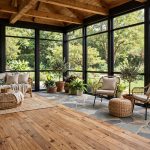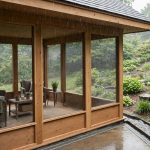
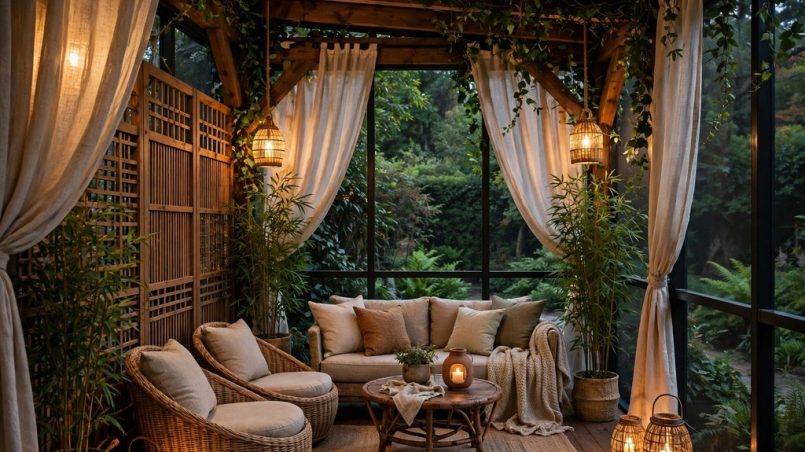
Strong screened porch privacy starts with layered barriers that block direct sightlines. Sheer fabrics, open lattice, and leafy plants filter views while breezes and daylight still pass through. Therefore, you keep the airy retreat you love and lose the exposed feeling. For example, warm natural materials help every layer feel soft and intentional.
Start by checking views from seated eye level, then build protection layer by layer. The best screened in porch ideas solve one exposed side first instead of covering every opening. As a result, the porch stays bright, comfortable, and truly relaxing.
Start With the Sightlines That Matter
First, sit in your usual chair and note every direct view into the porch. Also, check sightlines from the neighbor’s closest window, deck, and driveway. Then, mark only the angles that reach seated eye level clearly.
Meanwhile, standing views matter less because people rarely linger at full height outside. In addition, a high window may need cover while a low fence line needs none. So, targeted fixes protect privacy without wasting light or airflow.
Build Privacy at the Property Line First
First, distance softens every barrier, so planting outside the porch works gently. For example, a loose row of shrubs blurs views before they reach the screens. As a result, the porch itself needs less heavy coverage inside. Layered screened porch privacy keeps breezes moving freely.
Use Tall Planters and Potted Bamboo
Tall planters lift greenery exactly where seated sightlines need blocking most. Also, potted bamboo grows upright and filters light with soft, moving leaves. However, pots keep vigorous roots contained and let you rearrange coverage easily.
- Prime placement: Place planters along the most exposed edge first.
- Leafy fill: Fill gaps with grasses, ferns, or leafy shrubs.
- Simple care: Choose plants that suit your porch light conditions.
In addition, group planters at varied heights for a natural, layered edge. Then, leave small gaps between groups so breezes still slip through easily. Overall, the planting feels like garden scenery rather than a defensive wall.
Add Screened Porch Privacy Panels
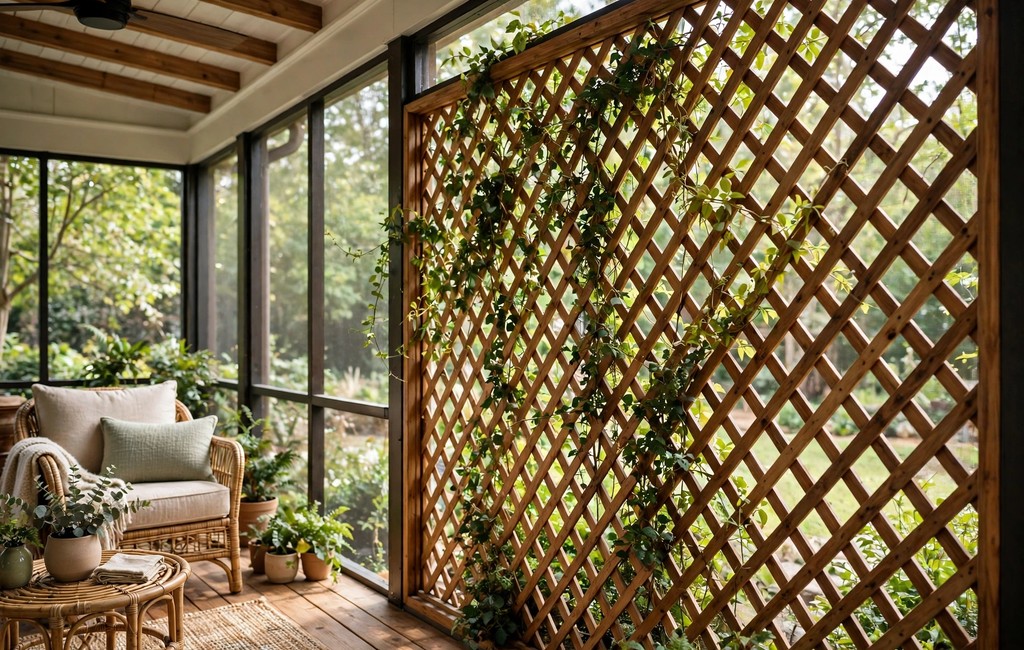
Next, panels handle the one side that planting alone cannot cover fully. For example, lattice and wooden slats block seated views while gaps admit light. Similarly, decorative screens add pattern and shadow without closing the porch completely.
Wooden Panels for Screened Porch Privacy
First, mount panels only across the exposed section beside your main seating. Also, warm wood tones and natural textures keep panels feeling welcoming. However, a full perimeter installation often darkens rooms and traps still air.
- Lattice panels: Lattice breaks sightlines while patterned gaps preserve daylight.
- Wooden slats: Horizontal slats give modern cover with breathable spacing.
- Decorative screens: Freestanding screens move easily when gatherings need flexibility.
In fact, one well placed panel often outperforms three poorly placed panels. Then, test the panel position from your chair before fixing it permanently. As a result, you block the real view and keep other sides open.
Soften the Screen Line With Curtains and Climbers
Pick Sheer or Opaque Outdoor Curtains
Sheer curtains filter harsh views and soften sunlight without darkening the porch. Instead, opaque curtains deliver full cover for changing, napping, or evening gatherings. Therefore, many porches pair sheer panels daily with opaque panels on exposed sides.
Also, curtains slide open in seconds when you want the full view back. For example, tie warm earthy panels aside during morning coffee with neighbors. Meanwhile, drawn curtains still flutter slightly and signal that air keeps moving.
Grow Climbing Plants Along the Screens
Climbing plants weave living privacy directly along the existing screen line. For example, jasmine and clematis climb trellis wires and scatter soft fragrance nearby. In addition, leaves thicken gradually and create dappled shade through warm afternoons.
However, guide stems outward regularly so growth never presses hard against screens. Then, prune lightly to keep airflow paths open between the leafy clusters. Still, even sparse vines break outlines and make seated figures less visible. Good screened porch privacy never seals the room shut.
Turn Furniture Away From Exposure
Finally, furniture placement forms the innermost and most flexible privacy layer. First, angle chairs and sofas away from the closest window or deck. As a result, guests face the garden or house instead of direct onlookers.
Also, a tall planter or storage bench behind seating shields backs discreetly. For example, indoor style cushioned seating feels sheltered inside a low leafy arc. In addition, multifunctional pieces store blankets while quietly blocking lower sightlines.
- Conversation arc: Arrange seats inward so conversation feels intimate and protected.
- Reading corner: Turn one chair toward soft light and away from exposure.
- Dining spot: Place tables deeper inside where panels already soften views.
Layer Light Solutions Instead of One Heavy Wall
Overall, two lighter solutions usually beat one heavy wall on every measure. For example, sheer curtains plus planters block views while preserving moving air. Similarly, lattice plus vines filters light better than solid boards alone.
Consequently, start with the weakest layer that solves your worst sightline. Then, add a second layer only where exposure still feels uncomfortable. As a result, the porch stays bright, breezy, and welcoming all day. Natural screened porch privacy improves as plants grow.
Frequently Asked Questions
How can I make my screened porch more private?
Layer sheer curtains, leafy planters, and one targeted panel along the worst sightline.
What is the best privacy option for a screened porch?
The best option combines two light layers matched to your seated sightlines.
Do outdoor curtains block airflow on a porch?
Sheer outdoor curtains let breezes pass while they soften direct views.
How do I add privacy without making my porch dark?
Choose open lattice, sheer fabric, and leafy plants that filter daylight.
Can plants really make a screened porch private?
Tall potted plants and climbing vines blur sightlines at seated eye level.
Conclusion
Overall, privacy grows strongest when every layer respects light and airflow. Start today by testing your seated sightlines and adding one soft layer. Then, enjoy a cozy retreat that finally feels calm, sheltered, and yours.