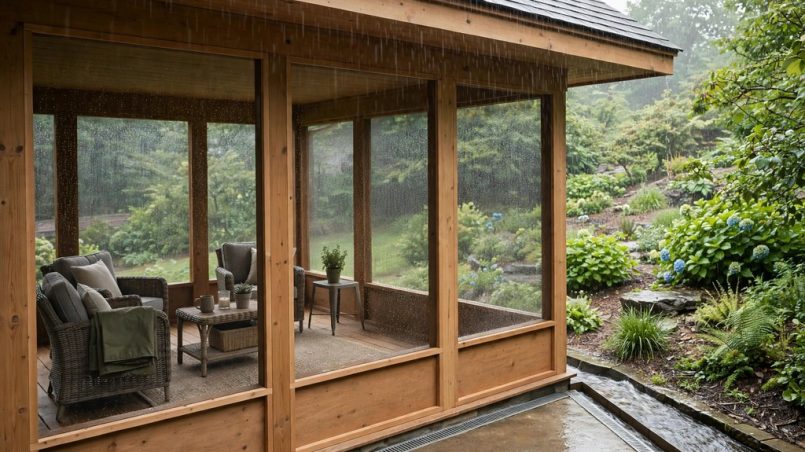
Overall, you keep rain out by blocking wind, shedding roof water, and draining floors. Screens stop insects effectively, yet strong wind still pushes rain through mesh openings. Therefore, practical screened in porch ideas combine weather protection with airflow and comfort.
First, picture one heavy storm arriving sideways late on a summer afternoon. Next, rain strikes the roof edge before it reaches the screen walls. Then, gusts drive spray low across cushions, rugs, and the doorway threshold.
However, you can interrupt every route with simple layered defenses outside and inside. In addition, quick drying habits afterward protect wood, fabric, and framing from damage.
Keep Rain Out From the Roof Downward
First, the storm tests the roof before it tests the screens. Meanwhile, water pours off shingles and gathers along the porch roof edge. As a result, weak overhead control sends water everywhere else below.
A deep roof overhang throws falling rain clear of the walls. In addition, a wider overhang protects screens during straight vertical rainfall. However, angled gusts still defeat overhangs without supporting gutter control below.
Clean gutters catch roof runoff and carry it toward the downspouts. Then, downspouts discharge water well beyond the porch floor edge. Consequently, overflow never sheets down screens or pools beside the foundation.
You also inspect flashing where the porch roof meets the house. However, cracked sealant lets slow drips stain ceilings and walls. Consequently, prompt resealing protects framing through many future storms ahead.
Keep Rain Out at the Screen Walls
Next, the storm turns sideways and attacks the screen walls directly. Fine mesh slows mist, yet it never stops hard driving rain. Therefore, you need a solid barrier ready before dark clouds build. Screens alone cannot keep rain out during storms.
Add Removable Panels or Heavy Curtains
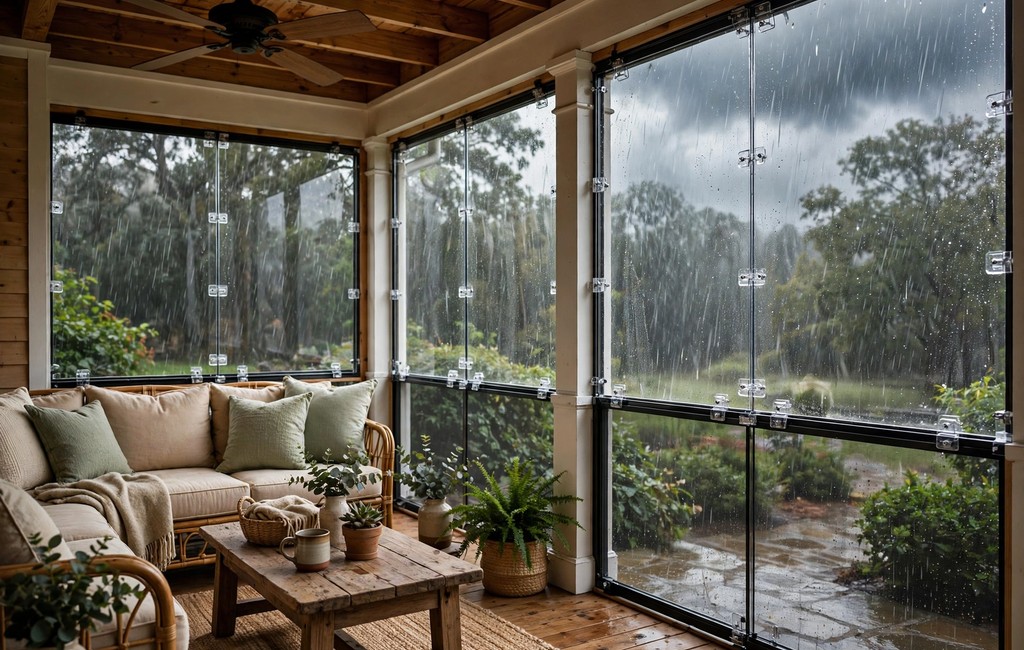
Removable clear panels cover screen openings completely during the hardest downpours. For example, you slide panels shut and keep the view outside. Similarly, heavy curtains block spray while they preserve natural daylight inside.
You secure curtain bottoms firmly so wind cannot lift them. In addition, you open everything again once the storm passes by. Still, you store dry panels neatly beside the porch door.
Shield the Bottom With Solid Kick Panels
Low spray causes trouble because it strikes below the main screens. Solid kick panels guard that zone on the weather facing side. For example, wood panels in warm earthy tones suit natural surroundings.
These panels also stop splashback bouncing upward from wet ground outside. In addition, raised gravel borders soften rainfall impact near the base. As a result, less dirty water reaches lower screens and framing. Deep overhangs keep rain out near the walls.
Guide Rain Out Across the Floor
Meanwhile, rain that enters still needs a clear exit route. A gentle floor slope moves puddles outward instead of inward constantly. Therefore, water never lingers against the house wall or framing.
Drainage channels along the outer edge collect runoff from the floor. Then, the channels carry water outside through small screened outlets. In fact, open board gaps also help shallow water escape underneath.
Keep Rain Out at the Door Threshold
Next, driving rain sneaks through gaps around the porch door. Fresh weatherstripping seals the frame and blocks wind driven spray effectively. In addition, a raised threshold stops shallow water creeping underneath it.
You also check the door sweep for worn or cracked edges. However, even small gaps reopen quickly during repeated seasonal storms outside. Consequently, seasonal inspections keep this entry point reliably dry inside. Removable panels keep rain out on storm days.
Choose Furnishings That Shed Water Fast
Even careful defenses allow some fine mist inside during storms. Therefore, fast drying flooring protects the porch after every soaking. For example, slatted wood and stone look tiles drain very freely.
Outdoor rugs with open weaves release water instead of trapping it. In addition, you hang damp rugs over rails after each storm. Similarly, indoor style cushioned furniture needs quick drying outdoor fabric covers.
- Fast-drying floor surfaces: Choose slatted wood, stone, or textured tile.
- Quick-drying soft furnishings: Pick open weave rugs and outdoor fabric cushions.
- Flexible multifunctional pieces: Move lightweight benches and tables before storms.
You arrange multifunctional layouts so pieces move away from screens. Meanwhile, deep seating near the house wall stays driest overall. Finally, the layout keeps a smooth indoor outdoor transition feeling natural.
Dry Everything After Rain Moves Out
Finally, the rain stops and the drying work begins immediately. Standing moisture invites mold and mildew on wood and fabric. Therefore, you open panels and curtains for strong cross ventilation.
You wipe pooled water from sills, thresholds, and low furniture legs. In addition, a fan speeds evaporation across the damp floor surface. As a result, surfaces dry fully before the next storm arrives.
You also lift cushions and stand them upright for airflow. Next, you check hidden corners behind planters and storage benches carefully. Indeed, early attention prevents musty odors and slow hidden decay. A sloped floor helps keep rain out completely.
Frequently Asked Questions
How do I stop rain blowing into my porch?
Overall, you block sideways rain with removable panels, curtains, and solid kick panels.
Can you keep rain out of a porch during storms?
However, heavy wind driven rain usually brings some fine mist inside.
Why does water pool on my porch floor?
Water pools because the floor lacks slope, drainage channels, or outlets.
How do I prevent mold after rain soaks my porch?
Then, you dry surfaces quickly with open panels, airflow, and a fan.
Do roof overhangs really help keep porches dry?
Indeed, overhangs throw falling rain clear and protect screens below.
Conclusion
Overall, layered defenses keep your porch comfortable through passing storms. You start at the roof, then you seal every lower path. Finally, walk your porch today and fix its weakest entry point.
In addition, small upgrades today prevent costly moisture repairs later on. As a result, every rainy evening becomes relaxing instead of stressful.