
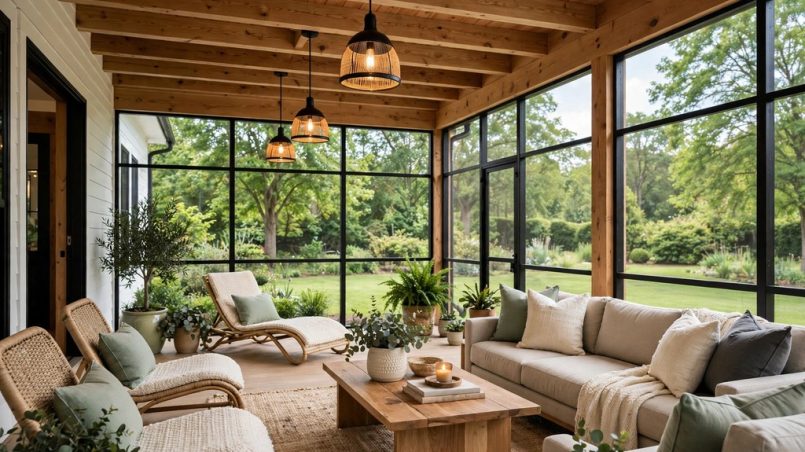
Great screened in porch ideas make outdoor space feel like a real room. It gives you fresh air, shade, and calm views daily. Also, strong modern porch designs now blend comfort with simple, natural style.
This guide walks you through a finished porch, zone by zone. First, you will see how style shapes every later choice. Then, you will explore seating, dining, surfaces, and seasonal comfort. Overall, each step helps you plan a porch you love.
Bring a notebook and picture your own porch while reading. Indeed, small notes now prevent costly changes later on site. Finally, use the linked guides whenever you need deeper detail.
Start With a Style That Suits Your Home
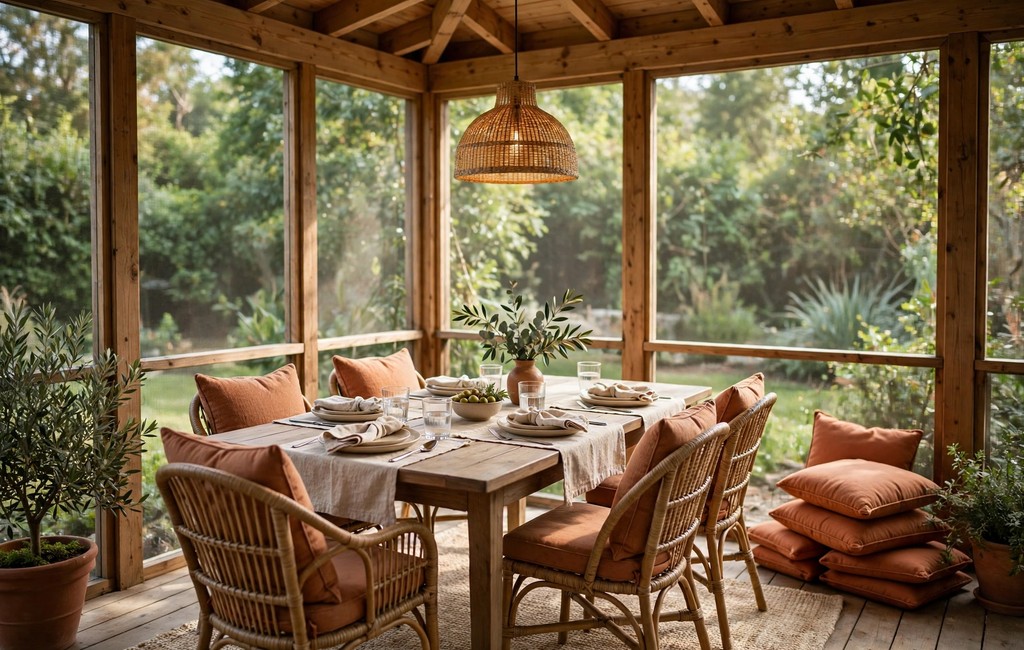
Style gives the whole porch a clear, shared direction. First, look at your house before choosing any furniture. For example, brick, siding, and rooflines all offer useful clues. As a result, the porch feels connected, not added on.
Walk slowly around the front and back of your home. Also, note colors that repeat in trim and stone. Then, carry one or two tones onto the porch. This simple link makes the transition feel calm and natural.
Sleek and Simple Looks
Clean lines and slim frames define this popular direction. Furniture stays low, spare, and comfortable for daily use. Also, neutral cushions keep attention on the garden view. Indeed, less clutter makes even modest porches feel larger.
Choose metal, smooth wood, or woven pieces with simple shapes. Meanwhile, black or charcoal frames sharpen the screen line beautifully. Add one soft rug to warm the hard edges. Still, keep surfaces clear so air moves freely through.
Lighting stays quiet in this style, with simple shapes. For example, a slim pendant suits a dining corner well. Plants add the softness that simple lines sometimes lack. Therefore, group greenery in corners rather than scattering pots everywhere.
Warm Farmhouse Screened Porch Ideas
Farmhouse porches feel welcoming, relaxed, and easy to use. Painted wood, rocking chairs, and woven baskets set the tone. Also, gingham or striped cushions add gentle, familiar pattern. As a result, guests settle in quickly and stay longer.
A long table anchors many farmhouse porches very well. Mismatched chairs around it feel collected rather than staged. In addition, a porch swing invites slow weekend mornings. Finally, lantern style lights complete the warm, lived in mood.
Keep colors soft with cream, sage, and warm wood. However, add one darker accent for depth and contrast. For example, black hinges or handles ground the pale palette. Still, let worn textures show character instead of hiding them.
Rustic Screened Porch Ideas With Natural Charm
Rustic porches lean into timber, stone, and honest texture. Heavy beams overhead make the space feel grounded and sheltered. Also, chunky chairs suit this scale better than delicate pieces. Indeed, natural materials connect the porch to surrounding trees.
Use reclaimed wood for shelves, tables, or simple benches. Meanwhile, a stone accent wall adds strength and permanence. Wool look throws and leather tones deepen the palette. Therefore, evenings feel cozy even when air turns cool.
Keep decor simple so materials speak for themselves clearly. For example, one woven basket holds blankets beside seating. In addition, iron details echo the weight of timber. Overall, this style rewards patience and simple, sturdy choices.
Contemporary Screened Porch Ideas and Comfort
Contemporary porches mix clean lines with softer indoor comfort. Deep sofas and rounded chairs soften the structured frame. Also, warm earthy colors keep the look relaxed, not stark. As a result, the room suits conversation and quiet alike.
Try a modular sofa that shifts with each gathering. Next, add a round table to soften straight lines. Then, layer woven texture through rugs, baskets, and shades. Finally, finish with plants that soften corners and edges.
This blended approach suits many homes very well indeed. However, choose one clear palette before buying anything new. Similarly, repeat metals and woods across zones for cohesion. Otherwise, mixed pieces can feel random rather than intentional. Simple screened in porch ideas like these suit almost any home style.
Plan Zones Around How You Live
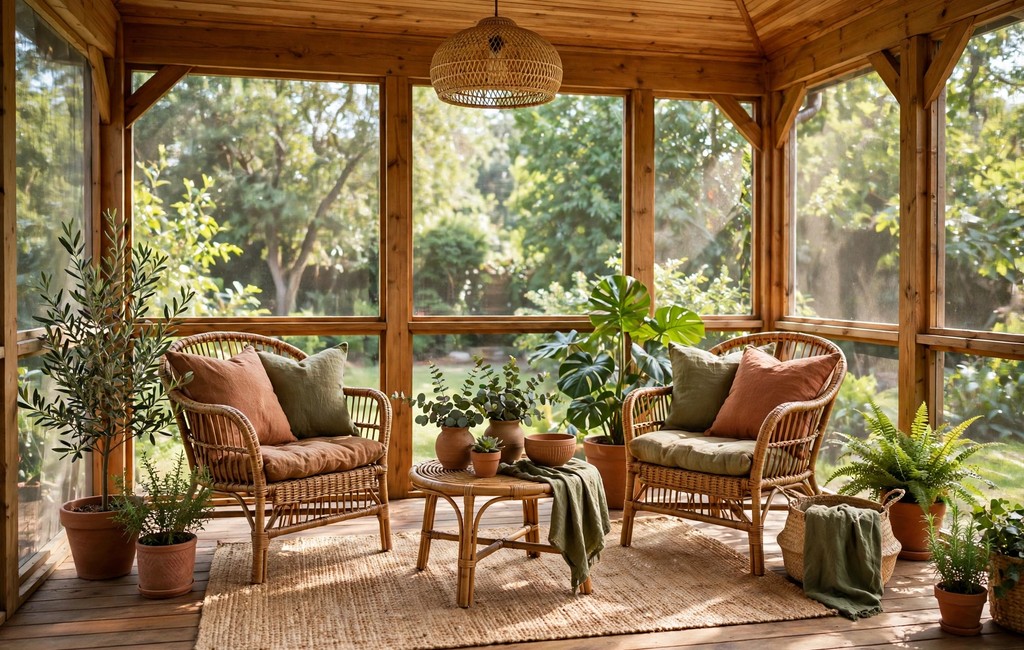
Start the tour right at the door from inside. First, stand there and notice where your eye lands. That first view sets the mood for every visit. Therefore, place something beautiful straight ahead, like leafy plants.
Keep the doorway clear so movement stays easy daily. Also, leave a landing spot for trays and drinks. A narrow console or shelf handles that job neatly. Still, avoid deep furniture that crowds the entry path.
Even compact porches benefit from clear, thoughtful layout planning. For example, space saving porch layouts use built ins and folding pieces wisely. Also, vertical storage keeps floors open in tight spaces. As a result, small porches feel generous, not cramped.
The Main Screened Porch Seating Zone
The seating zone usually sits at the porch center. Arrange chairs and sofas so people face each other. Also, anchor the group with an outdoor rug underneath. Indeed, a rug signals rest and gathers the grouping.
Leave clear paths around the seating group on all sides. Next, place a table within easy reach of every seat. Then, check sightlines toward the garden from each chair. Finally, adjust angles until conversation feels natural and easy.
Thoughtful furniture layout guidance balance comfort, flow, and view together. For example, a sectional suits one corner, not the center. Similarly, two chairs often beat one oversized sofa in flexibility. Overall, test layouts with tape before moving heavy pieces.
Choose indoor style comfort for the main seating pieces. Deep cushions and low arms invite longer, relaxed stays. Also, washable covers keep the zone fresh through seasons. Meanwhile, side tables hold books, drinks, and small lamps.
A Screened Porch Dining Corner
Place dining near the kitchen door whenever possible. Short carrying routes make meals simpler and safer outside. Also, a rectangular table suits narrow porches very well. For example, benches slide underneath and save precious space.
Hang a pendant or lantern centered above the table. Next, choose chairs with cushions for longer evening meals. Then, keep a serving cart or tray table nearby. As a result, hosts relax instead of running inside constantly.
Dining corners also double as work and game spaces. A flat table suits puzzles, laptops, and homework equally. In addition, a washable runner protects the table surface daily. Still, store games in a bench to reduce clutter.
Quiet Corners and Flexible Space
Reserve one corner for reading, napping, or morning coffee. A daybed, swing, or lounge chair anchors that corner. Also, add a small table and a soft throw. Indeed, quiet corners often become favorite spots in time.
Flexible pieces let the porch change with each season. For example, storage ottomans serve as seats or tables. Similarly, folding chairs appear for guests, then disappear neatly. Therefore, choose multifunctional pieces whenever space feels tight anywhere.
Children need a small, clear area for play too. A low mat and basket define their zone simply. Meanwhile, adults keep seating and dining zones comfortably nearby. Overall, clear zones prevent friction during busy family gatherings. Practical screened in porch ideas always respect the home architecture.
Pick Surfaces That Handle the Weather
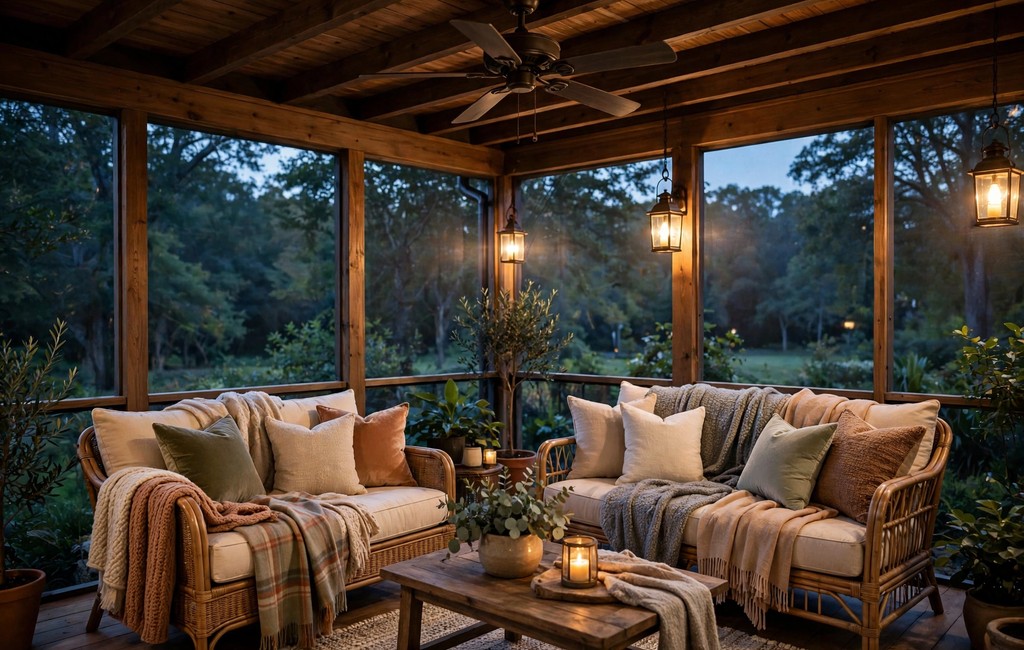
Now look down and consider what sits underfoot daily. Surfaces face tracked dirt, spilled drinks, and shifting weather. Also, they set the color base for everything else. Therefore, choose durability first, then refine color and texture.
Strong flooring options for porches include wood, composite, tile, stone, and concrete options. Each option handles moisture, cleaning, and wear quite differently. For example, composite boards need little upkeep each year. Meanwhile, natural wood offers warmth but needs regular care.
Tile and stone feel cool during hot afternoon hours. However, textured finishes grip better when surfaces get wet. In addition, darker tones hide outdoor dirt more easily. Still, pale surfaces brighten porches that sit in shade.
Think about bare feet before settling any surface choice. Smooth finishes feel kinder during long summer days outside. Next, test samples beside your existing house materials outside. Finally, check how the surface looks at noon and dusk.
- Wood boards: Warmth and natural grain suit traditional and rustic porches beautifully.
- Composite boards: Low upkeep and steady color suit busy households very well.
- Outdoor tile: Cool texture and pattern suit dining corners and sunny porches.
- Stone and concrete: Solid strength and earthy tone suit grounded, natural designs.
Rugs soften hard surfaces and define zones very clearly. Choose flat woven rugs that dry quickly after storms. Also, anchor rug corners so nobody trips during gatherings. As a result, seating zones feel finished and welcoming instantly.
Transitions matter where the porch meets the house threshold. Keep thresholds level so feet and trays move safely. In addition, a mat inside catches dirt before entry. Overall, small surface details quietly improve daily porch life.
Screened Porch Ideas for Shelter and Views
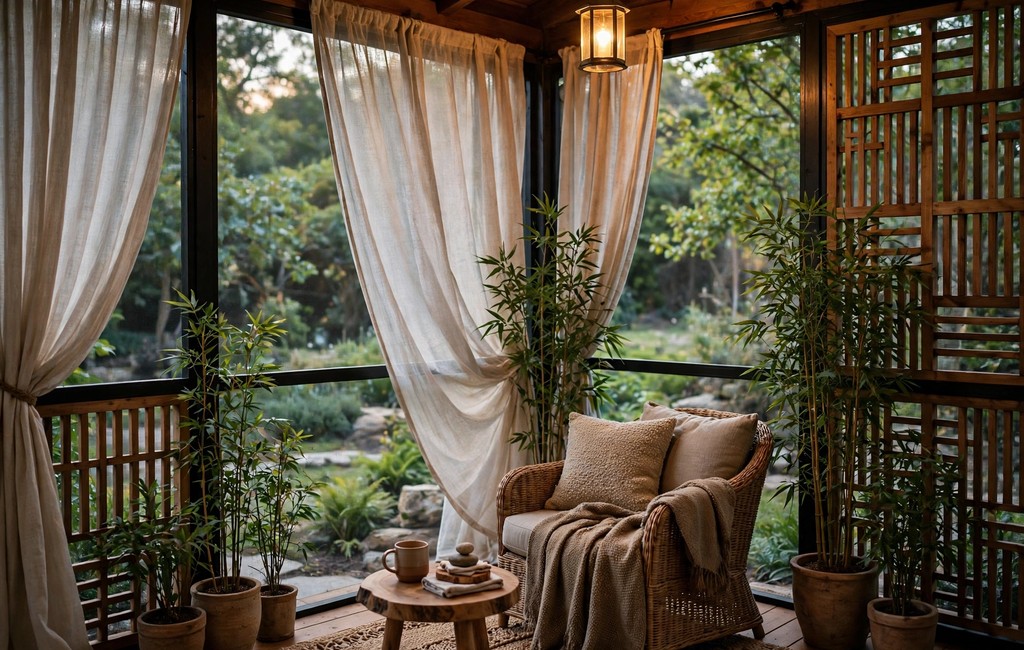
Privacy shapes how relaxed you feel on the porch. First, notice which neighbors and streets overlook your space. Then, soften those sightlines without blocking light or breezes. Indeed, layered solutions work better than one tall barrier.
Smart privacy solutions for porches include curtains, shades, lattice, and tall planters outside. Each option filters views while keeping air moving freely. For example, sheer curtains soften views and diffuse sunlight. Meanwhile, lattice supports climbing plants for natural green cover.
Tall plants in heavy pots frame seating zones beautifully. Also, they move easily when you want change later. Choose leafy plants that thrive in your light conditions. Still, leave gaps so breezes still reach every seat.
Shades roll down during bright or busy afternoon hours. Next, raise them again when the street quiets down. This flexibility suits porches facing close neighbors especially well. Therefore, adjustable options beat fixed barriers for daily comfort.
Sound also affects how private the porch feels daily. Soft cushions, rugs, and plants absorb harsh nearby noise. In addition, a small water feature masks street sounds gently. Overall, calm senses make the porch feel truly sheltered.
Look Up for Space and Shade
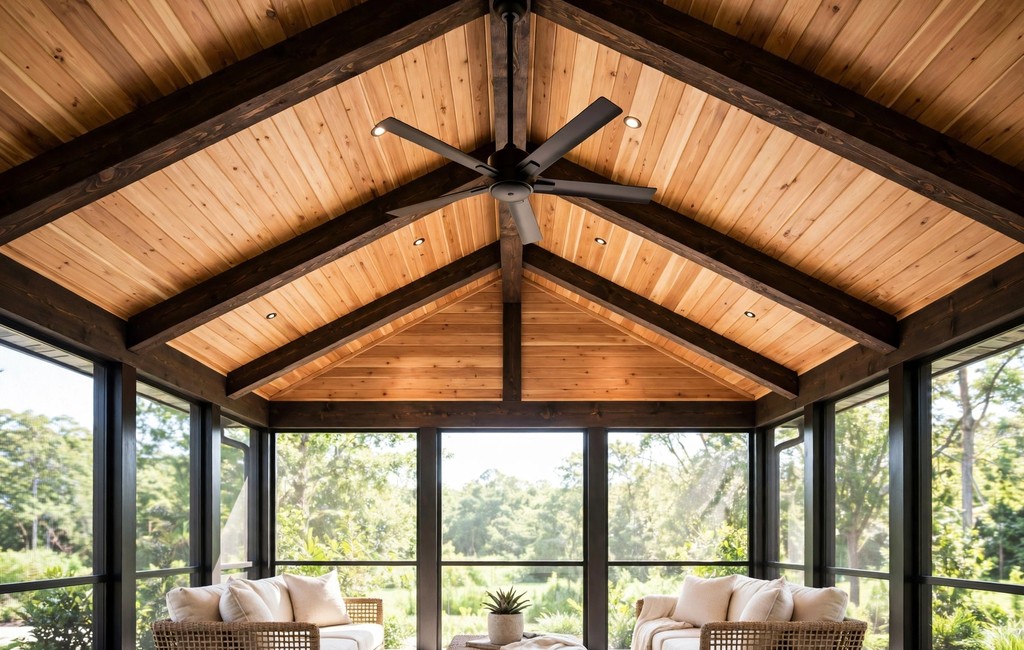
Now raise your eyes toward the overhead plane above. That surface shapes light, height, and mood all day. Also, it protects furniture from sun and passing showers. Therefore, treat it as a design feature, not leftovers.
Inspiring ceiling finishes and colors range from beadboard and shiplap to exposed beams. Painted boards brighten shaded porches and feel classic indoors. For example, pale blue paint offers a soft traditional touch. Meanwhile, warm wood tones deepen rustic and contemporary schemes.
Vaulted shapes make porches feel taller and more open. Exposed rafters add rhythm and shadow overhead as well. However, flat surfaces suit simple, sleek styles much better. Still, add beams or trim when plain surfaces feel empty.
Skylights bring daylight deep into covered porch spaces daily. Place them carefully so glare avoids main seating areas. In addition, vents near the peak release trapped heat. As a result, tall porches stay cooler on still days.
Fans hang from the overhead structure in many porches. Center them above seating, not above dining tables ideally. Next, match blade tones to beams or trim nearby. Finally, keep clearance generous so movement below stays safe. Layered screened in porch ideas keep the space flexible all day.
Layer Color, Texture, and Soft Furnishings
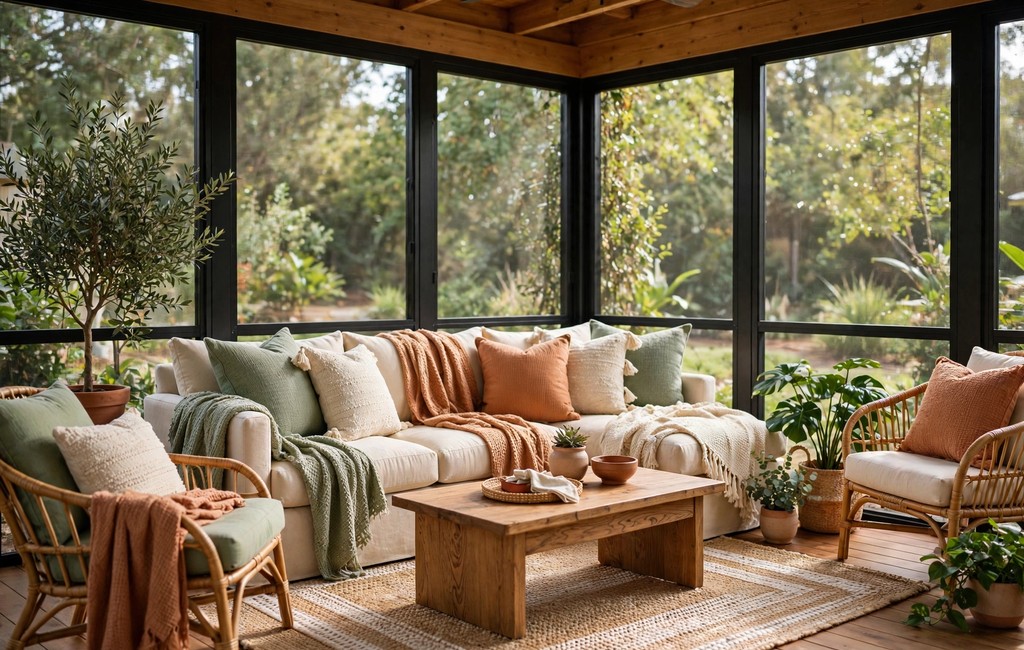
Color ties every zone together into one calm room. Start with warm earthy tones drawn from nature outside. Also, repeat each main color at least three times. Indeed, repetition makes mixed furniture feel intentional and calm.
Terracotta, clay, olive, sand, and warm white work beautifully. For example, clay cushions warm up gray seating instantly. Meanwhile, olive plants and pillows echo the garden beyond. Therefore, let the landscape guide your palette from start.
Natural Materials and Woven Texture
Rattan, wicker, jute, and linen soften structured porch frames. Layer them across seating, rugs, baskets, and window shades. Also, mix smooth and rough textures in each zone. As a result, the porch feels rich without busy patterns.
Wood tones should relate, even when they differ slightly. Next, add stone or ceramic pieces for cool contrast. Then, use metal sparingly for definition and quiet shine. Still, keep one material dominant so schemes stay calm.
Plants remain the easiest texture layer of all time. Group pots in odd numbers for relaxed, natural arrangements. In addition, vary heights with stands, shelves, and hangers. Overall, greenery blurs the line between indoors and outdoors.
Cushions, Rugs, and Throws
Soft layers turn hard outdoor furniture into welcoming seats. Choose cushions with removable, washable covers for easy care. Also, mix two patterns at most within one zone. For example, pair stripes with one botanical print nearby.
Throws invite evening use when temperatures dip slightly lower. Store them in a lidded basket beside the sofa. Meanwhile, indoor style pillows make seating feel truly finished. Finally, shake and air soft layers every week routinely.
Screened Porch Ideas for Comfortable Evenings
Comfort decides whether the porch earns daily use year round. Air movement, warmth, shade, and light all work together. Also, small comfort upgrades often matter more than decor. Therefore, plan comfort early, not after furniture arrives outside.
Practical lighting and fan comfort pair layered light with steady, quiet air movement. Fans cool seated guests without chilling plates or papers. For example, dimmable pendants suit dining after sunset perfectly. Meanwhile, lanterns and sconces soften seating zones very gently.
Layer light at three heights for balanced evening glow. Overhead fixtures handle general tasks and safe movement nightly. Next, table lamps and lanterns add warm middle light. Then, candles or string lights finish the lowest layer.
Choose fixtures rated for damp locations on covered porches. Also, warm bulbs flatter wood, skin, and food alike. In addition, timers reduce nightly fuss for busy households. Still, keep cords tidy and away from walking paths.
Shade matters during bright afternoons on west facing porches. Curtains or shades cut glare while preserving garden views. However, fans alone cannot fix intense direct sun exposure. As a result, combine shade, airflow, and light fabrics together.
Cool evenings call for gentle, portable warmth nearby instead. A throw, warm drink, and sheltered corner often suffice. For example, seat guests away from the windward screen. Overall, comfort layers extend porch hours in every season.
Screened Porch Ideas for Breezes Without Bugs
Screens perform the defining job of this whole room. They block insects while letting air and views pass. Also, frame spacing shapes how open the room feels. Therefore, choose mesh and framing together, not separately ever.
Common screen material comparisons include fiberglass, aluminum, and finer specialty mesh options. Fiberglass stays flexible and suits many standard porch frames. For example, finer mesh blocks tiny insects more effectively outdoors. Meanwhile, stronger mesh resists pets, children, and active use.
Visibility varies between mesh types more than expected initially. Darker mesh usually reduces glare and improves outward views. Next, compare samples from inside during bright daylight hours. Then, check views while seated, not just standing upright.
Tight installation keeps gaps away from corners and doors. Also, sturdy door closers prevent slamming and frame damage. In addition, kick panels protect lower sections from feet. Still, inspect edges each spring for looseness or tears.
Airflow improves when screens cover large, open wall sections. Avoid heavy panels that block cross breezes unnecessarily outside. Similarly, keep furniture low near the screen line itself. Overall, open screens keep the porch feeling truly outdoors. Durable screened in porch ideas reduce upkeep through every season.
Handle Wind, Sun, and Storms
Weather tests every porch, sometimes within one single day. Wind drives moisture sideways through screens during heavy storms. Also, sun fades fabrics and heats surfaces over time. Therefore, plan protection before the first storm arrives unexpectedly.
Learning about rain protection methods starts with gutters, slopes, and removable panels. Clear gutters move water away from the porch roofline. For example, a slight floor slope guides splashes outward safely. Meanwhile, removable panels guard furniture during long wet spells.
Move cushions inside when forecasts promise prolonged wet weather. Next, raise rugs so air circulates beneath them fully. Then, wipe standing water from sills and thresholds quickly. As a result, mildew and musty smells stay away longer.
Secure loose items before strong winds arrive each season. Lightweight chairs and decor topple quickly in sudden gusts. In addition, store small objects in lidded storage benches. Finally, check the roofline after storms for drips early.
Sun protection preserves colors and keeps seating usable daily. Rotate cushions so fading spreads evenly across each piece. However, shade panels offer stronger help on exposed sides. Still, hardy fabrics handle bright porches far better overall. Thoughtful screened in porch ideas connect indoor comfort with outdoor air.
Shift the Mood Through the Seasons
Seasonal changes keep the porch feeling fresh and loved. Small swaps refresh the room without buying new furniture. Also, nature outside already changes the backdrop each month. Therefore, echo outdoor shifts with simple indoor style touches.
Spring calls for washed covers, fresh plants, and light layers. Clean screens and sweep corners before placing soft furnishings. For example, pale cushions and fresh herbs welcome spring. Meanwhile, a light rug brightens the whole seating zone.
Summer favors shade, airflow, and easy care fabrics daily. Add extra drinks storage and washable throws for guests. Next, keep a basket ready for games and books. As a result, long evenings unfold without repeated trips inside.
Autumn brings warmer tones, heavier throws, and candlelight earlier. Swap bright cushions for clay, rust, and deep olive. In addition, pumpkins or branches add simple seasonal texture. Still, keep walkways clear as evenings darken much earlier.
Cooler months suit a smaller, sheltered arrangement of furniture. Group seating away from the windward side for warmth. Then, store delicate items and cover sturdy pieces well. Finally, enjoy quiet views whenever mild days return briefly.
Refresh the Space Yourself
Simple projects refresh a tired porch without full renovation. Paint, textiles, and rearranged furniture deliver the fastest change. Also, small repairs restore pride in the space quickly. Indeed, one weekend often transforms the whole porch mood.
Start with a deep clean from top to bottom. Wash screens gently, sweep corners, and scrub the floor. Next, tighten loose screws on doors and railings nearby. Then, patch small mesh tears before they grow larger.
Paint offers dramatic change for modest effort each time. For example, paint the door a warm contrasting color. Similarly, refresh trim before tackling larger wall surfaces outside. As a result, the porch looks cared for and current.
Rearrange furniture before buying anything new for the space. Swap the dining and reading corners for fresh perspective. Meanwhile, borrow indoor plants or lamps for one evening. Overall, testing ideas first prevents wasteful purchases later on.
- Paint one accent: A door or bench in warm clay adds instant character.
- Swap textiles seasonally: Fresh covers and throws change mood without replacing furniture pieces.
- Add one living layer: A tall plant or herb pot softens corners very quickly.
- Upgrade one light: A warmer lantern or pendant lifts evenings almost immediately afterward.
Build simple shelves or benches from sturdy outdoor wood. Storage benches hide cushions, games, and gardening tools neatly. Also, hooks near the door hold hats and leashes. Finally, label storage so family members maintain systems easily. Small screened in porch ideas can still transform a modest entry porch.
Care Routines That Keep Mesh Tight
Regular care protects screens, surfaces, and furniture for years. Gentle routines prevent small issues becoming expensive repairs later. Also, a tidy porch invites use every single day. Therefore, schedule brief checks at each season change routinely.
Brush screens gently with a soft brush and water. Avoid pressure that stretches or tears the mesh surface. Next, rinse lightly and let panels dry fully afterward. Then, inspect frames while everything stands clean and visible.
Check for tears, rust spots, and loose staples carefully. Small patches handle minor tears quickly and neatly outside. In addition, tighten door hardware before slamming causes damage. Still, replace damaged sections promptly to keep insects outside.
Wipe surfaces and wash covers according to care labels. Shake rugs outdoors and dry them fully after washing. Meanwhile, oil or seal wood surfaces when makers advise. As a result, materials age gracefully instead of failing early.
Store cushions during long wet or freezing periods ahead. Ventilated storage prevents trapped moisture and musty smells indoors. Finally, note repairs needed before the next busy season. Overall, steady care keeps the porch ready for guests.
Connect the Porch to the House
A porch feels best when it echoes the house. Repeat one indoor color on cushions or trim outside. Also, match hardware tones with nearby interior rooms closely. As a result, moving outside feels natural, not jarring.
Keep the doorway view open and welcoming every day. Hang nothing heavy that blocks light from inside rooms. Next, place low plants beside, not before, the door. Still, add a mat and hook for daily convenience.
Windows beside the porch deserve thoughtful treatment as well. Avoid tall furniture that blocks their light and view. In addition, sheer porch curtains soften glare into them. Therefore, both spaces gain light instead of losing it.
Floor tones should relate across the threshold as well. For example, warm indoor wood pairs with warm decking. Meanwhile, cool tile inside suits stone or concrete outside. Overall, related tones make the home feel larger together.
Repeat one beloved indoor habit on the porch daily. Morning coffee, evening reading, or family games all count. Finally, design around that habit before decorating anything else. Indeed, habits, not objects, make rooms feel truly lived in.
Read the Light Before You Buy
Light changes everything on a porch throughout the day. Visit the space at morning, noon, and evening first. Also, note where shadows fall during each visit carefully. Therefore, place seating where light feels kind, not harsh.
North facing porches often enjoy soft, even daylight hours. South and west facing spaces need stronger shade planning. For example, curtains help greatly during low evening sun. Meanwhile, pale surfaces bounce light into darker corners gently.
Glare off pale floors can tire eyes very quickly. Choose matte finishes where strong sun enters the porch. Next, test cushion colors under actual porch light conditions. Still, warm bulbs at night balance bright daytime schemes.
Plants reveal the light pattern honestly over several weeks. Move pots toward brighter edges when leaves stretch thin. In addition, rotate plants so growth stays even overall. As a result, greenery thrives instead of merely surviving outside.
Host Gatherings Without the Fuss
Good porches make hosting feel easy for everyone involved. Set zones once, then let guests find their places. Also, keep drinks and snacks within each main zone. Indeed, relaxed hosts enjoy their own gatherings far more.
Create a simple serving station near the dining corner. A tray, ice bucket, and towel handle most needs. Next, leave counter or shelf space for shared dishes. Then, keep spare napkins in a lidded box nearby.
Seating counts change, so keep flexible extras ready nearby. Floor cushions and folding stools welcome unexpected guests warmly. For example, a bench seats two without extra chairs. Similarly, ottomans shift from footrests to seats very quickly.
Children and adults enjoy gatherings more with clear zones. Give children one corner, one basket, and clear boundaries. Meanwhile, adults keep conversation seating away from play paths. Finally, end evenings with one simple tidy up routine.
Music and scent add atmosphere without visual clutter anywhere. Keep volume low so conversation stays easy and clear. Also, herbs in pots offer gentle, natural fragrance outside. Overall, subtle touches make gatherings memorable without extra effort.
Style Small Details With Intention
Small details finish the porch like punctuation finishes sentences. Books, trays, and baskets give zones purpose and warmth. Also, one focal object per zone prevents visual clutter. Therefore, edit details ruthlessly and keep only loved pieces.
Trays gather small items into calm, tidy groupings anywhere. Place candles, plants, and coasters together on one tray. Next, leave breathing room around each grouping you create. Still, surfaces need empty space to feel truly calm.
Art belongs on the sheltered house wall of porches. Choose pieces that tolerate humidity and shifting temperatures well. For example, woven wall pieces suit natural schemes beautifully. In addition, mirrors bounce garden views into darker corners.
Books and games signal real use, not staged perfection. Stack two or three beside the reading chair neatly. Meanwhile, store the rest inside a bench or basket. Finally, rotate small details seasonally to keep interest fresh.
Personal touches make the porch feel unmistakably yours always. Display one travel souvenir or handmade piece with pride. Also, frame a garden photograph for the sheltered wall. Indeed, meaningful objects spark conversation better than bought sets.
Step back weekly and remove one unnecessary item outside. This quiet habit keeps every zone calm and breathable. Next, notice which corners guests choose most often naturally. Overall, those observations guide your smartest future porch changes.
Frequently Asked Questions
How do you decorate a screened in porch?
Layer comfortable seating, warm textiles, natural materials, and soft lighting together.
What is the best layout for a screened porch?
Place seating centrally, dining near the kitchen, and quiet corners aside.
How do you keep a screened porch comfortable?
Combine steady airflow, layered shade, soft seating, and warm evening light.
What furniture works best on a screened porch?
Choose deep, washable, multifunctional pieces sized carefully for your porch layout.
How do you maintain screens on a porch?
Brush mesh gently, inspect frames seasonally, and patch small tears promptly.
Wrap Up Your Porch Plan With Confidence
You now hold a complete route through the porch. Style came first, then zones, surfaces, and comfort followed. Also, care routines protect every choice you make outside. Indeed, a planned porch rewards you every single day.
Start with one zone and finish it fully first. Next, live with it before changing the next area. Then, add layers slowly as seasons and needs change. As a result, the porch grows naturally with your family.
Choose your style today and sketch your zones tonight. Then explore three season comfort tips for longer seasonal enjoyment. Finally, take the first small step this weekend confidently.