The most attractive screened porch ceiling combines smooth surfaces, warm texture, and thoughtful color. Beadboard, tongue-and-groove wood, and exposed beams each add beauty and character. Together, therefore, these layers turn plain rafters into a finished, comfortable focal point.
Start, however, by picturing a flat ceiling with bare, unfinished rafters overhead. Then imagine adding surface, beams, color, and fixtures one layer at a time. Finally, that simple tour reveals which combination suits your porch best.
Also, a good ceiling balances looks with moisture resistance and everyday comfort. Indeed, the right finish protects the surface while supporting a relaxed, indoor-style atmosphere.
Start by Looking Up at Bare Rafters
First, broad screened in porch ideas begin overhead, where the ceiling sets tone. However, bare rafters alone leave wiring, framing, and rough edges fully visible. As a result, the porch often feels unfinished despite comfortable furniture below.
Still, that rough starting point also shows every opportunity clearly. For example, gaps between rafters reveal where panels, beams, and lights fit. Next, you can judge height, slope, and daylight before choosing materials.
A Flat Screened Porch Ceiling Stays Clean
Flat ceilings, meanwhile, keep lines simple and suit porches with lower rooflines. They also create a calm background for woven textures and warm earthy colors. However, a flat field needs pattern or beams to avoid feeling plain.
Add the First Layer With Surface Materials
Surface materials cover the rafters first and establish the ceiling character. In addition, they hide minor framing flaws and create one continuous plane. Therefore, choose the surface before selecting beam size or paint color.
Beadboard for a Screened Porch Ceiling
Beadboard uses narrow grooves and small rounded beads between boards. This pattern, in fact, adds gentle shadow lines without overwhelming the porch. Also, its repeated rhythm suits cottage comfort and relaxed indoor-style furniture below.
Painted beadboard looks crisp, bright, and neatly tailored overhead. Stained beadboard, instead, shows wood grain and feels warmer and more rustic. Similarly, both finishes pair beautifully with natural fibers and multifunctional layouts below.
Tongue-and-Groove Screened Porch Ceiling Planks
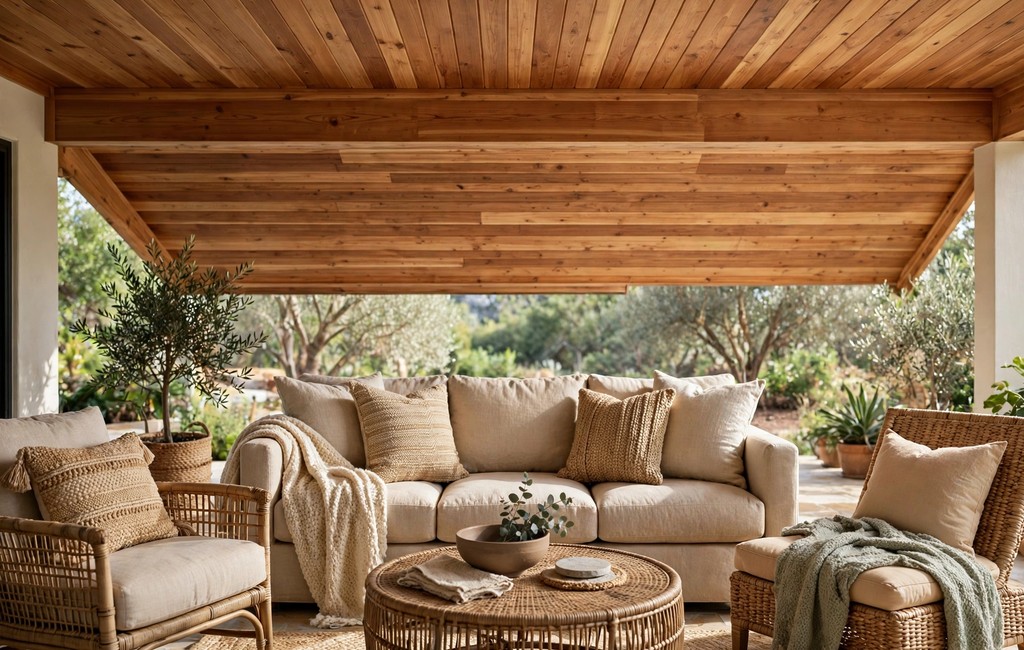
Tongue-and-groove planks lock together and form a smooth, continuous wood surface. Cedar planks, for example, bring warm color, visible grain, and natural character. Meanwhile, wider planks feel calmer, while narrower planks create more visual movement.
Homeowners often stain these planks to highlight knots and grain patterns. Others, however, paint them lightly to keep the texture but soften contrast. Overall, this surface suits porches that blur indoor and outdoor living.
Add Structure With Beams and Shape
Next, beams and ceiling shape add architecture overhead after the surface. In addition, these choices guide sight lines toward seating, dining, and views. Still, scale matters because oversized details can overwhelm a modest porch.
Exposed Beams Create Contrast and Rhythm
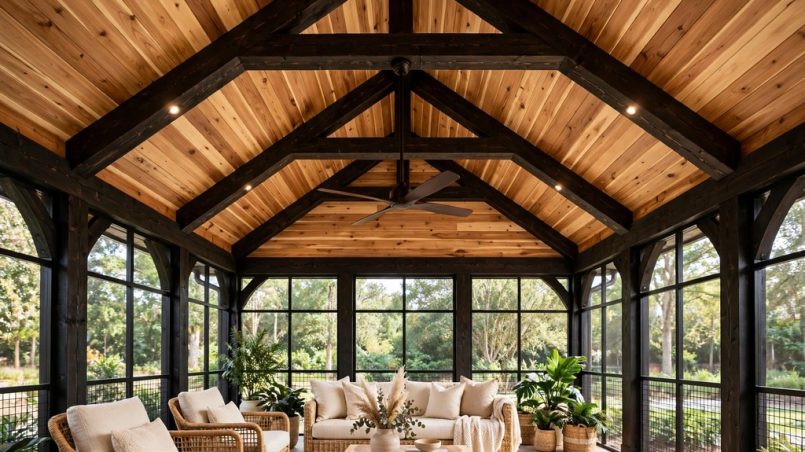
Exposed beams cross the ceiling field and create strong horizontal rhythm. Dark beams, for example, contrast beautifully against a lighter painted field. As a result, the ceiling gains depth without needing extra decoration.
Homeowners can leave structural beams visible during construction. Instead, decorative beams can cover a finished ceiling for similar effect. Either approach, therefore, works best when beams align with posts below.
A Vaulted Screened Porch Ceiling Opens Space
Vaulted ceilings follow the roof slope and open the porch vertically. They also improve spaciousness and let warm air rise above seating. However, vaulting needs enough roof height to feel graceful, not cramped.
Flat ceilings, instead, feel intimate and suit quiet reading corners below. Similarly, flat designs simplify fixture mounting and surface repairs. Therefore, choose shape from roof structure, porch size, and desired mood.
Add the Next Layer With Color and Finish
Color changes the ceiling mood more quickly than any other layer. Light colors, for example, reflect daylight and make low ceilings feel higher. Warm finishes, meanwhile, deepen coziness and soften bright midday glare.
White Paint Brightens the Whole Porch
White paint brightens beadboard grooves and plank seams beautifully. It also suits clean trim, light screens, and airy summer furniture. However, warmer whites usually feel friendlier than stark, cool whites outdoors.
Pale Blue Carries a Beloved Tradition
Pale blue porch ceilings carry a beloved Southern painting tradition. Folklore, in fact, says the color mimics sky or water overhead. Tradition also links the shade to warding off restless spirits.
Some stories, instead, claim the color discourages insects from nesting overhead. Still, homeowners should treat that claim as folklore, not proven science. Indeed, many people choose pale blue simply because it feels serene.
Warm Stains Deepen Comfort and Coziness
Warm wood stains deepen cedar grain and create a cozy glow. They also pair naturally with earthy cushions, woven shades, and wood furniture. Consequently, stained ceilings suit porches designed for lingering evening conversations.
Finish the Ceiling With Fixtures
Finally, fixtures turn a beautiful ceiling into a truly useful one. Fans move air, while lights extend comfortable hours after sunset. Therefore, plan mounting points before covering rafters and running finishes.
Fans Keep Air Moving Overhead
A centered ceiling fan anchors seating and cools the main gathering zone. On vaulted ceilings, however, a downrod positions the fan at effective height. Also, fan finishes should echo beam hardware, furniture tones, or lighting.
Lights Extend the Porch Into Evening
Recessed lights spread even glow across beadboard or plank surfaces. Pendant lights, meanwhile, hang from beams and define dining zones below. In addition, dimmable lighting supports reading, games, dining, and quiet relaxation.
Choose Finishes That Handle Outdoor Air
Outdoor air brings humidity, pollen, and shifting temperatures to every surface. Moisture-resistant finishes, therefore, protect wood and painted panels from everyday exposure. As a result, sealed edges and covered rafters stay cleaner and fresher.
Next, match each finish choice to the material beneath it. Also, inspect the ceiling seasonally and refresh worn areas promptly.
- Sealed wood: Choose moisture-resistant stain or paint for cedar planks overhead.
- Protected beadboard: Apply exterior-grade primer and finish on every groove and edge.
- Covered rafters: Install panels or planks to hide framing and wiring completely.
- Layered fixtures: Combine a central fan with softer lights around the perimeter.
Overall, durable finishes preserve the layered look you built step by step. They also simplify cleaning because smooth sealed surfaces release dust easily.
Frequently Asked Questions
What is the best ceiling material for a screened porch?
Beadboard and tongue-and-groove wood both work beautifully because they cover rafters and add texture.
Why do people paint porch ceilings blue?
People follow the pale blue tradition for its serene look and folklore about spirits.
Should a screened porch ceiling be flat or vaulted?
Choose vaulted ceilings for spaciousness or flat ceilings for intimacy and simpler mounting.
Can you cover exposed rafters on a porch ceiling?
Yes, panels or planks cover exposed rafters and create a cleaner, more finished ceiling.
What ceiling color makes a screened porch feel brighter?
White paint reflects daylight best, while pale blue adds soft, sky-like brightness overhead.
Bring Your Ceiling Together
Overall, the best ceiling combines surface, beams, color, and fixtures thoughtfully. Start, therefore, by covering bare rafters and choosing one surface material today. Then sketch your beams, color, fan, and lighting before requesting quotes.