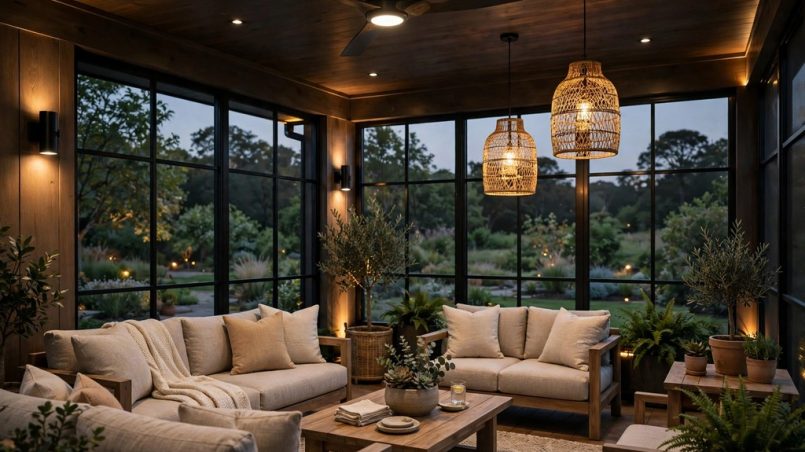
A porch lighting fan setup pairs a correctly sized ceiling fan with layered lighting. First, the fan moves air directly over seating and dining zones. Also, separate light layers handle visibility, dining focus, and evening mood.
Therefore, one porch can feel cool at noon and welcoming after dark. For example, rattan shades, warm wood, and soft cushions suit this layered approach. Still, every fixture needs a damp rating or wet rating outdoors.
In addition, dimmers let each layer shift with changing daylight outside. Meanwhile, steady airflow also helps discourage mosquitoes around occupied seating areas.
Overall, planning by time of day keeps choices simple and practical. Indeed, homeowners match fan speed and light level to each moment.
Planning Porch Lighting and Airflow Around the Day
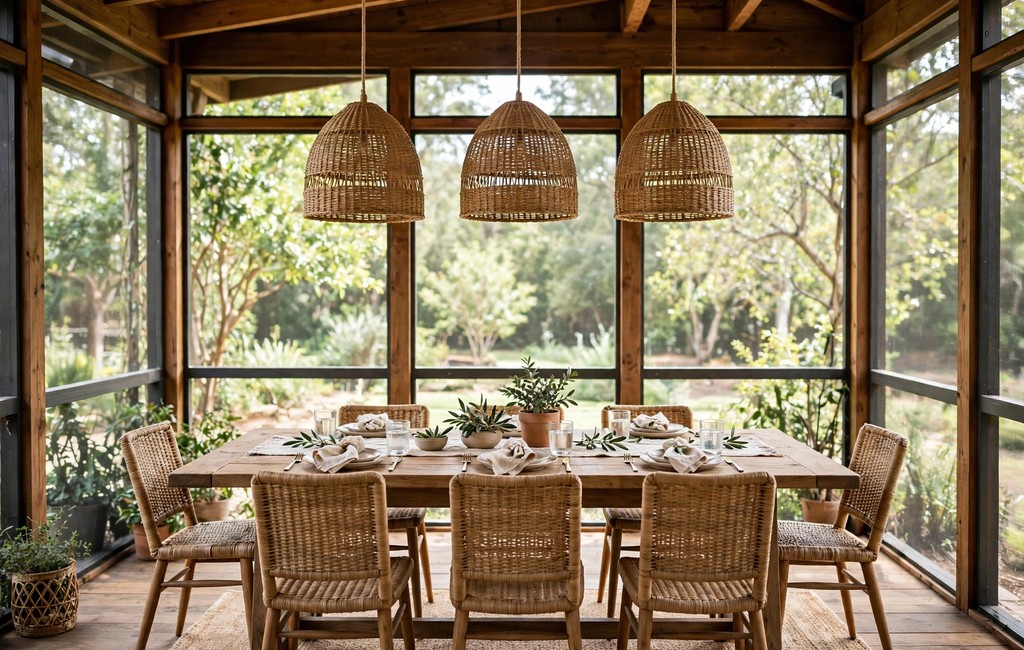
Start with strong screened in porch ideas and then map seating, dining, and doors. Next, assign one fan and several light layers to those zones. However, treat new wiring as professional work from the beginning.
First, list how the porch works at noon, dinner, and late evening. Also, note ceiling height, screen exposure, and existing fixture locations carefully. As a result, the porch transitions smoothly between indoor comfort and outdoors.
- Main seating zone: Center the fan above chairs where people linger longest
- Dining zone: Hang pendants above the table for focused meal lighting
- Entry zone: Place sconces beside doors for safe steps and arrivals
- Perimeter zone: Add recessed lights for an even general wash everywhere
- Mood zone: Use string lights sparingly for soft accent glow only
At Hot Noon, a Porch Fan Cools Seating
At noon, direct sun and still air make screens feel enclosing. Therefore, run the fan above the main seating zone first. Then, choose a blade span matching the seating area size.
For example, small seating groups need one modest fan centered overhead. In addition, long porches may need two smaller fans spaced evenly. Similarly, wide seating areas need a larger span for coverage. A smart porch lighting fan plan layers both systems together.
Choosing Ratings for Humid Porch Air
First, choose damp-rated fans and fixtures for covered screened porches. However, choose wet-rated models where wind drives rain through screens. As a result, motors and finishes handle porch humidity more reliably.
Also, place the fan where blades clear beams, lights, and doors. Still, keep seating directly below the airflow path for best effect. Indeed, centered placement prevents dead corners along screened edges outside.
Using Downrods on Vaulted Ceilings
Vaulted ceilings lift fans too high above people below them. Therefore, a downrod lowers the fan into effective airflow range. Next, match downrod length to ceiling slope and height carefully.
For example, steep slopes need longer downrods and angled mounts. Meanwhile, stable mounting keeps blades level and reduces distracting wobble. Overall, correct height lets air reach cushions without striking heads.
At Golden Hour, Layered Light Shapes Dinner
Golden hour softens daylight and gathers people around the table. First, warm pendants focus light on food and faces. Also, indoor-style chairs and natural wood keep dinner feeling relaxed.
However, one overhead fixture alone leaves corners and steps dim. Instead, layered lighting assigns each source a clear job. Consequently, the porch stays flexible from cooking through conversation time.
Porch Lighting Layers That Work Together
First, hang pendants directly over the dining table for focus. Next, mount wall sconces beside doors and near porch steps. Then, spread recessed lights across the ceiling for general wash.
For example, pendants define dinner while sconces guide safe entry. In addition, recessed lights fill shadows behind seating and serving areas. Similarly, each layer supports multifunctional layouts without crowding the ceiling. Balanced porch lighting fan choices prevent glare and heat.
Warm Bulb Tones and Dimmers Prevent Glare
Warm bulb tones flatter skin, food, and earthy porch colors. Therefore, choose warm tones consistently across pendants, sconces, and recessed lights. Also, add dimmers so each layer adjusts independently at dinner.
However, bright bare bulbs can bounce glare off screens at night. Instead, use shaded fixtures and aim light downward or toward walls. As a result, diners see faces clearly without harsh reflections nearby.
In the Quiet Evening, Accent Light Slows the Pace
Later, dinner clears and the porch becomes a quiet retreat. First, dim pendants and recessed lights to low background levels. Then, switch string lights or accent lights on for mood.
For example, woven textures and linen cushions glow softly under accents. Meanwhile, a gentle fan speed keeps air moving without noise. Still, mosquitoes struggle in moving air around the seating zone.
Also, moving air disperses scents that help mosquitoes find people. Consequently, the fan supports comfort beyond simple cooling on still nights. Overall, low light and steady breeze extend reading and conversation. Every porch lighting fan layout starts above the seating.
Wiring, Safety, and Professional Help
Homeowners can choose fixtures, bulbs, dimmers, and fan speeds themselves. However, adding new wiring requires help from a licensed electrician. Similarly, new circuits and new fixture boxes require licensed professional work.
First, an electrician checks ceiling support and safe outdoor ratings. Next, an electrician confirms controls suit damp porch conditions safely. As a result, planning choices stay attractive without creating electrical risks. Thoughtful porch lighting fan placement improves evening comfort.
Frequently Asked Questions
What size ceiling fan does a screened porch need?
Also, homeowners match blade span to the main seating area size.
Do ceiling fans keep mosquitoes away from a porch?
Indeed, moving air makes landing difficult for weak-flying mosquitoes.
Can homeowners install a fan on a vaulted ceiling?
Indeed, a downrod brings fans into effective range on vaulted ceilings.
What lighting works best for a screened porch at night?
Overall, layered warm lighting from pendants, sconces, and recessed fixtures works best.
When does porch lighting need a licensed electrician?
Therefore, homeowners hire a licensed electrician for new wiring and circuits.
Conclusion
Overall, the best porch pairs purposeful airflow with flexible layered lighting. First, size the fan for seating and rate every fixture outdoors. Then, tune warm light and fan speed through each daypart.
Start today by mapping your seating, dining, and entry zones carefully. Next, shortlist damp-rated fixtures and book an electrician for wiring. Finally, test the porch at noon, dinner, and late evening.