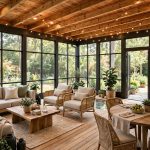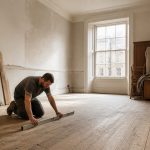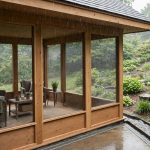
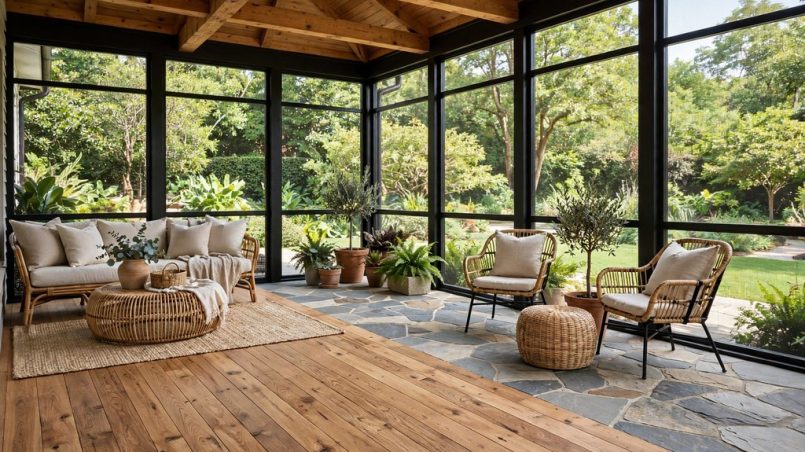
The best screened porch flooring handles blown rain and humidity without rotting or warping. For example, porcelain tile and composite decking resist moisture with very little upkeep. However, warm wood, textured stone, or finished concrete may fit better.
First, screens stop insects but never stop damp air. Also, heat and cold keep moving through the space. Therefore, every candidate must tolerate repeated wetting and drying. Indeed, comfort and appearance matter only after durability holds.
Next, compare each material against the same conditions. Then, consider ventilation, drainage, grip, and comfort underfoot. Finally, add an outdoor rug for softness and warmth.
How to Choose Flooring for a Screened Porch
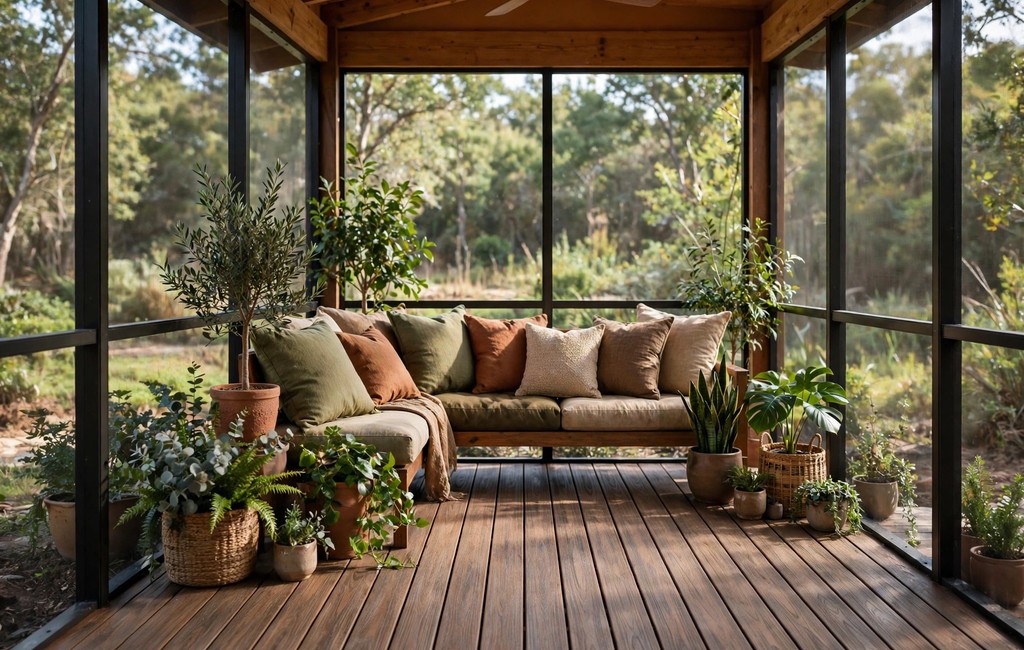
Start your shortlist with broad screened in porch ideas before narrowing materials down. However, your porch exposure should outrank any favorite finish. For example, wind-driven rain changes what works best.
First, check whether rain reaches the floor edges. Also, note how temperature shifts between morning and evening. Then, test samples barefoot during warm and cool hours.
The Conditions That Decide Performance
Meanwhile, moisture remains the main threat beneath every surface. Indeed, trapped dampness can encourage mold, odor, and decay. Therefore, materials must dry quickly or resist absorbing water.
Similarly, temperature swings make materials expand and contract repeatedly. As a result, rigid surfaces may crack without proper support. Still, flexible board systems usually tolerate movement more easily.
Five Flooring Materials Compared Head to Head
Wood Boards as Porch Flooring
Wood boards bring natural grain and warm color underfoot. For example, stained boards pair beautifully with comfortable indoor-style furniture. However, wood absorbs moisture and needs regular sealing attention.
Also, boards feel resilient and pleasant during barefoot use. Yet, wet wood can become slippery without textured finishes. Finally, expect sanding, staining, and board replacement over time.
Composite Screened Porch Flooring
Composite decking mimics wood grain without using solid timber. In addition, its blended construction resists rot, insects, and splintering. Therefore, busy households often favor its predictable everyday performance.
Meanwhile, composite boards need only washing and occasional inspection. However, dark boards can feel hot in strong sunlight. Still, textured surfaces improve grip when rain blows inward.
Porcelain Tile Porch Flooring
Porcelain tile offers dense, low absorption performance outdoors. Indeed, proper outdoor rated tile tolerates freezing and thawing well. For example, wood look planks create smooth indoor outdoor transitions.
Also, tile feels cool and firm beneath bare feet. However, smooth tile becomes hazardous when wet and dusty. Therefore, choose matte textured finishes and keep grout maintained.
Natural Stone Porch Flooring
Natural stone delivers varied texture, pattern, and earthy color. Similarly, each piece looks unique beside woven seating and wood. In fact, stone suits porches designed as calm outdoor rooms.
Meanwhile, stone stays durable but feels hard and cool. Also, porous stone needs sealing against moisture and staining. Yet, rough natural textures can provide useful grip when wet.
Concrete Porch Flooring Finishes
Concrete creates a solid base for many decorative finishes. For example, staining adds warm color without adding thickness. In addition, stamping imitates stone, brick, or wood patterns. Also, painting refreshes plain slabs with coordinated porch colors.
However, concrete feels hardest and coldest beneath bare feet. Still, sealed concrete resists moisture and cleans very easily. Therefore, rugs and cushioned furniture often improve its comfort.
Slip Resistance and Comfort Underfoot
Grip When the Floor Gets Wet
First, imagine entering with wet shoes after summer rain. Then, remember children and guests move quickly across porches. Consequently, surface texture matters as much as material strength.
For example, grooved boards and matte tile grip feet better. Also, grout lines and stone texture add small grip points. Otherwise, glossy finishes can turn damp patches into hazards.
Warmth, Softness, and Everyday Feel
Meanwhile, wood and composite usually feel warmer than masonry. Indeed, tile, stone, and concrete store coolness during mornings. Therefore, multifunctional layouts need softer zones for reading and relaxing.
What Lies Beneath the Porch Floor
Ventilation and Drainage
First, inspect the structure before judging any surface material. Also, airflow beneath raised floors helps damp materials dry. In addition, open gaps between boards support that drying.
Next, ground level slabs need drainage away from walls. However, standing water weakens grout, paint, and surface sealers. Therefore, fix slopes and blocked drainage before installing finishes.
Similarly, tile and stone need stable support beneath them. In fact, movement below can crack rigid materials above. Consequently, heavy surfaces suit strong slabs or reinforced framing.
Outdoor Rugs as a Softening Layer
Outdoor rugs soften any base without replacing it permanently. For example, woven rugs warm concrete and cushion tile beautifully. Also, rugs define seating, dining, and quiet reading zones.
However, rugs must dry quickly after rain blows inside. Then, lift rugs periodically and clean the floor beneath. Finally, choose low pile textures that resist trapping moisture.
Choose by Your Top Priority
Overall, no material wins every category for every porch. Instead, match the floor to your clearest daily priority. Then, use this framework before making the final decision.
- Looks first: Choose wood, stone, or wood look tile. Also, carry warm earthy colors into furniture and textiles.
- Upkeep first: Choose composite decking or sealed concrete for simplicity. Then, wash surfaces regularly and inspect edges after storms.
- Durability first: Choose porcelain tile, stone, or well finished concrete. However, confirm strong support and textured wet grip first.
Similarly, mixed priorities can still produce a balanced choice. For example, composite plus rugs balances upkeep and comfort. Indeed, the base handles weather while textiles add softness.
Frequently Asked Questions
What is the most durable flooring for a screened porch?
Overall, porcelain tile and well finished concrete offer exceptional durability.
Can you put tile over a wood porch floor?
However, tile needs a stable, reinforced base above wood framing.
Is composite decking slippery when wet?
Still, textured composite boards provide grip when surfaces stay drained.
How do you stop moisture problems under a porch floor?
Therefore, keep ventilation open and direct drainage away from walls.
Can outdoor rugs stay on a screened porch floor?
Also, outdoor rugs can stay outside when they dry quickly.
Conclusion
Overall, judge flooring by exposure before judging its appearance. Then, shortlist two materials and compare samples at home. Finally, request detailed installation advice and start your porch upgrade.