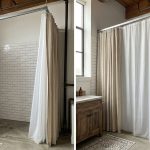
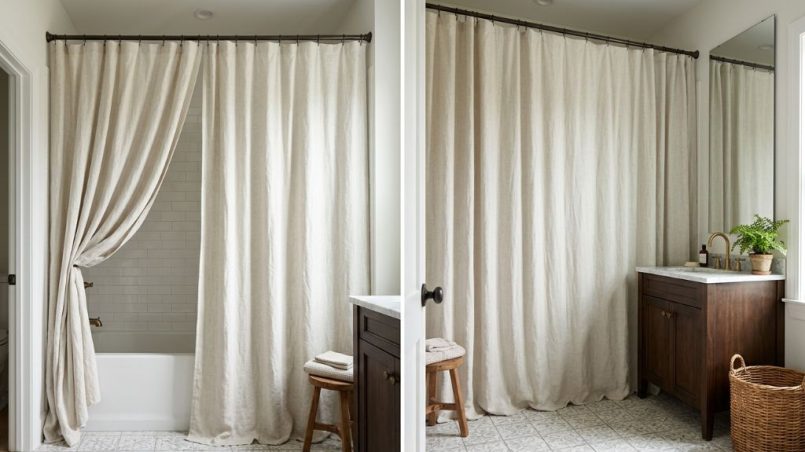
Yes, longer shower curtains often look better because they strengthen vertical lines and create a tailored finish. However, extra length only succeeds when the hem stays clean, controlled, and clear of standing water. Poorly scaled fabric can crowd the room and complicate daily cleaning. Rod placement also changes how the eye reads the tub and surrounding wall.
A thoughtful bathroom design connects curtain length with ceiling height, fabric weight, and available floor space. Therefore, judge visual proportion before chasing a dramatic floor-to-ceiling effect. The best result feels intentional from the doorway and practical during every shower. Meanwhile, the liner should control water without disturbing the decorative panel.
4 Situations Where Longer Looks Better
High Ceilings
High ceilings can feel disconnected when a short curtain stops the eye too early. Instead, a longer panel carries one vertical line from rod toward floor. That line connects the shower with the room’s full architectural height. Generous, even folds make the installation look deliberate rather than merely oversized.
Spa-Like Minimalism
Minimal rooms gain warmth when fabric softens tile, glass, and metal. Likewise, a long curtain creates a calm surface that hides products and tub hardware. Choose restrained colors and controlled fullness, so the panel reads like tailored drapery. Otherwise, heavy gathers can undermine the clean, spa-like mood.
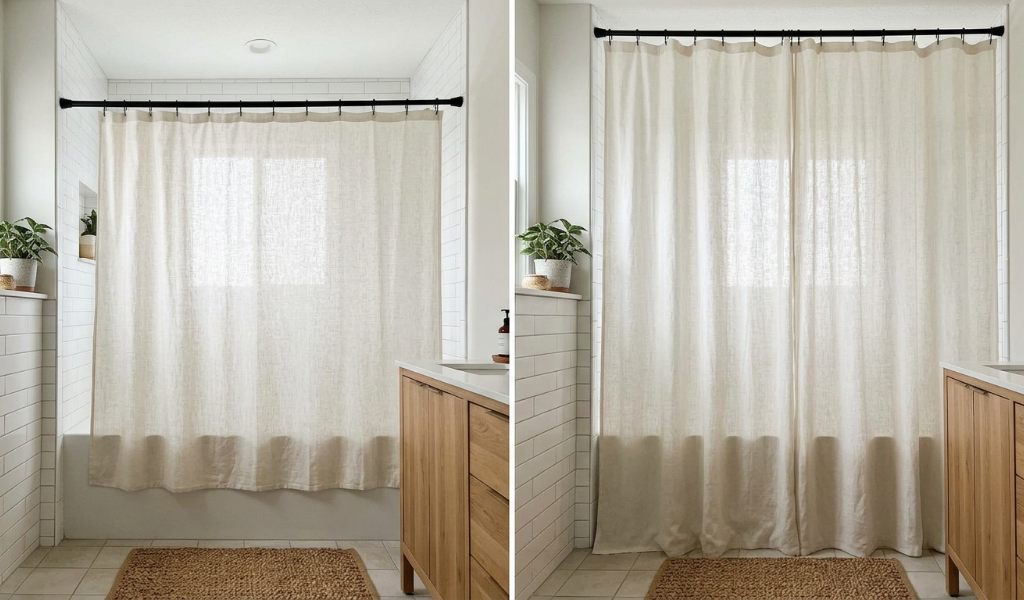
Concealing a Dated Tub
A deeper drop can conceal a dated tub apron without requiring renovation. For example, continuous fabric shifts attention toward texture, color, and vertical proportion. Keep the hem crisp, because uneven edges expose the disguise immediately. Also, place the liner inside the tub while the decorative panel stays outside.
Dramatic Fabric Moments
Bold patterns need enough vertical space for repeats to develop clearly. Moreover, longer panels give stripes, botanicals, and saturated solids greater visual authority. Match the pattern scale to the room, so decoration never overwhelms fixtures. Consequently, dramatic fabric can feel architectural instead of merely ornamental.
3 Situations Where It Backfires
Small Bathrooms
Long curtains can enlarge a small bathroom when color and fullness support visual continuity. However, dark fabric and bulky gathers may turn the panel into a looming wall. Select lighter tones, quiet patterns, and modest folds around narrow walking routes. Then, keep the curtain open whenever the shower remains unused.
Damp or Poorly Ventilated Spaces
Floor contact slows drying and lets the hem collect dust, soap, and splashes. Therefore, poorly ventilated bathrooms need visible hem clearance and reliable airflow. Run the exhaust fan, spread the panel fully, and dry any wet edge promptly. Otherwise, curtain pooling can trade short-lived drama for persistent odor and staining.
Bathrooms Used by Children or Pets
Children and pets turn loose fabric into a moving obstacle during busy routines. Additionally, pooled hems collect bathwater, hair, toys, and cleaning residue. Choose a controlled drop that clears feet, paws, and rolling bathroom aids. Practical looks often remain attractive longer because daily use never disrupts their shape.
The Three Hem Positions, Ranked
1. Hem Kissing the Floor: Best Tailored Look
A floor-kissing hem gives the strongest tailored impression when the floor stays level and dry. Specifically, the fabric should visually meet the surface without folding across it. This position preserves height while limiting moisture contact and tripping risks. Still, measure carefully because slight errors become obvious along a crisp edge.
2. A 1–2-Inch Gap: Safest Classic
A 1–2-inch gap offers the safest balance between elegance and everyday maintenance. Before buying, compare standard curtain dimensions with your rod height and intended hook drop. That small opening improves airflow and gives cleaning tools easier access. Accordingly, this hem suits compact, shared, and frequently used bathrooms.
3. Puddling: Beautiful but Demanding
Puddling creates a romantic, editorial silhouette through deliberate excess fabric. Yet pooled material traps splashes, gathers dust, and complicates floor cleaning. Reserve this finish for low-traffic rooms with excellent ventilation and washable textiles. Even there, arrange the folds after cleaning so the effect stays intentional.
Getting the Look Without the Problems
Set the Drop Before Adjusting Hardware
Start by choosing the final hem position before adjusting the rod. Next, account for rings, hooks, header depth, and any fabric shrinkage. Use a level, because a sloping rod makes every lower edge look careless. Finally, test the drop with temporary placement before drilling or hemming.
Choose Fabric That Holds Its Shape
Medium-weight woven fabric usually creates clean folds without adding excessive bulk. Meanwhile, a weighted hem helps the panel resist billowing and maintain vertical lines. Very stiff textiles may flare outward, while thin materials can collapse between hooks. Therefore, examine the hanging silhouette from across the room before making alterations.
Let the Liner Manage Water
Separate beauty from water control by treating the curtain and liner as different tools. Place the waterproof liner inside the tub, and keep the decorative fabric outside. Double hooks simplify removal, while magnets can stabilize the liner against certain tub surfaces. However, confirm compatibility before relying on magnets or specialized hardware.
Protect the Lower Edge
After every shower, spread both layers so moisture can escape from the folds. Also, run the exhaust fan and wipe any water touching the decorative hem. Follow the fabric’s care label, especially when custom pleats or trim require special treatment. Regular attention protects the long silhouette and reduces stains near the floor.
Use a Three-Point Decision Check
Before finalizing the design, compare appearance with everyday demands. Then, use this three-point check to avoid expensive alterations:
- Scale: View the curtain from the doorway and check whether it improves ceiling height.
- Clearance: Confirm that the hem avoids water, feet, paws, and cleaning tools.
- Care: Choose fabric, fullness, and hardware that match your realistic maintenance routine.
Frequently Asked Questions
Should a Shower Curtain Touch the Floor?
No, most curtains look tailored with slight clearance while avoiding dirt, moisture, and tripping hazards.
What Curtain Length Makes a Small Bathroom Look Bigger?
Hanging a long, lightly colored curtain high can emphasize ceiling height without crowding limited space.
How High Should You Hang a Shower Curtain?
Hang it high enough for strong vertical proportion while preserving safe hem clearance below.
Can You Use Regular Curtains Around a Shower?
Yes, but pair suitable fabric with a waterproof liner and moisture-resistant hardware.
Does Curtain Pooling Create a Luxury Look?
Puddling can look luxurious, yet it demands excellent ventilation, careful styling, and frequent floor cleaning.
Choose Length for Your Space, Not the Showroom
The best long curtain strengthens room proportions without demanding constant correction. Therefore, choose the hem after evaluating traffic, ventilation, floor level, and fabric behavior. A beautiful installation should support daily routines as confidently as it frames the room.
Now, mock up the hem with clips and inspect it from the doorway. Before ordering fabric, review our shower curtain lengths guide and confirm your preferred drop. Then, choose the option that looks composed, dries quickly, and remains easy to clean.