
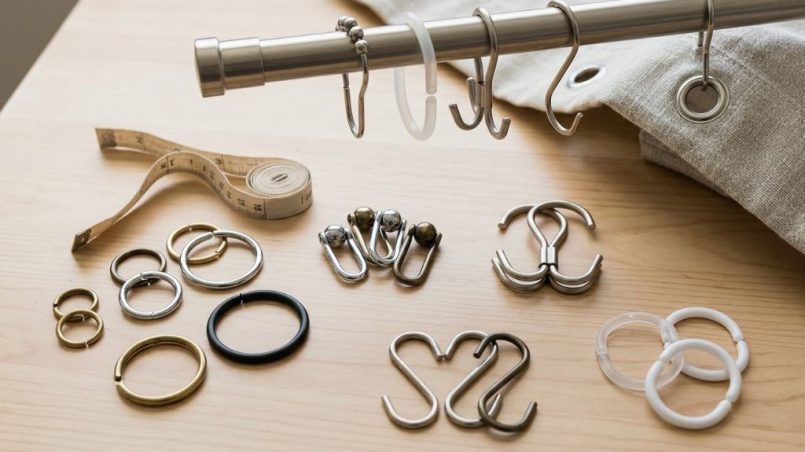
The best shower curtain hooks fit the rod, glide smoothly, resist humidity, and support every curtain opening. Choose roller rings for easier movement, double hooks for layered setups, or closed rings for everyday security.
Small hardware can change curtain height, liner alignment, and daily handling. Therefore, check rod clearance, grommet fit, material, and hook drop before choosing a finish. Most full-width curtains use 12 reinforced openings, so count yours before ordering.
Also, consider cleaning access because intricate designs collect residue faster. A balanced choice protects the curtain while keeping the bathroom visually coherent. The following checks turn a decorative purchase into dependable working hardware.
Hook and Ring Types
Each hook type favors a different mix of security, glide performance, and cleaning convenience. Consequently, choose the mechanism before comparing colors or decorative shapes.
Standard Rings
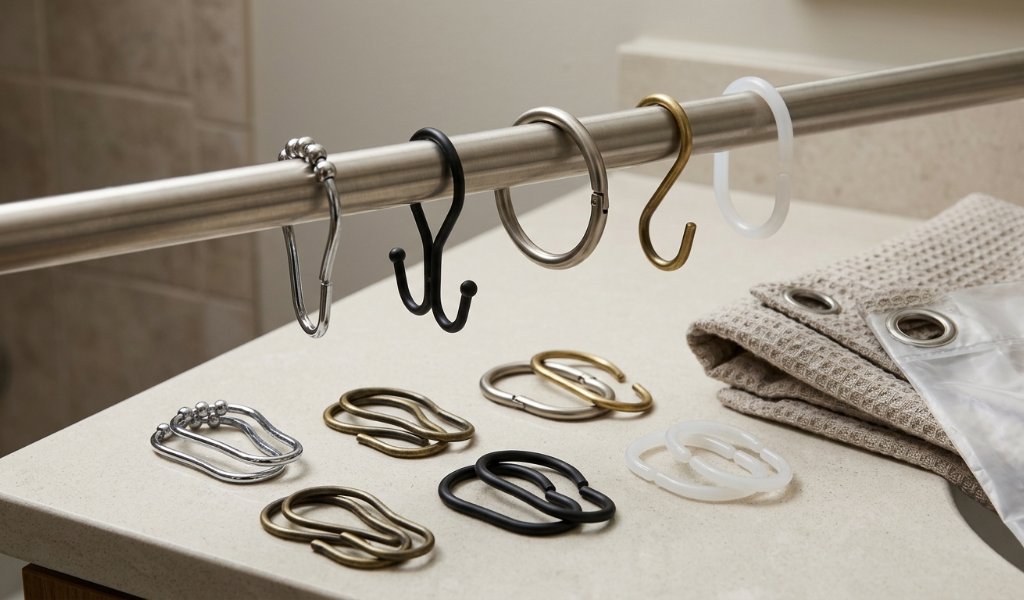
Closed or clasp-style rings surround the rod and resist accidental release. Therefore, they suit busy bathrooms and energetic daily use. However, some clasps require opening each ring before laundering either layer.
Roller Rings
Roller rings place small beads between the hardware and rod. As a result, they reduce friction across straight sections, curves, and minor joints. Check every roller because one frozen bead can disrupt the entire glide.
S-Hooks
S-hooks install quickly because their open shape needs no clasp. Moreover, they simplify frequent curtain washing in guest rooms or rentals. However, upward tugs can release lightweight curtains from shallow openings.
Double Hooks
Double hooks carry the decorative curtain and liner on separate arms. Therefore, you can remove either layer without disturbing the other. Load both sides consistently, since uneven weight can tilt hardware and restrict movement.
Decorative hooks add visual emphasis, but bulky shapes often collect soap film. Therefore, inspect rear surfaces and attachment edges before prioritizing ornament. Smooth profiles usually clean faster and snag less fabric.
Meanwhile, C-shaped rings offer quick threading with fewer sharp turns. Their open side speeds removal, although shallow curves may release under upward pressure. Choose deeper curves when security matters more than speed.
| Hook type | Best use | Main trade-off |
| Closed rings | Secure daily hanging | Slower layer removal |
| Roller rings | Easy gliding | Rollers need cleaning |
| S-hooks | Fast curtain changes | Open ends may release |
| Double hooks | Curtain plus liner | Needs balanced loading |
How Hooks Affect Finished Length
The curtain starts below the rod because each hook adds vertical drop. Typically, that gap measures roughly 1 to 2 inches from rod to attachment point. However, deep loops lower the curtain more than compact rings do.
For accurate placement, attach one hook before setting the rod height. Next, measure from the hook’s curtain attachment point to the planned hem. This method captures the usable drop instead of guessing from the rod’s top.
Also, check both layers because liners and fabric curtains may use different top treatments. Keep the liner inside the tub while preventing fabric from brushing wet surfaces. Therefore, test the lowest hanging layer before final installation.
A shorter hook can recover clearance without moving an already mounted rod. Conversely, a deeper hook can lower a curtain slightly. However, hardware cannot correct a major sizing mistake, so measure first.
Sizing and Compatibility
Hook sizing requires two separate checks: rod clearance and curtain attachment fit. First, measure the rod at its thickest section, including joints or decorative sleeves. Then compare that measurement with the ring’s inside opening.
Allow enough clearance for smooth travel without creating a loose, oversized appearance. Our guide to matching hook size to your rod explains that related measurement in greater detail. Meanwhile, test movement across every connector and curved section.
Next, inspect each grommet or sewn buttonhole before buying hardware. Rounded lower loops usually enter metal grommets easily, while broad hooks can strain narrow buttonholes. Therefore, match the attachment shape as carefully as the rod opening.
Most full-width curtains use 12 openings, and common sets provide 12 pieces. Still, count the curtain holes before ordering because custom panels may differ. Support every reinforced opening to distribute weight and prevent stretched headers.
Finally, consider the combined weight of the curtain and wet liner. Sturdy hooks should hold both layers without bending or twisting. However, use double hooks when separate removal matters more than compactness.
Rod joints often reveal fit problems that straight sections hide. Therefore, slide one sample hook across the entire rod before hanging every piece. Return undersized hardware if it catches despite a clean surface.
Materials and Finishes
Metal versus plastic affects strength, noise, maintenance, and visual weight. Stainless steel offers dependable rust resistance and supports heavier fabrics confidently. Nevertheless, moisture and residue can still dull polished or plated surfaces.
Plastic rings run quietly and avoid scratching delicate rod finishes. Also, plastic cannot rust, which simplifies care in humid bathrooms. Thin plastic may eventually crack, stretch, or distort under a heavy curtain.
Plated metal can coordinate with faucets, rods, and cabinet hardware. However, coating quality matters because chips expose the underlying metal. Inspect welds, clasp edges, and roller pins before installation.
Rust resistance never replaces routine cleaning for metal hardware. Soap film and hard-water residue trap moisture against small joints. Therefore, wipe hooks with mild soap, rinse them, and dry them completely.
Choose smooth surfaces over elaborate projections when easy care matters. Likewise, rounded edges protect fabric from snags during daily movement. A neutral finish can recede, while decorative hardware creates a deliberate accent.
Humidity affects small moving parts before broad surfaces show damage. Consequently, check clasps and roller pins during routine bathroom cleaning. Early residue removal protects motion and keeps discoloration away from fabric.
Noise can also guide the material choice. Plastic usually moves quietly, while metal may click against the rod. Therefore, light sleepers may prefer quiet rings near adjoining bedrooms.
Installation and Spacing Tips
A careful installation prevents bunching and spreads weight across the curtain header. Use this sequence:
- Lay both layers flat, then inspect every reinforced opening for damage.
- Count the openings and confirm that the set contains one hook for each.
- Attach hooks from one edge toward the other without skipping or doubling openings.
- Place the liner inside and the decorative curtain outside when using double hooks.
- Face every hook consistently, then spread the assembly evenly across the rod.
- Slide the curtain fully open and closed while watching joints, curves, and snag points.
Afterward, correct any reversed hook, twisted liner, or missed opening. These small errors concentrate stress and make the curtain bunch. Additionally, straighten both layers before judging the final hem.
If movement feels rough, remove residue before replacing the hardware. Then inspect roller action, ring clearance, and rough seams separately. This quick diagnosis prevents an unnecessary purchase and identifies the real friction point.
Keep one or two matching spares only when the set allows easy replacement. However, never add a hook where the curtain lacks reinforcement. Extra punctures weaken the header and rarely improve spacing.
During weekly cleaning, open the curtain fully so trapped folds can dry. Also, separate overlapping layers around each hook. Better airflow reduces residue and exposes developing damage sooner.
Frequently Asked Questions
How Many Hooks Does a Shower Curtain Need?
Most full-width curtains use 12 reinforced openings, so they usually need 12 hooks.
What Size Hooks Fit a Standard Shower Rod?
Measure the rod’s widest point, then choose an opening that clears every joint comfortably.
Do Metal Shower Curtain Hooks Rust?
Some metals can corrode, so choose stainless steel or quality plating and clean residue regularly.
Do Roller Rings Glide Better Than Plain Rings?
Roller rings often reduce friction, although clean rods and proper clearance influence glide performance.
Can One Hook Hold a Curtain and Liner?
Yes, sturdy rings can hold both, while double hooks separate the layers for easier removal.
Choose for Fit First, Then Finish
The right shower curtain hooks clear the rod, fit every opening, and support both layers. Afterward, use our shower curtain lengths guide to confirm the total drop and hem position. Finally, compare finishes only among options that pass those functional checks.
Install every hook consistently, test the full glide, and inspect the hanging line. Then correct any tilt before taking the first shower. Choose your hardware now using measurements, not packaging claims alone.