
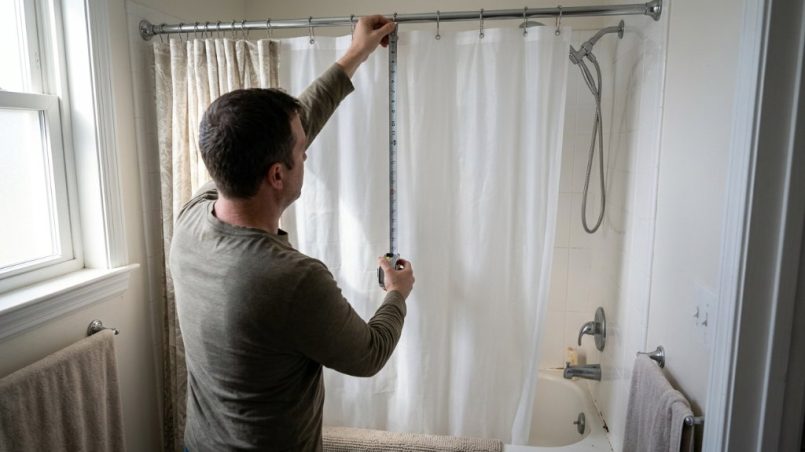
Most tub-and-shower combinations need a standard 72 × 72-inch liner. Narrow stalls usually suit 54 × 78 inches. Meanwhile, tall installations may require 72 × 84 or 72 × 96 inches.
However, measurements should decide the final size because rods, hooks, and shower bases vary. This guide complements our broader shower curtain lengths resource with liner-specific fit advice. First, measure the opening and hanging drop before comparing the chart. Then choose enough coverage without letting the lower edge drag.
Because package names vary, trust printed dimensions instead of labels like standard or long. Accordingly, verify both measurements before choosing any liner material.
Standard Shower Curtain Liner Sizes: The Chart
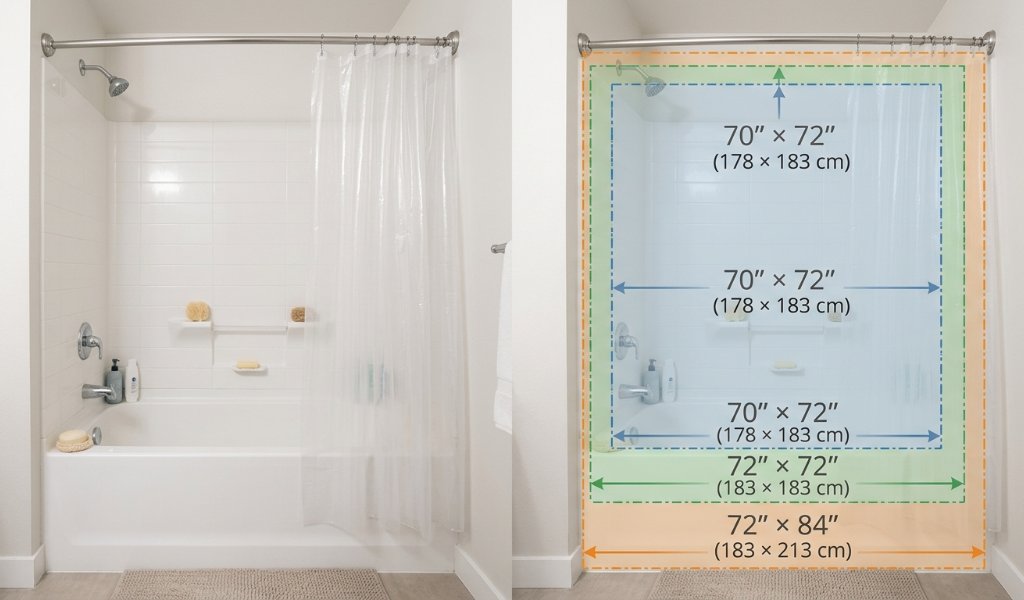
Manufacturers write dimensions as width × length. Width covers the opening, while length controls the liner’s vertical drop. Therefore, always read the width first and the length second.
Use this size chart as a practical starting point. Still, measure your installed rod and wet area before ordering. Package labels describe panel dimensions, not your finished hanging height.
| Size name | Width × length | Typical application |
| Standard | 72″ × 72″ | Standard tub-and-shower combination |
| Standard alternative | 70″ × 72″ | Standard tub-and-shower combination |
| Stall | 54″ × 78″ | Narrow, dedicated shower stall |
| Extra-long | 72″ × 84″ | Tall shower or higher installation |
| Extra-extra-long | 72″ × 96″ | Very tall installation |
The standard 72 × 72 liner gives typical tub openings useful overlap and familiar proportions. Alternatively, a 70 × 72 liner can serve the same common setup. Both sizes let gentle folds close side gaps without creating excessive bulk.
By contrast, stall liners trade width for additional drop. The 54 × 78-inch format suits many narrow, dedicated stalls. Nevertheless, confirm the opening because stall dimensions vary more than package labels suggest.
Extra-long liners solve height problems rather than ordinary fit problems. Choose 72 × 84 inches for a tall installation. Reserve 72 × 96 inches for a very tall rod-to-base measurement.
Correct placement matters as much as labeled size. Keep the lower edge inside the tub or shower pan. However, leave enough clearance to prevent bunching, pooling, and constant standing-water contact.
Liner vs Curtain Sizing
A liner contains water, while an outer curtain provides privacy and style. Consequently, the liner hangs inside the wet area. The decorative curtain usually hangs outside the tub or shower base.
Matching package dimensions often simplifies a standard installation. However, equal dimensions do not guarantee equal-looking lower edges. Compare standard outer-curtain dimensions before coordinating both layers.
The tub floor usually sits higher than the bathroom floor. Therefore, the inside liner can appear shorter than the outside curtain. Avoid forcing both hems into one visual line.
Instead, judge each layer by its purpose. The liner should catch spray and direct water inward. Meanwhile, the curtain should hang cleanly without entering standing water.
Liner materials also change drape and daily care. PEVA holds a crisp water barrier and usually wipes clean easily. Fabric, often polyester, hangs softly and may support machine washing.
When comparing PEVA vs fabric, follow each care label and inspect any waterproof coating. Also, consider weighted hems or magnets when airflow pushes lightweight panels inward. Those features improve stability, but they cannot correct poor sizing.
Choosing Liner Size by Shower Type
Start with two measurements: opening width and hanging drop. Measure width along the rod’s actual path, especially with a curved rod. Next, measure from each hook attachment point toward the wet-area floor.
Account for rings, hooks, or snap-in attachments before selecting length. Otherwise, hardware can move the liner several inches below the rod. Finally, choose a size that closes comfortably and clears the base.
Use these shower-specific starting points. Match the enclosure type before comparing its measurements:
- Tub-and-shower combination: Start with 72″ × 72″ or the 70″ × 72″ alternative.
- Dedicated shower stall: Compare the opening and drop with the 54″ × 78″ stall reference.
- Freestanding or clawfoot tub: Measure every side requiring containment before choosing panels.
- Curved shower rod: Follow the rod’s curve because the arc increases the required width.
For a tub combination, keep the liner inside the tub throughout its full width. Additionally, allow gentle folds so the panel reaches both ends. A taut liner can pull away from walls and release spray.
A dedicated stall needs careful width control. Too much fabric crowds a narrow opening and creates heavy folds. Conversely, too little width leaves side gaps near the curb.
Freestanding and clawfoot tubs may need broader coverage than one listed panel provides. Therefore, measure the complete containment span rather than one straight wall. Multiple panels or a specialized size may fit that layout better.
After measuring, compare the result with the nearest chart category. Prioritize full width coverage before considering extra length. Then verify that the chosen hem stays inside the wet zone.
When to Size Up
Size up when the measured hanging drop exceeds 72 inches after accounting for hardware and clearance. For example, a high rod may require the 72 × 84-inch option. A very tall setup may instead need 72 × 96 inches.
Do not choose extra length for a dramatic look alone. Excess material can bunch, trap moisture, and interfere with footing. Instead, use the shortest verified option that safely contains water.
Before ordering, review when an extra-long liner is necessary for focused buying guidance. Then compare that advice with your measured attachment-to-base distance. This approach prevents guesswork and unnecessary floor contact.
Width may also require an upgrade. Curved rods and oversized openings often consume more panel span. Therefore, measure the full rod path instead of assuming extra length solves everything.
Frequently Asked Questions
Should the liner be the same size as the curtain?
Yes, matching dimensions often work, but each layer needs a different hanging position.
How long should a shower liner hang?
A liner should reach inside the wet area while clearing the tub floor or shower base.
What size liner fits a standard bathtub?
Most standard tub-and-shower combinations suit a 72″ × 72″ or 70″ × 72″ liner.
Can I trim a shower curtain liner?
You can trim some simple liners, but first check the hem, magnets, and care instructions.
What if my measurements fall between liner sizes?
Choose complete width coverage, then select the shortest length that safely reaches inside the wet area.
Match the Liner to the Shower, Then the Curtain
Reliable sizing combines width, drop, hardware, and placement. First, measure the rod path and the attachment-to-base distance. Next, compare those numbers with the verified size chart.
Choose 72″ × 72″ for a typical tub, or 54″ × 78″ for many stalls. However, select a taller liner only when the measured drop demands one. Finally, coordinate the outer curtain after confirming the liner’s functional fit.
Measure your shower now, write down both dimensions, and check them before purchasing. That simple step protects the floor and prevents frustrating returns. Most importantly, it turns a confusing package label into a dependable fit.