Choose an extra long shower curtain liner when a 72-inch liner leaves exposed space below. Most tall setups need an 84-inch liner or 96-inch liner after careful measurement. However, extra length cannot fix missing width around a curved or freestanding tub.
Start with the installed rod, then measure toward the liner’s intended endpoint inside the tub. Next, account for rings or clips before selecting a finished length. A precise fit contains spray without dragging, bunching, or soaking in pooled water. Finally, verify the width because narrow panels can leak despite perfect vertical coverage.
When an Extra-Long Liner Is Necessary
A raised shower rod creates the clearest need for extra length. Standard 72-inch coverage may end too high after decorative hardware lifts the rod. Consequently, spray can escape beneath the liner during normal use. This gap also weakens privacy near the tub’s most exposed area.
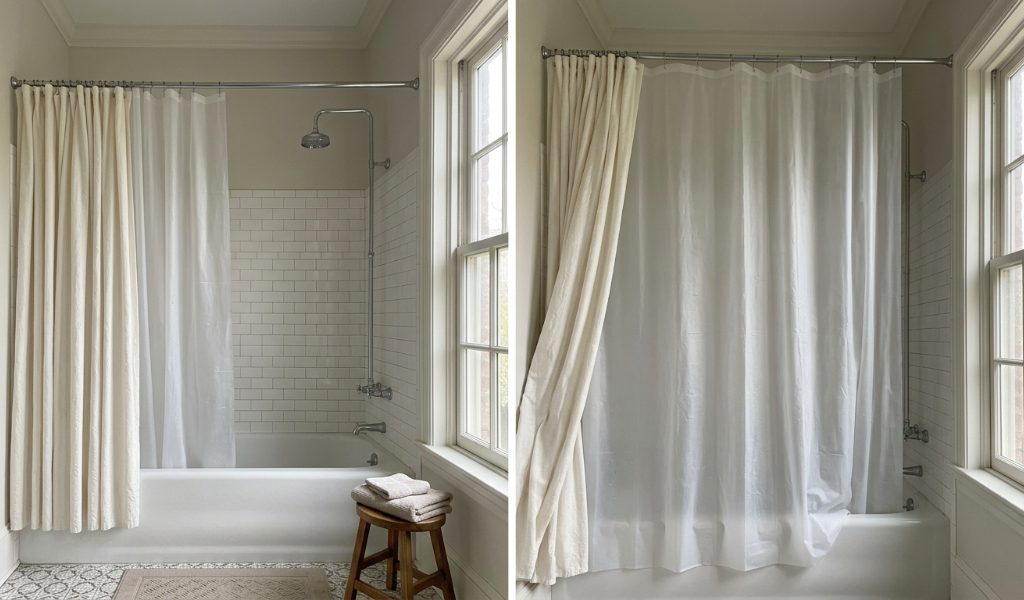
High ceilings alone never determine liner length. Instead, the rod position controls the vertical drop between hardware and tub. Therefore, measure the actual installation rather than estimating from room height. The same ceiling can support several safe rod heights and liner lengths.
Tall shower openings also need careful coverage. A higher showerhead can direct spray toward the entrance, increasing exposure near the bottom. Additionally, an extra long shower curtain liner can preserve a deliberate, elevated rod position.
Clawfoot tubs and freestanding tubs introduce another challenge. Their open sides often need generous width, overlap, or wraparound coverage. Although more length helps the lower edge stay inside, it cannot replace adequate width. Otherwise, water can escape where the liner fails to overlap.
How to Measure for Extra Length
Measure after installing and leveling the rod whenever possible. This sequence removes guesswork from the final hanging height. Use these steps:
- Measure the installed drop. Run a tape straight from the rod toward the desired endpoint. Keep that endpoint slightly above the tub floor or shower floor.
- Account for hanging hardware. Measure how far rings or clips place the liner below the rod. Then subtract that distance from your target drop.
- Compare finished lengths. Choose 84 inches when that length reaches your target. Select 96 inches when the shorter option still leaves exposed space.
- Check both ends. Repeat the measurement near each wall. This comparison catches uneven floors, sloped tubs, and slightly unlevel rods before purchase.
Hookless tops need a different calculation because their openings sit directly on the rod. Therefore, measure from the top opening instead of assuming a ring allowance. Always follow the product’s listed finished dimensions. Built-in openings can shorten or lengthen the visible drop differently.
If your measurement falls between options, inspect the adjustable rod range first. A slight rod adjustment may create safe clearance without altering the liner. However, never accept a lower edge that rests in water.
What to Look For
Length solves only one part of the fit. Material, movement control, hanging strength, privacy, and maintenance shape daily performance. Together, these details separate dependable liners from merely long ones. Compare these features:
- Liner materials: PEVA and vinyl block water and usually support simple wipe cleaning. Polyester offers softer drape, although care instructions vary across products. Additionally, each material creates a different feel, sound, and drying pattern.
- Weighted hem: A weighted hem limits inward billowing across the longer surface. Consequently, the liner stays calmer while water hits nearby panels.
- Magnets and fasteners: Magnets grip compatible metal tubs, while suction cups can stabilize other surfaces. Confirm compatibility before relying on either feature.
- Reinforced hanging points: Grommets or finished buttonholes spread repeated pulling across the header. Strong top construction matters because extra fabric adds weight below.
- Mildew resistance: A mildew-resistant finish may simplify upkeep, but ventilation still matters. No treatment replaces complete drying and regular cleaning.
- Opacity: Clear liners preserve light, frosted liners soften visibility, and opaque fabric adds privacy. Match the finish to your room and outer curtain.
Also inspect the product description for waterproof or water-repellent language. Waterproof plastics block direct spray, while fabric performance can vary by construction. Therefore, verify the care label and intended use before buying.
Longer liners carry more surface area, so airflow can move them more easily. Heavier gauges may feel steadier, but thickness alone never guarantees a better fit. Instead, balance weight with your rod strength and preferred handling.
Extra-Long Liner Size Reference
A standard 72-inch by 72-inch liner provides the familiar baseline. An 84-inch liner adds twelve inches while keeping the verified 72-inch width. Meanwhile, a 96-inch liner adds another twelve inches for taller measured drops. Both longer sizes require the same careful width check.
| Finished size | Useful starting point | Primary check |
| 72 W x 72 L inches | Standard tub setup | Confirm vertical coverage |
| 72 W x 84 L inches | Raised rod or tall opening | Check lower-edge clearance |
| 72 W x 96 L inches | Very tall measured drop | Prevent floor contact |
These sizes provide reference points, not universal prescriptions. Width, shower shape, and overlap still control side coverage. Therefore, consult the full liner size chart before finalizing an unusual enclosure.
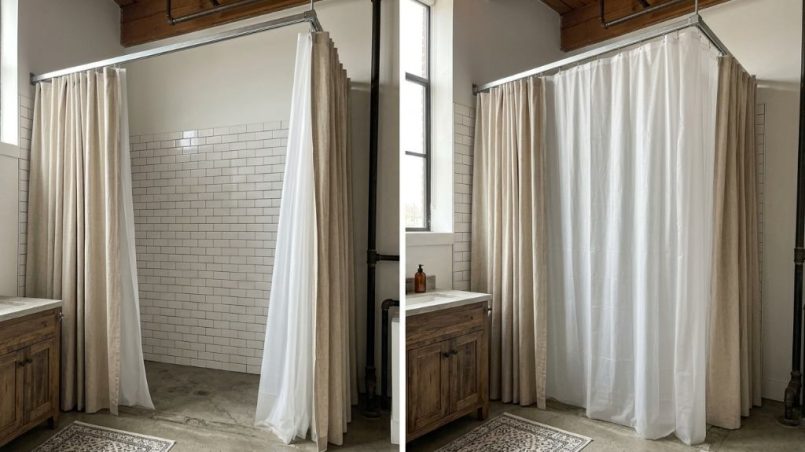
A curved rod can increase the path around a tub, even when vertical measurements stay unchanged. Similarly, a clawfoot enclosure may require extra width or multiple panels. Measure the complete rod path before treating length as the only variable. Therefore, trace every bend instead of measuring only the wall opening.
Care Tips for Long Liners
After every shower, spread the liner across the rod. Open folds release trapped moisture and improve airflow along the entire lower edge. Additionally, run the bathroom fan or open a suitable window. This habit also reduces odor and discourages damp folds.
Wipe PEVA or vinyl according to the care label. For polyester, follow the stated washing and drying directions. Because constructions differ, never assume every fabric liner tolerates identical machine settings.
Soap residue gives moisture more places to linger. Therefore, rinse buildup before it forms a stubborn film. Regular light cleaning usually requires less effort than occasional aggressive scrubbing. Pay special attention to the lower corners, where folds frequently hold residue.
Keep the hem above standing water and away from the bathroom floor. If magnets collect residue, wipe them without bending the surrounding material. Also inspect grommets and buttonholes before small tears spread.
Avoid trimming unless the manufacturer explicitly permits cutting. Scissors can remove weights, magnets, finished seams, or protective edge construction. Instead, choose the correct length or adjust the rod safely.
Frequently Asked Questions
How long is an extra-long shower curtain liner?
Common extra-long choices measure 84 or 96 inches long, often with a 72-inch width.
Should a shower curtain liner touch the floor?
No, keep the liner above the tub or shower floor so it dries without collecting moisture.
Should the liner match the outer curtain exactly?
Coordinate their coverage, but let the liner hang inside while the decorative curtain stays outside.
Which liner material works best for easy care?
PEVA or vinyl usually supports wipe cleaning, while many polyester liners allow washing according to labels.
Can I shorten an extra-long liner myself?
Avoid trimming unless the maker allows it, because cutting can remove hems, weights, or magnets.
Measure Your Drop Before You Buy
The best extra long shower curtain liner follows your installed dimensions, not a room-height guess. Review shower curtain lengths before coordinating the outer curtain and liner. Then confirm width, material, hardware, and care needs together.
Measure both ends today, record the shorter safe clearance, and compare 84-inch and 96-inch options. Finally, choose the length that contains water without touching the floor. That quick check prevents most costly fit mistakes. Then save the measurement with your bathroom notes for simpler future replacement purchases.