
Fixing a leaky faucet or replacing a worn-out pipe does not have to be stressful. The right tools make every job faster, safer, and more efficient. However, walking into a hardware store today can feel overwhelming. There are hundreds of options on shelves, and not all of them are worth your money.
This guide will help you cut through the noise. You will learn what to look for, what to avoid, and how to build a reliable toolkit for home plumbing jobs in 2026. Whether you are a first-time homeowner or a weekend DIY enthusiast, this article is written for you.
Why Choosing the Right Plumbing Tools Matters
Many homeowners underestimate the value of good tools. They buy the cheapest option available and later wonder why jobs take longer or results fall short. The truth is simple: quality tools give you better control, reduce the risk of damage, and save you money over time.
Additionally, using the wrong tool for a job can make a small problem much worse. For example, using an ill-fitting wrench on a pipe fitting can strip the threading. Once that happens, you may need a professional repair that costs far more than a proper wrench would have.
Therefore, investing in the right tools from the start is a smart decision. You do not need to buy everything at once. However, knowing which tools matter most will help you spend wisely.
Start with the Basics: Your Essential Plumbing Toolkit
Before exploring specialty tools, you should build a solid foundation. These are the core tools every home should have for basic plumbing tasks.
Adjustable Wrench
An adjustable wrench is one of the most versatile tools you can own. It fits different sizes of nuts and bolts without needing a full set of fixed wrenches. Look for one with a comfortable grip and smooth jaw adjustment. A 10-inch model works well for most household tasks.
Pipe Wrench
A pipe wrench grips round surfaces like pipes and fittings. It uses a self-tightening design that holds firmly as you turn. Most homeowners benefit from having two sizes — one for gripping and one for counter-holding.
Plunger
A good plunger is your first defense against clogs. There are two main types: cup plungers for flat surfaces like sinks, and flange plungers for toilets. Keep one of each in your home.
Plumber’s Tape (PTFE Tape)
This thin white tape seals threaded pipe connections. It is inexpensive, easy to use, and prevents leaks at joints. Always wrap it in the direction of the threads for the best seal.
Pipe Cutter
A pipe cutter gives you clean, straight cuts on copper or plastic pipes. It is much safer and more precise than using a hacksaw. Simply score and rotate around the pipe until it separates cleanly.
How to Assess Tool Quality Before You Buy
Not all tools are built the same way. Knowing what to look for helps you avoid poor-quality products that wear out quickly or perform badly under pressure.
Check the Material
Good plumbing tools are made from drop-forged steel or chrome vanadium steel. These materials are strong and resist rust over time. Avoid tools made from cast metals, as they can crack under pressure.
Look at the Finish
A polished or chrome finish not only looks professional but also protects against corrosion. Tools that show rough edges or uneven coating at the factory are often lower in quality overall.
Read User Reviews
Online reviews give you real-world feedback from people who have used the tool. Look for patterns in the reviews rather than individual opinions. If many users mention that a handle breaks easily, that is a clear warning sign.
Consider the Warranty
Reputable tool brands stand behind their products. A lifetime warranty or a multi-year guarantee shows that the manufacturer has confidence in their product’s durability.
Understanding Modern Tool Trends for Home Plumbing
The home improvement industry has changed a great deal in recent years. Tool trends now reflect a growing focus on ease of use, smart technology, and sustainability. Keeping up with the latest plumbing equipment helps you work smarter, not harder.
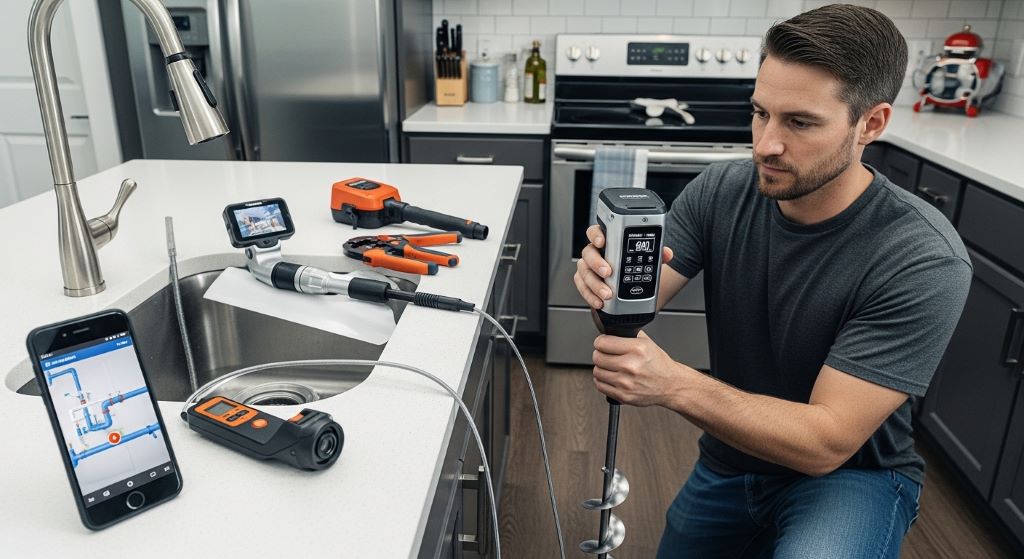
One major shift is the rise of battery-powered tools. Cordless drain augers and pipe inspection cameras are now widely available to homeowners. These tools were once limited to professionals. However, improved battery technology and falling prices have made them accessible to everyday users.
Another trend is the growth of push-fit fittings and corresponding tools. Push-fit connections allow you to join pipes without solder or adhesive. A simple disconnect clip tool lets you remove these fittings without damaging the pipe. This approach saves time and reduces the skill level needed for basic repairs.
Additionally, tool ergonomics have improved greatly. Manufacturers now design handles with better grip angles, reduced vibration, and lighter overall weight. These changes reduce fatigue during longer jobs and make tools easier to use in tight spaces.
Choosing Tools Based on Your Most Common Jobs
The best toolkit is one that matches the work you actually do. Think about the types of plumbing tasks you face most often at home.
For Clog Clearing
If you regularly deal with slow drains or full blockages, a hand-cranked or electric drain snake is a worthwhile investment. It reaches deep into pipes where a plunger cannot. Look for one with a flexible steel cable at least 25 feet long.
For Pipe Repairs
Leaks and burst pipes require tools for cutting, joining, and sealing. A pipe cutter, deburring tool, and compression fitting tool are your core set here. If you work with copper pipes, a small torch kit and soldering supplies are also useful.
For Toilet and Fixture Work
A toilet auger handles clogs that a plunger cannot clear. A basin wrench lets you reach tight spaces under sinks to tighten or loosen supply line fittings. These two tools solve the majority of toilet and sink problems homeowners face.
For Inspections
A waterproof flashlight is essential for seeing inside cabinets, under sinks, and behind walls. If you suspect hidden leaks or want to inspect drains more closely, a small pipe inspection camera can save you hours of guesswork.
Smart Shopping Tips to Get the Most Value
Buying plumbing tools wisely means balancing quality and budget. You do not need to buy the most expensive option in every category. However, cutting corners on tools you use frequently will cost you more in the long run.
Here are some practical tips to guide your purchases.
- Buy quality on tools you use often. A wrench or plunger gets heavy use over the years. Spend more here.
- Save on tools you use rarely. A specialty crimping tool for PEX pipes does not need to be top-of-the-line if you use it once a year.
- Consider starter kits. Many brands sell bundled plumbing tool sets at a better price than buying each item separately. These are great for new homeowners building a kit from scratch.
- Shop at reputable stores. Buying from established retailers ensures you get genuine products with valid warranties.
- Avoid cheap imports without brand names. These tools often fail under normal use and can cause damage to fixtures or pipes.
Staying Safe While Working with Plumbing Tools
Safety should always come first. Even basic home plumbing involves risks that are easy to overlook.
Always shut off the water supply before you start any repair. This seems obvious, but it is the step people most often forget. Know where your main shutoff valve is located before you need it in an emergency.
Wear safety glasses when cutting pipes or working in tight spaces. Small debris can cause serious eye injuries. Additionally, wear rubber gloves when working with drain cleaners or any chemical solutions.
Use tools only for their intended purpose. A pipe wrench is not a hammer. Using tools incorrectly damages both the tool and the work surface. Furthermore, it increases the risk of injury.
Keep your tools clean and dry after each use. Rust and grime reduce performance and shorten the lifespan of your equipment. A simple wipe-down after every job goes a long way.
When to Go Beyond Basic Tools
Sometimes a job calls for something more advanced. Knowing when to upgrade your tools — or when to call a professional — saves you time and prevents costly mistakes.
If you are tackling a larger project like replacing a water heater, installing new supply lines, or rerouting pipes, you may need tools like a pipe bender, a PEX crimping kit, or a propane torch set. These are available at most hardware stores and many online retailers.
However, there is also a point where a job becomes too complex for a homeowner to handle safely. If you are unsure about what you are doing, it is always better to stop and call a licensed plumber. Mistakes in plumbing can lead to water damage, mold growth, and costly structural repairs.
Keeping up with the latest plumbing equipment and tool trends is helpful, but knowing your limits is equally important.
Conclusion
Choosing the right plumbing tools for home projects in 2026 comes down to a few clear principles. Start with the essentials. Focus on quality materials and reliable brands. Match your tools to the jobs you do most often. Shop smart by balancing cost with durability. And always put safety first.
Modern tool trends have made home plumbing more accessible than ever. Battery-powered tools, push-fit systems, and ergonomic designs have lowered the barrier for homeowners. Additionally, access to the latest plumbing equipment means you can tackle more jobs confidently without always relying on a professional.
Build your toolkit gradually. Learn how each tool works before you need it in a crisis. With the right preparation, most common home plumbing problems are well within your ability to solve.
Frequently Asked Questions
What are the most important plumbing tools every homeowner should have?
Every homeowner should have an adjustable wrench, a pipe wrench, a cup and flange plunger, plumber’s tape, and a pipe cutter. These five items handle the majority of basic home plumbing tasks efficiently.
How do I know if a plumbing tool is good quality?
Look for tools made from drop-forged or chrome vanadium steel. Check for a smooth finish, a solid warranty, and positive reviews from verified buyers. Avoid tools without brand names or clear country of manufacture.
Are battery-powered plumbing tools worth the extra cost?
Yes, in many cases. Cordless drain augers and pipe inspection cameras save significant time and effort. If you handle plumbing tasks regularly, the investment pays off quickly through convenience and efficiency.
What is plumber’s tape, and how do I use it?
Plumber’s tape, also called PTFE or thread seal tape, is a thin white tape used to seal threaded pipe connections. Wrap it clockwise around the male threads two to three times before connecting the fitting. It helps prevent leaks at joints.
When should I call a plumber instead of doing it myself?
Call a plumber for jobs involving gas lines, major pipe rerouting, water heater installation, or any situation where you are unsure of the process. Mistakes in these areas can cause serious damage and are dangerous to attempt without proper training.
Related Topics:
How to Easily Install a Toilet Seat? Step-by-Step Guide
How to Replace a Well Pump: A Step-by-Step Guide