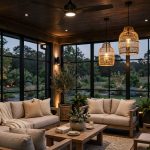
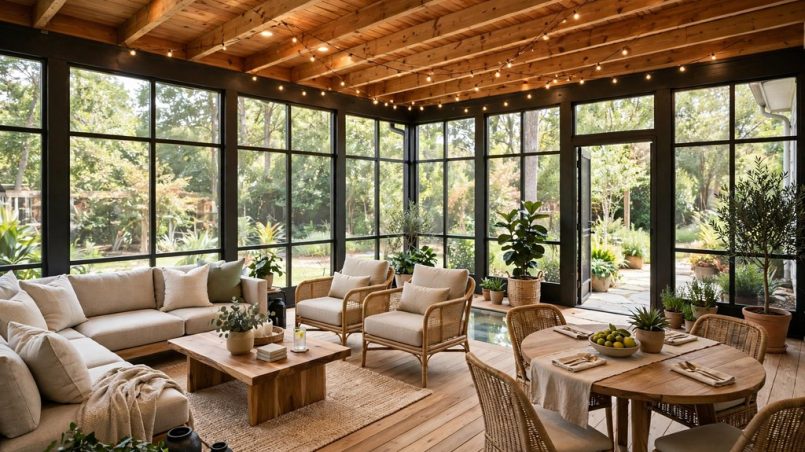
Arrange screened porch furniture in clear zones for conversation and dining first. Then keep comfortable, wide paths open between the house door, seating groups, and porch steps. This simple order creates relaxed seating, easy dining, and smooth movement for everyday use.
Start with a completely empty porch and then build the layout carefully, zone by zone. Also, natural materials and warm earthy colors connect each zone without making them identical. In addition, comfortable indoor style furniture makes the porch feel calm, welcoming, and finished. Finally, test the finished layout in real use before you commit to it permanently.
Start With an Empty Porch and a Zone Plan
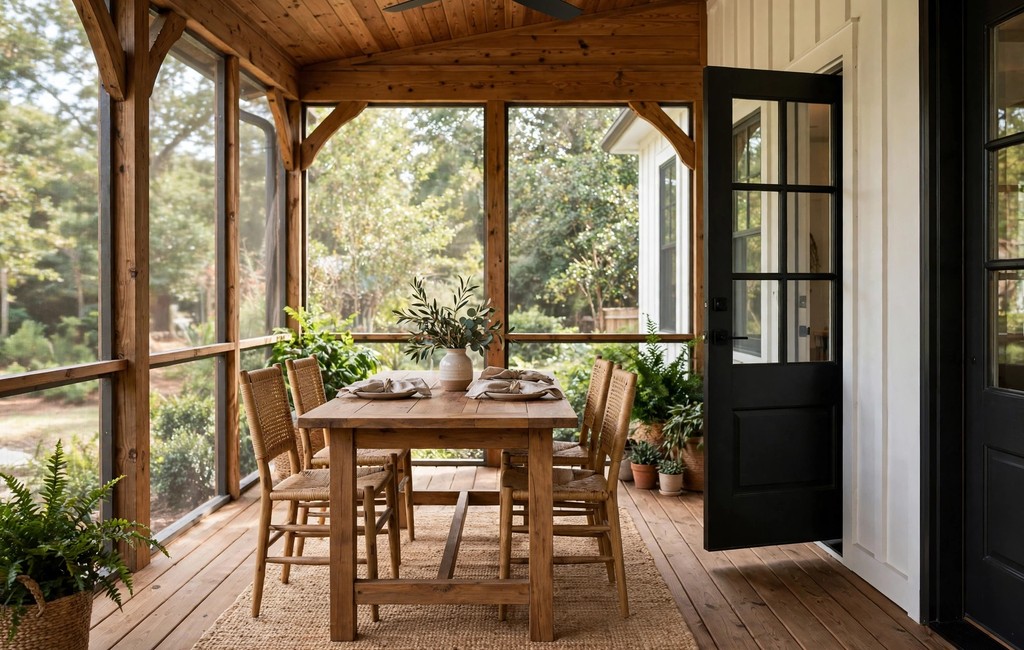
First, sketch three simple zones and review screened in porch ideas before moving furniture inside. Next, assign conversation to one area, dining to another, and reading to a corner. This early plan prevents crowding and helps every later choice fit the whole porch.
Measure the porch length, width, door positions, and step locations before you choose pieces. Then mark each zone lightly on the floor with tape or a rug outline. Still, leave the center paths open while you mark furniture footprints around the edges.
- Conversation cluster: First, group a sofa and chairs around one low central table.
- Dining zone: Next, place a table and chairs near the house door for serving.
- Reading corner: Then tuck one comfortable chair and small side table into a corner.
Place the Largest Anchor Piece First
First, carry in the largest piece, usually a sofa or dining table, before anything else. Set that anchor where its zone needs the most support and the best balance. Then build every smaller piece around the anchor instead of pushing pieces against screens.
For example, a woven sofa with deep cushions anchors a conversation zone beautifully. Similarly, a sturdy wooden dining table anchors meals and gives the porch clear purpose. However, keep the anchor low enough to preserve breezes and views through the screens. Zones keep screened porch furniture grouped by purpose.
Define Each Zone With a Rug
Lay a rug under the anchor before you add chairs, tables, or decorative accents. Also, choose rug sizes that let front furniture legs rest comfortably on the rug. As a result, each zone looks grounded and guests understand its purpose immediately.
Use warm earthy rug patterns to connect natural wood, woven textures, and soft cushions. Meanwhile, different rug patterns can separate zones while the shared colors keep harmony. Indeed, rugs define boundaries without walls, screens, or bulky dividers blocking the airflow.
Build the Conversation Zone Next
Next, arrange the sofa and two chairs so everyone faces each other comfortably. Angle the chairs slightly inward and center a low table between all the seats. This inward focus encourages easy talk and helps guests relax without raising voices.
However, turn one or two seats toward the garden view for quieter relaxing moments. For example, angle a single chair toward the view while the sofa faces inward. Therefore, the same zone supports lively conversation and calm watching without moving furniture.
- Side tables: Also, place one small table within easy reach of every main seat.
- Soft cushions: Then add layered cushions and throws for comfortable indoor style seating outdoors.
- Low table: Finally, choose a central table that holds drinks without blocking sight lines.
Add the Dining Zone Near the House Door
Next, place the dining table near the house door for easy serving and clearing. Then pull dining chairs around the table and leave room behind each pulled chair. Guests need space to sit down, stand up, and move without squeezing past others.
For example, a round table suits a square porch and softens tight corners nicely. However, a rectangular table suits a long porch and follows its natural lines better. Also, ground the dining zone with its own rug for clear visual separation.
Finish With a Quiet Reading Corner
Finally, use a leftover corner for one deep chair, a cushion, and good light. Face that chair toward the best view because reading breaks feel calmer facing outward. Then add a small side table for a book, drink, and reading glasses nearby.
This corner works best away from the dining traffic and the main door swing. Still, keep the corner connected through matching wood tones, woven textures, and warm colors. Indeed, one quiet corner gives everyone a retreat when group conversation grows lively.
Keep Traffic Paths and Doors Clear
Walk the route from the house door through seating toward the porch steps daily. However, any tight squeeze along that route signals a furniture problem worth fixing. So clear that main path completely and shift blocking pieces toward the zone edges.
Respect Door Swings and Screen Doors
First, open every door fully and mark its swing arc on your floor plan. Then keep chairs, rugs, and tables completely outside that arc at all times. Screen doors need the same respect because guests carry drinks through them often.
Also, keep entry corners open so guests enter without turning sideways around furniture. Similarly, keep step landings clear because people pause there while carrying food outside. Otherwise, one misplaced ottoman can slow every arrival, departure, and serving trip daily. Durable screened porch furniture handles daily outdoor living.
Choose Flexible Pieces and Test the Layout
Choose lightweight chairs, nesting tables, and movable ottomans that shift easily between different uses. For example, an ottoman becomes extra seating, a footrest, or a side table quickly. Meanwhile, a folding chair joins dining during gatherings and tucks away afterward neatly.
Next, test the layout by sitting everywhere, walking every path, and opening every door. Then carry a tray through the porch because real tasks reveal hidden tight spots. Finally, adjust one piece at a time and retest until movement feels effortless everywhere. Flexible screened porch furniture adapts when guests arrive.
Frequently Asked Questions
How do you arrange furniture on a screened porch?
First, create clear zones, place the largest piece first, and keep paths open.
How much space should you leave between porch furniture?
Leave enough open space so guests walk, pull chairs out, and pass comfortably.
Where should you place a dining table on a screened porch?
Place the dining table near the house door, then ground it with a rug.
How do you create zones on a screened porch?
For example, use rugs and furniture groupings to define conversation, dining, and reading zones.
What is the best furniture layout for a small screened porch?
Instead, choose one compact conversation grouping, skip extra pieces, and keep every path completely clear.
Conclusion
Overall, a zone first layout turns an empty porch into a comfortable everyday room. Start today by clearing the porch, marking three zones, and placing your anchor piece. Then invite family outside and enjoy conversation, meals, and quiet reading in comfort.