
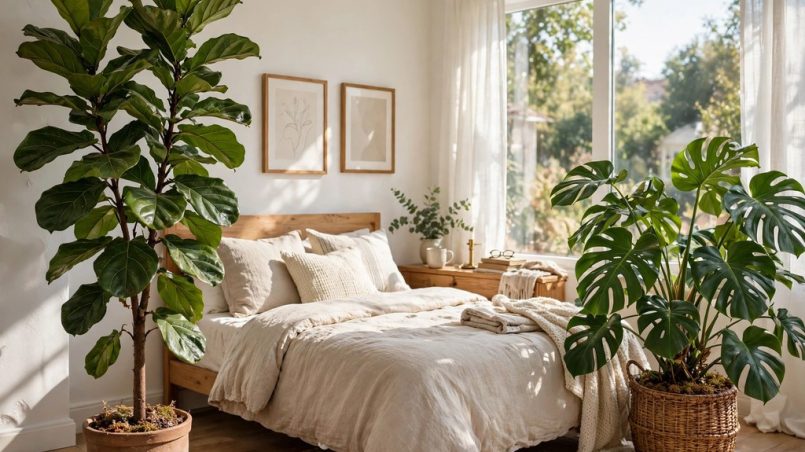
The best bedroom plant corner ideas layer one tall plant, mid-level plants, and trailing plants together. Additionally, this layered approach fills empty spaces without blocking walkways or windows. Finally, matching plants to corner light keeps the display lush and calm.
However, many corners fail because people choose plants before checking light levels. Therefore, this guide helps you assess light, group plants wisely, and style confidently. Moreover, you will learn simple layouts for bright, dim, and narrow corners alike.
Meanwhile, thoughtful corners support biophilic design and turn forgotten square footage into restful greenery. Indeed, even renters can build beautiful corners using stands, shelves, and removable hangers.
Assess Corner Light for Bedroom Plant Corner Ideas
First, watch your corner at morning, midday, and evening before buying any plants. Second, note whether sunlight falls directly, filters softly, or barely reaches the walls. Consequently, this simple check reveals true indirect light levels for confident plant choices.
Subsequently, place bright-light lovers closer to windows and shade-tolerant plants deeper inside. Also, rotate each pot weekly so every side receives balanced light exposure. For broader inspiration, explore greenery bedroom ideas across different layouts and room sizes first.
Still, dark corners work well when you add a small grow light overhead. Position the grow light above foliage and run it during daytime hours only. Likewise, timers keep lighting consistent while you work, travel, or simply forget.
Furthermore, sheer curtains soften harsh midday sun and protect delicate leaves from scorching. Conversely, bare windows suit sturdy snake plant leaves during bright winter mornings best. Gradually, move plants closer to windows over weeks so leaves adjust without stress.
Choose Bedroom Corner Plants by Height and Habit
Start every corner with one tall anchor plant for instant vertical impact. Then, add medium plants around the base to soften hard architectural edges. Lastly, finish with trailing plants that spill downward and connect every layer visually.
- Tall anchor plants: Choose a fiddle leaf fig or monstera for bold, upright corner presence.
- Upright easy-care plants: Pick a snake plant when light stays low and watering feels inconsistent.
- Trailing filler plants: Grow pothos on high shelves so vines cascade gently toward the floor.
- Pet safety note: Keep fiddle leaf fig away from pets because its leaves are toxic.
Importantly, indoor plants thrive when you match each habit to available corner space. Similarly, varied leaf shapes create depth without requiring many pots or extra furniture.
Layer Bedroom Plant Corner Ideas in a Small Footprint
When floor space feels tight, build upward instead of spreading outward across carpet. These small bedroom greenery ideas prove compact corners can still feel lush and layered. Better still, vertical garden layouts free floor area for baskets, seating, or storage below.
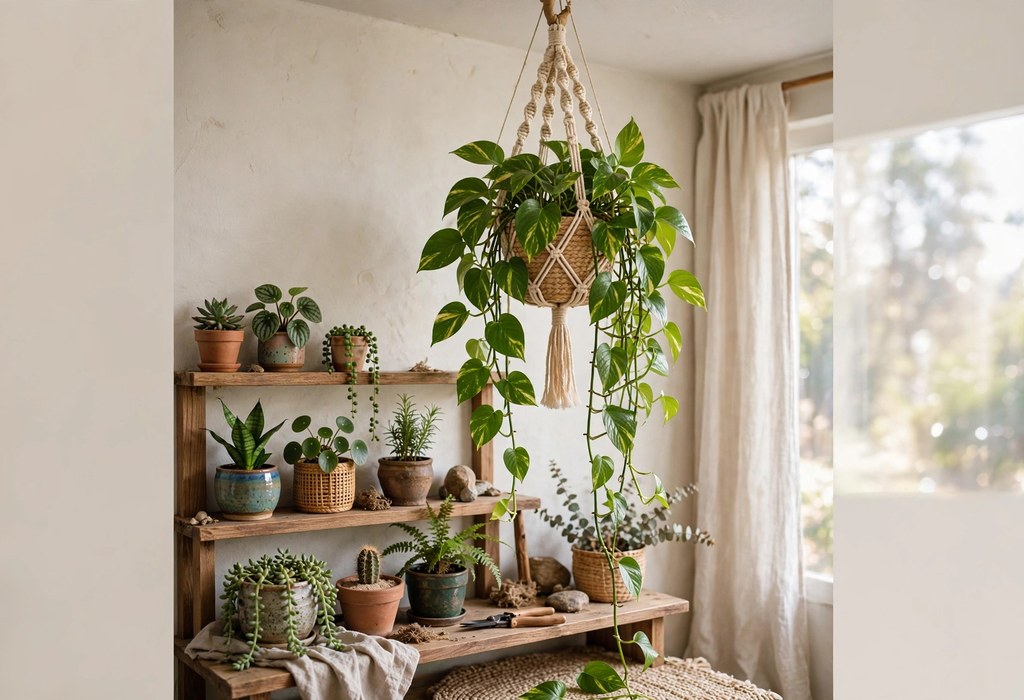
Begin by mounting a sturdy plant shelf at eye level for smaller potted plants. Next, hang a pothos inside a macrame hanger near the ceiling corner joint. Afterwards, guide trailing plants along hooks so vines frame the wall beautifully.
Before styling, learn to arrange plants on bedroom shelves using odd-numbered groupings and varied heights. After that, leave breathing room between pots so leaves receive air and light. Ultimately, edited shelves look intentional while crowded shelves quickly feel messy and stressful.
Group Plants by Humidity and Care Needs
Grouping plants together raises local humidity naturally through shared moisture and transpiration. So, cluster humidity lovers together and keep drought-tolerant plants slightly apart nearby. Plus, pebble trays boost humidity gently without soaking roots or damaging floors.
- High humidity group: Mist monstera leaves regularly and keep soil evenly moist during active growth.
- Low humidity group: Water snake plant sparingly and let soil dry fully between each watering.
- Moderate care group: Feed pothos monthly during spring and prune leggy vines for fuller growth.
Regularly, check soil moisture before watering because corners dry slower than windowsills. Crucially, keep pothos vines away from pets because pothos leaves are toxic. Monthly, wipe leaves so dust never blocks precious light from foliage.
Style Bedroom Plant Corner Pots and Stands
Choose pots in one color family so diverse foliage still feels cohesive. Together, woven baskets, ceramic, and warm wood stands create warm layered texture. In turn, raised stands protect floors and lift smaller plants into better light.
Place a small stool beside taller plants to create useful mid-level height. Later, add one soft accent like a cushion or folded throw nearby. Overall, restrained styling keeps focus on greenery rather than competing decorative clutter.
Weekly, inspect undersides of leaves so you catch pests before infestations spread widely. Promptly, remove yellow leaves and spent growth so plants direct energy toward health. Seasonally, refresh top soil and check roots so crowded plants keep growing strongly.
Frequently Asked Questions
What Is the Best Plant for a Dark Bedroom Corner?
A snake plant suits dark corners best because it tolerates low light and infrequent watering.
How Many Plants Should a Bedroom Corner Have?
Most corners look balanced with three to five plants at different heights.
Can Plants Thrive in a Corner Without Windows?
Yes, plants thrive without windows when you provide a grow light daily.
Which Bedroom Corner Plants Are Safe for Pets?
Spider plants suit pet homes best, while fiddle leaf fig and pothos stay toxic.
How Do You Keep Corner Plants From Looking Messy?
You keep corners tidy by grouping similar needs, pruning regularly, and editing ruthlessly.
Conclusion
Empty corners hold real potential when you layer heights, light, and textures thoughtfully. Act today by measuring your corner, checking its light, and choosing one anchor. Share your finished corner next and inspire someone else to grow theirs.