
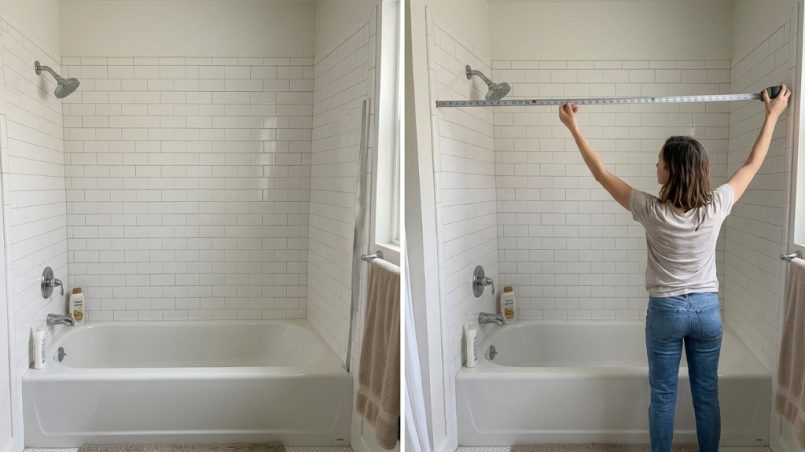
Choose a shower curtain rod that comfortably covers the measured span at your planned mounting height. Most tub alcoves use rods near 60 inches, while adjustable models commonly span 41 to 72 inches. Therefore, measure first and compare that number with the manufacturer’s stated fit range.
Never size the rod from the tub label or curtain width alone. Tile, trim, and uneven walls can alter the finished opening. Additionally, curved rods need the same straight mounting-point measurement as straight rods.
A careful measurement protects tension, alignment, and curtain coverage. It also prevents overextension, unstable end caps, and awkward bathroom clearance. Consequently, a five-minute check can prevent returns and installation problems.
Standard Shower Curtain Rod Lengths
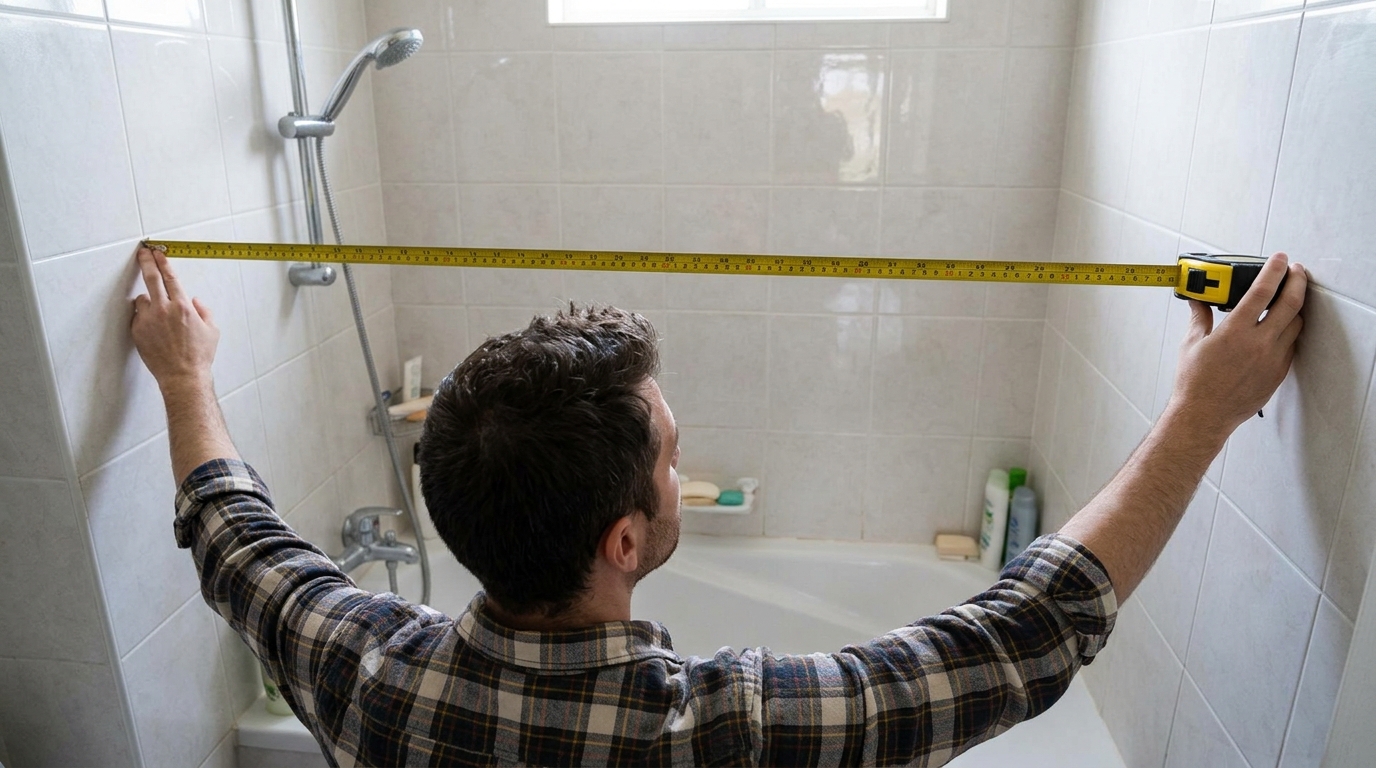
Manufacturers describe standard rod sizes through fixed dimensions or an adjustable tension rod adjustment range. However, the enclosure and mounting style ultimately determine the correct shower curtain rod length. Treat these measurements as shopping guides, not substitutes for measuring alcove width.
| Rod type | Typical size | Best fit |
| Adjustable tension | 41 to 72 inches | Many tub alcoves; flexible sizing without drilling |
| Compact tension | 24 to 40 inches | Narrow stalls and other small openings |
| Fixed straight | About 60 inches | Standard tub alcoves with permanent mounts |
| Curved | Measure the mounts | Spaces where outward bowing adds usable elbow room |
A 41 to 72-inch tension rod covers many common alcoves through telescoping sections. Meanwhile, compact 24 to 40-inch models serve narrow shower stalls. A fixed straight rod commonly measures about 60 inches, although its brackets must match the opening.
Curved rods use the same end-to-end mounting span as straight rods. However, the bow projects into the room and lengthens the curtain’s travel path. Therefore, check both wall fit and outward clearance before choosing that design.
Measure the Span Where the Rod Will Actually Sit
Use a rigid tape measure at the planned mounting height. Measurements taken lower on the wall can miss tile, trim, or changing wall angles. First, choose the final mounting line before recording any width.
Follow this sequence:
- Mark the mounting height on both walls with a pencil or removable tape.
- Check the marks with a level so both rod ends share one horizontal line.
- Measure between finished wall surfaces for a tension rod.
- Measure between planned bracket positions for a fixed or curved rod.
- Repeat the measurement and resolve any difference before recording the span.
- Check end caps, brackets, tile edges, trim, and nearby glass for interference.
- Test curved-rod clearance against doors, cabinets, towel bars, toilets, and walkways.
Next, write down the installed span rather than trusting memory. Compare that number with the full product diagram and stated adjustment range. Ideally, avoid forcing a tension rod against either limit of its range.
Mounting hardware can change the usable dimensions. For example, decorative flanges may cover wall space while brackets conceal part of a fixed rod. Consequently, confirm the manufacturer’s finished installation dimensions before drilling or trimming anything.
Rod Length and Curtain Width Are Related, but Not Equal
The rod spans the opening, while the curtain needs extra width for soft gathers. As a practical starting point, choose fabric 10% to 15% wider than the installed span. Otherwise, a tight curtain can expose edge gaps whenever someone moves it.
For example, a 72-inch curtain provides 12 extra inches across a 60-inch span. That pairing creates 20% fullness, which remains familiar for standard tub alcoves. For broader context, review matching standard curtain sizes to your rod before purchasing fabric.
However, never fix a curtain-width problem by overextending the rod. Choose a rod that securely fits the opening, then select the curtain separately. This order protects both rod stability and liner coverage.
Curved rods deserve another width check because the curtain follows their longer path. Therefore, a panel may look less gathered after replacing a straight rod. Measure the mounted curve’s usable path only when choosing curtain width, not rod fit.
Choose the Mounting Style That Suits the Span
Rod length solves only part of the installation. Additionally, wall condition, drilling permission, support needs, and room clearance should guide your choice. Match the mounting method to the surfaces before comparing finishes.
Tension Rods Offer Flexible, Drill-Free Fit
A tension rod presses outward against two opposing surfaces. Therefore, it suits rentals, quick updates, and openings within its adjustment range. Clean, flat contact points help the end caps grip consistently.
However, deep texture, fragile trim, or narrow tile edges can weaken that grip. Avoid loading the rod with towels or storage accessories unless its instructions allow them. Also, retighten the rod if daily movement gradually reduces pressure.
Fixed Rods Provide a Permanent Span
A fixed rod uses wall brackets and screws for dependable support. Consequently, accurate bracket placement matters more than a nominal 60-inch label. Check each mounting point before drilling into tile, drywall, or trim.
Some fixed rods allow trimming, while others require exact dimensions. Therefore, read the installation diagram before modifying the tube. A level bracket line keeps rings moving smoothly and prevents a visibly sloped curtain.
Curved Rods Add Space but Need Clearance
A curved rod bows outward to create more elbow room inside the shower. Still, its mounting points use the straight wall-to-wall span. Never measure along the curved tube when choosing its installed width.
Meanwhile, the center of the curve pushes the curtain farther into the bathroom. Open nearby doors and inspect the walkway before fixing bracket locations. Also, confirm that the curtain remains inside the tub rim during use.
Frequently Asked Questions
What Is the Standard Shower Rod Length?
Fixed straight rods commonly measure about 60 inches, while adjustable models cover wider stated ranges.
Can a Tension Rod Span 72 Inches?
Yes, a tension rod with a 72-inch maximum can securely span that width.
How High Should I Mount the Rod?
Choose mounting height from the curtain, liner, hooks, tub rim, and desired floor clearance.
Does a Curved Rod Need a Different Measurement?
No, measure straight between mounting points, then separately check the curve’s outward projection.
How Do I Know What Length Shower Rod I Need?
Measure the finished opening at mounting height, then choose a rod whose specifications include that span.
Measure First, Then Complete the Setup
Accurate shower curtain rod length starts with a level measurement at the final mounting height. Once the rod fits securely, our guide to shower curtain lengths helps you choose the vertical drop. Measure your opening now, record the result, and shop only within that verified range.