
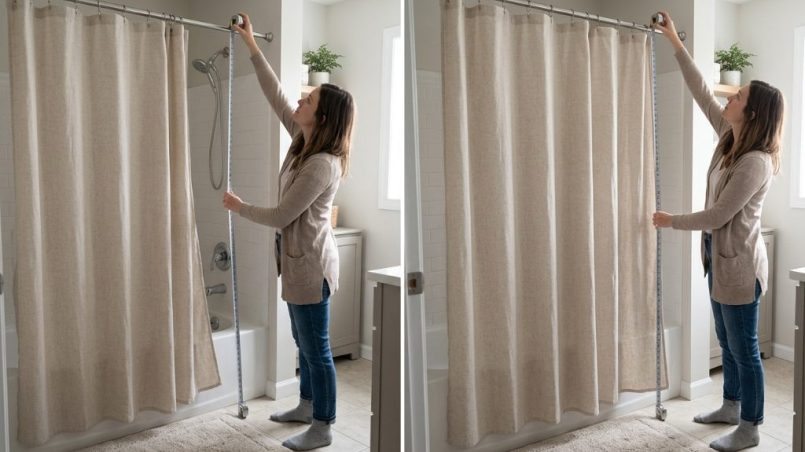
The average shower curtain length is 72 inches, usually with a matching 72-inch width. Most standard tub setups accept this size, although measurements should guide your final choice. That common square format offers useful coverage, gentle folds, and familiar proportions for everyday bathrooms. Still, rod height, rings, and shower geometry can change the curtain’s finished drop.
While comparing shower curtain lengths, focus on fit rather than the word “standard.” A proper curtain covers the opening without stretching flat, dragging, or collecting moisture along its hem. Consequently, one quick measurement protects both your bathroom floor and your preferred visual balance.
The Short Answer: 72 × 72 Inches
In American stores, 72 × 72 inches remains the most common ready-made outer curtain size. Here, average describes the prevailing retail standard, not a mathematical mean across every bathroom. Because builders use varied layouts, no national average can predict every installation precisely.
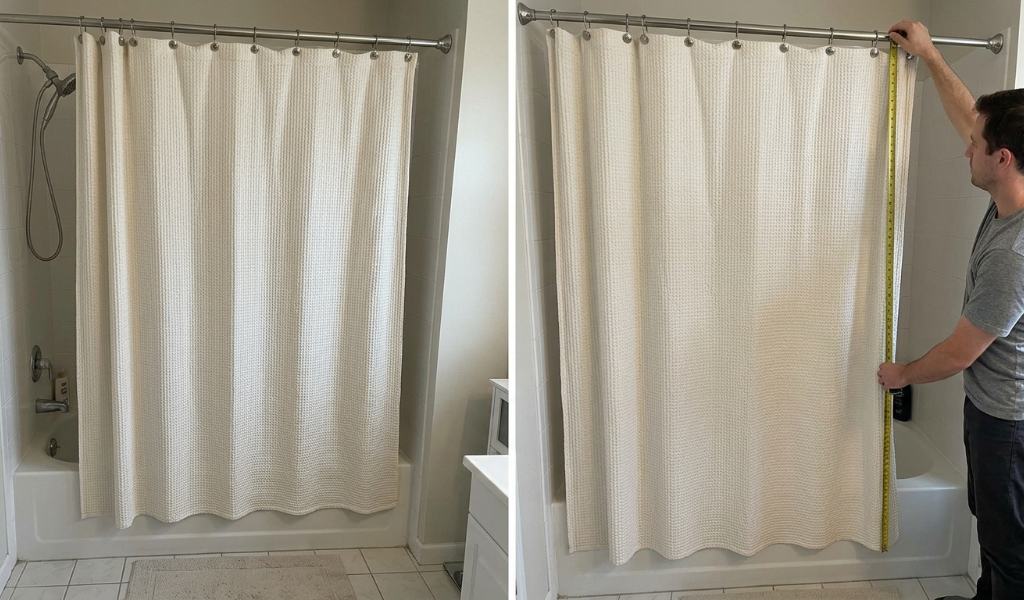
A 70 × 72-inch curtain also counts as a common standard option. It provides the same drop but gives you two fewer inches of width. However, most conventional tub openings hide that difference within the curtain’s natural folds. Wider openings or fuller styling benefit from the extra margin of a 72-inch-wide panel.
Manufacturers usually print width first and length second on packaging. Therefore, 70 × 72 means 70 inches wide and 72 inches long. Check that order before purchasing, especially when comparing square curtains with extra-long versions.
A standard 72 inch curtain gives shoppers a reliable benchmark. Yet the package size describes fabric dimensions, not the exact distance from rod to floor. Hooks, rings, and mounting height all influence where the bottom edge finally rests.
Standard Sizes by Shower Type
The right packaged size changes with the bathing area’s shape. Tub vs stall sizing requires different proportions because each opening handles width and vertical coverage differently. First, identify your fixture type before comparing measurements.
| Shower type | Typical outer curtain | Why it fits |
| Tub/shower combination | 72″ W × 72″ L | Covers a typical opening and allows gentle fullness. |
| Compact stall | 54″ W × 78″ L | Uses less width but adds drop for a taller, narrower opening. |
| Tall or freestanding setup | 72″ W × 84″ L or 72″ W × 96″ L | Provides added drop when a 72-inch curtain would finish too high. |
For tub and shower combinations, 72 × 72 inches supplies width for coverage and relaxed folds. Meanwhile, a 54 × 78-inch stall curtain favors extra drop over unnecessary width. Taller installations can use 72 × 84-inch or 72 × 96-inch packaged options.
These common dimensions offer practical references, not universal guarantees. For example, a freestanding tub may need coverage around more than one exposed side. Similarly, a compact stall may require careful positioning near its threshold.
Next, measure the straight opening width along the rod’s path. A 60-inch tub commonly pairs well with 72 inches of curtain width. That difference creates approximately 12 inches for overlap and gathered fullness. However, curved rods or unusual surrounds can alter the usable span.
For measuring drop, start at the installed rod rather than the ceiling. Then account for the vertical distance added by your chosen hooks or rings. Finally, choose a length that reaches the needed barrier without pooling on a wet surface.
Hem clearance supports cleanliness, easier floor care, and smoother movement. However, tubs and stalls need different finished positions because their thresholds contain water differently. Judge clearance against the tub lip or shower base, not a universal floor rule.
Why 72 × 72 Became the Standard
The 72-inch square matches many conventional tub and shower proportions. A common bathtub measures about 60 inches long, while the curtain needs additional width. Therefore, a 72-inch-wide panel offers coverage, overlap, and attractive folds without custom fabrication.
The matching 72-inch drop also suits many ordinary rod positions. It reaches toward the tub while avoiding excessive fabric around the lower edge. Consequently, retailers can stock one practical format for many common bathrooms.
Retail consistency also makes replacement easier for homeowners and renters. Manufacturers can offer broad style choices around one familiar dimension. However, that convenience never makes every bathroom identical.
Geometry explains the standard better than tradition alone. The curtain must bridge the opening, move freely, and keep water inside. When one square panel handles those jobs reasonably well, stores can sell it widely.
Moreover, the familiar size simplifies liner coordination for many tub setups. Shoppers can pair outer curtains and liners without searching for custom dimensions. Still, each layer serves a different purpose and may need a different finished position.
When Average Isn’t Right for You
A standard package can fail when your space uses unusual proportions. Look closely at these situations before selecting a size:
- Tall ceiling or high hanging point: A 72-inch drop may finish too far above the tub or floor. Consider 72 × 84-inch or 72 × 96-inch specialty options.
- Freestanding or clawfoot tub: The curtain may need coverage around additional exposed sides. Treat 72 inches as a starting point, not an automatic answer.
- Compact stall: A 54 × 78-inch curtain matches the common reference for a narrower, taller opening.
- Low or unusually short opening: A 72-inch panel may bunch against wet surfaces. Check the desired lower edge before purchasing.
First, test the proposed drop with a tape measure from the installed rod. Include the hooks or rings because they extend the fabric below that point. Then compare the measured drop with 72, 84, and 96-inch options.
Also, check how the lower edge meets the bathing area. The outer curtain should hang freely without forming a damp pile. By contrast, the waterproof liner must guide water inside the tub or shower base.
Liner coordination deserves separate attention because decoration and water control require different positions. Review how liner sizing differs before forcing both layers into an identical drop. Consequently, each layer can perform its own job without fighting the other.
Ceiling height alone cannot determine the correct curtain length. Instead, evaluate the rod, hanging hardware, lower edge, and required coverage together. This approach prevents both exposed gaps and soggy fabric.
Width can also disqualify the average size. A curtain stretched tightly across the opening loses useful overlap and often exposes side gaps. Therefore, choose enough width for movement and folds, not merely edge-to-edge coverage.
Frequently Asked Questions
Is 70 × 72 the same as 72 × 72?
No, both offer a 72-inch drop, but the second curtain provides two additional width inches.
What length fits a standard 60-inch tub?
A 72-inch outer curtain offers the common starting point for a standard 60-inch tub.
Are shower curtain dimensions listed width first?
Yes, most packages list width first and length second, but always confirm the product description.
How many inches off the floor should a shower curtain hang?
Allow practical hem clearance without sacrificing water coverage, using your tub lip or shower base as reference.
Should a shower curtain liner match the outer curtain size?
Not always, because the liner must direct water inward while the decorative curtain hangs outside.
Measure Before You Buy
The average shower curtain length gives you a useful beginning, not a guaranteed finish. Therefore, record the opening width, rod-to-edge drop, hook extension, and preferred hem clearance. Compare those numbers with every package before ordering.
For a typical tub, start with 72 × 72 inches and verify both dimensions. Meanwhile, choose 54 × 78 inches for a compatible compact stall setup. Taller or freestanding arrangements may justify 72 × 84-inch or 72 × 96-inch options.
Finally, check the liner’s position before committing to the outer curtain. Confirm that both layers move freely and keep water where it belongs. Measure your setup now, then buy the size that fits your real geometry.