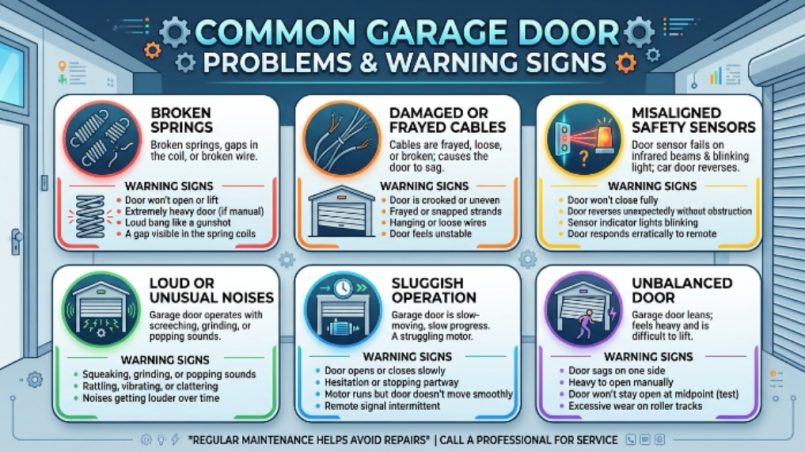
Most garage door problems start with small warning signs like unusual sounds, slow movement, or uneven operation. Spotting these symptoms early helps prevent expensive repairs, improves safety, and extends your garage door’s lifespan.
Your garage door opens and closes more than 1,500 times each year in many homes. Small faults naturally develop through daily use, making regular inspection important. Modern safety sensors have also greatly reduced garage door related injuries since becoming standard equipment. Learning the earliest warning signs helps you avoid sudden failures and costly emergency repairs.
Why Early Detection Matters
A garage door contains many moving parts that work together every day. Therefore, one worn component often affects several others over time.
Minor problems usually cost less to repair than major mechanical failures. Early maintenance also reduces stress on the opener and supporting hardware.
Regular inspections improve household safety because garage doors are heavy moving systems. Additionally, early repairs help prevent unexpected breakdowns during busy mornings.
Common Warning Signs Every Homeowner Should Notice
Strange Noises During Operation
Grinding, squeaking, rattling, or popping sounds usually indicate developing mechanical problems. These noises rarely disappear without proper maintenance.
Dry rollers, loose hardware, or worn hinges often create excessive noise. However, loud bangs may signal a broken spring requiring immediate professional service.
Slow Door Movement
A garage door should move smoothly at a steady speed. Slower movement often points toward opener strain or increasing mechanical resistance.
Weak springs, worn rollers, or aging motors commonly create sluggish operation. Consequently, delaying repairs can damage additional components.
Uneven Door Movement
Watch the door carefully while opening and closing. One side moving faster than the other usually indicates cable or spring imbalance.
An uneven door places extra pressure on tracks and rollers. Therefore, continued operation increases the chance of complete system failure.
Door Reverses Unexpectedly
Modern garage doors automatically reverse when detecting obstacles. Random reversing usually suggests sensor alignment or safety system problems.
Dirty sensor lenses often create false readings. Nevertheless, damaged wiring or failing sensors may also require professional attention.
The Most Common Garage Door Problems
Broken or Worn Springs
Garage door springs carry most of the door’s weight during operation. They gradually weaken after thousands of opening and closing cycles.
Warning signs include:
- Loud snapping sounds
- Heavy manual lifting
- Door opening only partially
- Visible spring gaps
- Crooked door movement
Never attempt spring repairs without proper training. These components remain under extreme tension and present serious safety risks.
Damaged Rollers
Rollers guide the door smoothly along its tracks every day. Constant movement eventually wears their bearings and outer surfaces.
Common symptoms include:
- Vibrations during movement
- Loud rolling sounds
- Jerky operation
- Visible cracks
- Flat roller surfaces
Replacing worn rollers early protects both tracks and opener components.
Misaligned Tracks
Garage door tracks must remain perfectly aligned for smooth movement. Even slight shifts create noticeable operating problems.
Look for these warning signs:
- Door rubbing against tracks
- Visible track gaps
- Bent metal sections
- Uneven spacing
- Door sticking halfway
Avoid forcing a door with damaged tracks because further damage may occur quickly.
Frayed or Loose Cables
Lift cables support the door alongside the springs. Continuous tension eventually causes visible wear.
Inspect cables for:
- Frayed wires
- Rust buildup
- Loose connections
- Uneven cable tension
- Twisted sections
Cable failures can allow the door to drop unexpectedly. Therefore, schedule repairs immediately after noticing damage.
Dirty or Misaligned Safety Sensors
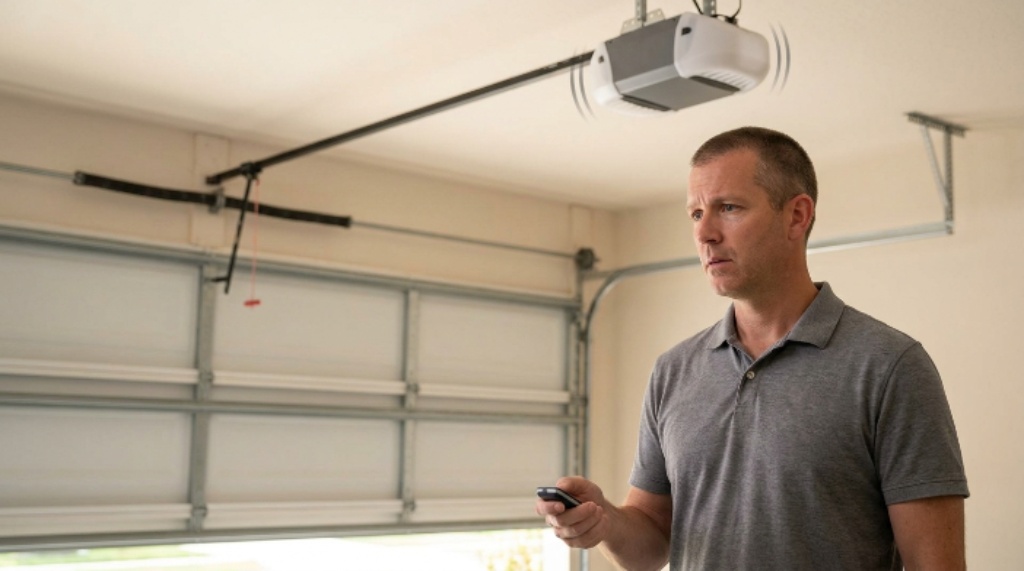
Safety sensors prevent garage doors from closing on people, pets, or objects. Small alignment changes often stop proper operation.
Symptoms usually include:
- Door reversing immediately
- Flashing opener lights
- Door refusing to close
- Intermittent operation
- Inconsistent sensor lights
Cleaning sensor lenses regularly often solves simple problems. However, damaged wiring requires professional diagnosis.
Worn Hinges
Hinges allow garage door panels to bend during movement. Daily use gradually loosens mounting hardware and wears pivot points.
Watch for:
- Clicking noises
- Visible rust
- Loose screws
- Panel shifting
- Metal fatigue
Replacing damaged hinges early protects surrounding door panels from additional stress.
Failing Garage Door Opener
Openers experience electrical and mechanical wear after years of service. Small performance changes usually appear before complete failure.
Typical warning signs include:
- Delayed response
- Inconsistent remote operation
- Motor humming
- Random stopping
- Weak lifting power
Simple battery replacement sometimes solves remote problems. Otherwise, internal opener components may require repair.
Weather Seal Damage
Bottom seals keep water, dirt, insects, and drafts outside the garage. Rubber naturally hardens and cracks with age.
Inspect for:
- Visible cracking
- Water entering underneath
- Light showing below the door
- Brittle rubber
- Missing seal sections
Replacing weather seals improves energy efficiency while protecting stored belongings.
Problems You Can Safely Check Yourself
Several garage door issues allow safe homeowner inspection without special tools. Always disconnect power before performing visual inspections.
You can safely inspect:
- Sensor cleanliness
- Remote batteries
- Weather seals
- Loose visible bolts
- Roller condition
- Door balance from a safe distance
Never loosen springs, cables, or bottom brackets during inspections. These components remain extremely dangerous under tension.
Monthly Garage Door Inspection Checklist
Performing a quick inspection each month helps identify problems early. The process usually requires only a few minutes.
Check the following:
- Listen for unusual noises.
- Watch for smooth movement.
- Test remote controls.
- Clean safety sensors.
- Inspect weather stripping.
- Look for rust.
- Tighten accessible hardware.
- Observe spring condition from a distance.
- Check cable appearance.
- Confirm the door fully closes.
Signs You Should Stop Using the Door Immediately
Certain problems indicate serious safety concerns requiring immediate professional service. Continuing operation may cause property damage or personal injury.
Stop using the door if you notice:
- Broken springs
- Frayed lift cables
- Door hanging unevenly
- Door falling quickly
- Off track rollers
- Large track damage
- Burning motor smell
- Door refusing manual support
Disconnect the opener if safe to do so. Then arrange repairs before using the door again.
Maintenance Tips That Prevent Bigger Repairs
Routine maintenance significantly extends garage door life while reducing repair costs. Most preventive tasks require little time.
Apply garage door lubricant to moving metal parts twice each year. Keep tracks free from debris without applying grease inside them.
Clean safety sensor lenses with a soft cloth regularly. Also replace remote batteries before they become completely depleted.
Watch the entire door while it operates every month. Finally, schedule professional inspections whenever performance noticeably changes.
When Professional Service Is the Best Choice
Some repairs involve extreme mechanical tension or complex electrical systems. Professional technicians have proper tools and safety training.
Always hire experienced technicians for spring replacement, cable repairs, opener installation, track realignment, and major structural damage. Professional service also protects manufacturer warranties on many components.
Conclusion
Most garage door failures begin with simple warning signs that homeowners often overlook. Paying attention to sounds, movement, balance, and safety features helps prevent expensive repairs while protecting your family. Start performing a brief monthly inspection today, and schedule professional service whenever you notice serious warning signs before small issues become major problems.
FAQs
How often should I inspect my garage door?
Inspect your garage door once every month for the best preventive maintenance.
What causes a garage door to become noisy?
Dry rollers, worn hinges, loose hardware, or aging springs usually create excessive noise.
Can I replace garage door springs myself?
No, garage door springs remain under dangerous tension and require professional replacement.
Why does my garage door close and then reopen?
Dirty, blocked, or misaligned safety sensors commonly cause automatic reversing.
How long does a typical garage door last?
A well maintained quality garage door often lasts between 15 and 30 years.
Meta description: Learn the most common garage door problems, early warning signs, maintenance tips, and safe inspection methods to prevent costly repairs.
Suggested slug: common-garage-door-problems