
Key Takeaways
- Cyclonic vacuums spin air at high speed to throw dust out of the airflow.
- Fast-spinning air creates strong force that pushes dirt into a collection bin.
- No bags are needed, so suction stays steady as the bin fills.
- Multi-cyclone systems capture fine dust better than single-cyclone designs.
- Regular filter cleaning keeps a cyclonic vacuum working at its best.
Have you ever wondered why some vacuums never lose suction? The answer often sits inside a plastic cone that spins air faster than a highway car. This is cyclonic technology, and it has reshaped the vacuum industry. James Dyson popularized cyclonic vacuums in the 1980s. He adapted the idea from industrial dust collectors used in sawmills and factories. According to Dyson, his team built over 5,000 prototypes before launching the first bagless cyclonic vacuum in 1993. Since then, nearly every major brand has copied the core idea.
This guide explains how cyclonic separation actually works. You will learn the physics in plain words, the difference between single and multi-cyclone systems, and how this design compares to bagged vacuums. Additionally, you will learn how to maintain one properly. By the end, the technology will feel simple instead of mysterious.
What Is Cyclonic Vacuum Technology?
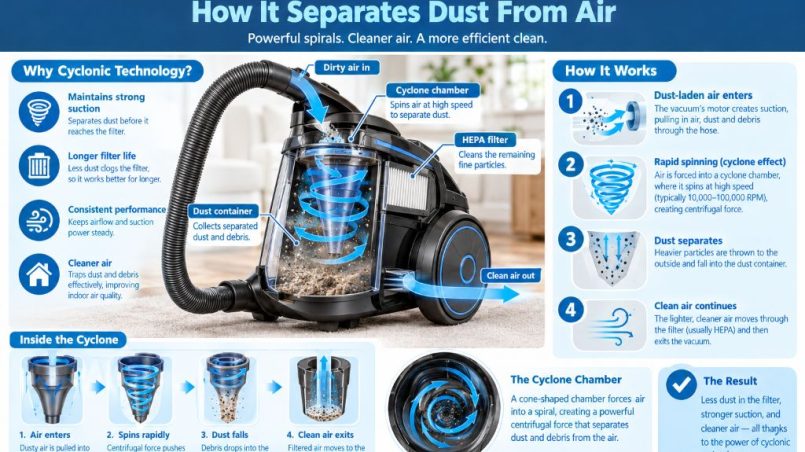
Cyclonic technology separates dust from air using fast spinning motion. Dirty air enters a cone-shaped chamber at high speed. The cone’s shape forces the air into a tight spiral, similar to water circling a drain.
This spinning motion creates strong outward force. Engineers call it centrifugal force. Heavier dust particles get flung toward the outer wall of the cone. Meanwhile, cleaner air stays near the center and rises out through the top.
The dust then drops into a collection bin below. Gravity handles the final step, because the particles have already lost most of their speed. The result is simple. Dirt sits in the bin, and air exits through the exhaust.
The process repeats every second the vacuum runs. Therefore, suction stays consistent from start to finish. There is no bag to clog, and airflow rarely gets blocked.
Compare this with older bagged vacuums. A bag acts like a giant filter. As it fills, its pores clog with fine dust. Consequently, airflow drops and suction weakens. Cyclonic design removes this weak point entirely. That is the core promise of the technology.
The Physics of Air Spinning in a Cone
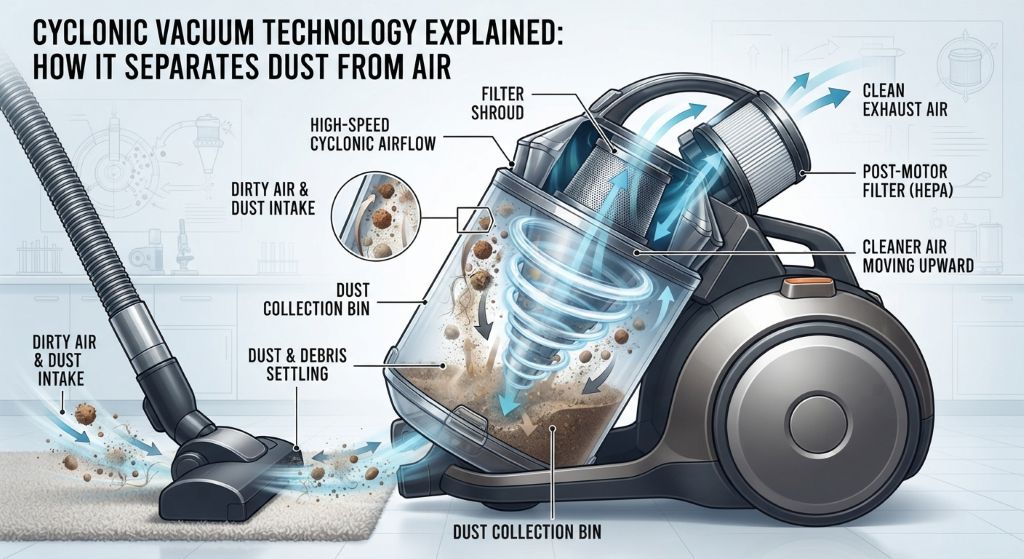
The secret behind cyclonic separation is speed and force. When air spins fast enough, it generates a force many times stronger than gravity. Industrial cyclones can generate forces over 2,000 times gravity. Household vacuums are smaller but still produce remarkable pulling power.
Here is how the process unfolds step by step:
- Dirty air enters the cyclone chamber at high velocity.
- The angled entry forces the air into a spiral path.
- The cone narrows, which speeds up the spin.
- Dust particles get pushed outward toward the chamber walls.
- Particles slide down into the bin while clean air exits upward.
The narrowing cone shape matters most. As the space gets tighter, the air must spin faster to fit through. Think of a figure skater pulling in their arms to spin quicker. The same rule applies to the airflow inside the cone.
Particle size decides the outcome. Large debris like sand and crumbs separate easily. Fine particles, such as pollen and smoke-sized dust, spin out too, but some escape. Therefore, cyclonic vacuums still need a final filter to catch the finest dust.
This is why design details matter. A well-shaped cone with smooth walls separates dust more efficiently. Cheap designs with rough or uneven walls let more dust escape back into the air.
Single Cyclone vs. Multi-Cyclone Systems
Not all cyclonic vacuums are equal. The number of cyclone chambers changes how well the machine captures dust. Budget models often use one large cyclone. Premium models use many small cyclones working together.
A single cyclone handles large debris well. However, it struggles with the finest particles. Those tiny particles slip through and head toward the exhaust. As a result, single-cyclone vacuums depend heavily on their final filter.
Multi-cyclone systems solve this problem. They place several small cones after the main chamber. Each small cone spins air even faster than the first. Therefore, they capture finer dust that the main cyclone missed.
Consider these differences:
- Single cyclone: simple, cheap, best for large debris.
- Multi-cyclone: pricier, captures fine dust, keeps filters cleaner.
- Small cones: spin faster and catch smaller particles.
- Main chamber: handles the bulk of visible dirt first.
According to Dyson’s engineering team, smaller cyclones generate higher centrifugal forces. This is why their machines stack many mini cyclones in parallel. Other brands, including Shark and Hoover, use similar layered designs.
For buyers, the lesson is clear. If allergies or fine dust concern you, choose a multi-cyclone model. The extra cost buys cleaner exhaust air and less frequent filter clogs.
Cyclonic vs. Bagged Vacuums: A Clear Comparison
Both designs aim for the same goal, which is trapping dust. However, they reach it through very different methods. Understanding the trade-offs helps you pick the right type for your home.
Cyclonic vacuums never need replacement bags. You empty the bin into the trash and keep cleaning. Therefore, running costs stay low over the years. Bag owners spend money on every replacement pack.
Suction tells a similar story. Cyclonic vacuums maintain airflow as the bin fills. Bagged models lose suction as their bags clog. This difference shows most on long cleaning sessions.
However, bags have real advantages too. They seal dust inside, so emptying is cleaner and easier. Cyclonic bins puff dust back into the air when emptied. Therefore, allergy sufferers sometimes prefer bags despite the cost.
Consider these points:
- Emptying: bags win for cleanliness, bins save money.
- Suction: cyclonic wins for steady airflow.
- Maintenance: bags need replacing, bins need washing.
- Allergies: sealed bags trap dust better during disposal.
- Cost: cyclonic wins long-term with no bag purchases.
Noise and exhaust air also differ. Cyclonic vacuums push exhaust through washable filters. Bagged models filter through the bag material itself. Both can perform well when maintained. The best choice depends on your priorities, not on marketing claims.
How to Maintain a Cyclonic Vacuum for Best Results
Cyclonic vacuums need less upkeep than bagged models, but not zero care. A few simple habits keep suction strong for years. Skip these steps, and even the best machine will disappoint.
First, empty the bin before it gets full. Dust packed to the max line blocks airflow and reduces spin speed. Therefore, empty after each big cleaning session rather than waiting.
Second, wash the filters on schedule. Most brands recommend rinsing filters monthly and replacing them every 3 to 12 months. Check your manual, because schedules vary by model.
Third, clear the cyclone unit itself. Fine dust sometimes cakes inside the cones. A gentle tap or rinse removes it. However, always let every part dry fully before reuse. Wet parts trap dust and cause odors.
Follow this simple routine:
- Empty the bin after each major cleaning session.
- Rinse filters monthly with cold water only.
- Let all washed parts dry for 24 hours.
- Replace filters yearly or as your manual advises.
- Check hoses and brushes for clogs monthly.
Additionally, never use hot water on filters. Heat damages the filter material and shortens its life. Cold water cleans just as well and protects the mesh.
Finally, store the vacuum with an empty bin. Residual dust absorbs moisture and creates smells. A dry, empty machine stays fresh and ready.
Frequently Asked Questions
Do cyclonic vacuums really never lose suction?
They lose far less suction than bagged models, because dust does not block airflow. However, clogged filters or an overfilled bin can still reduce performance. Regular maintenance keeps suction steady.
Can cyclonic vacuums capture allergens and fine dust?
Yes, multi-cyclone systems capture most fine dust, and a final filter catches the rest. For serious allergies, look for models with HEPA-grade exhaust filters.
Do cyclonic vacuums still need filters?
Yes, every cyclonic vacuum uses a final filter to trap the finest particles that escape the cones. Wash these filters monthly and replace them as your manual directs.
Why does my cyclonic vacuum smell bad?
Odors usually come from dust left in the bin too long or from filters washed with hot water. Empty the bin often, use cold water for washing, and let parts dry fully.
Are cyclonic vacuums better than bagged vacuums?
Cyclonic models offer lower running costs and steady suction. Bagged models offer cleaner disposal and sealed dust handling. Neither is strictly better, so choose based on your needs.
Conclusion
Cyclonic technology turns a simple physics trick into a cleaning advantage. Fast-spinning air flings dust out of the airflow and into a collection bin. No bags, no clogs, and no slow loss of suction. This design can be especially useful when portable vacuum cleaners make garage cleanup easier, as the bin-based system provides convenient debris collection without relying on disposable bags. The design has limits, though. Fine dust can escape the cones, so filters still matter. Emptying a bin stirs up some dust, which bothers some allergy sufferers. Meanwhile, maintenance needs are modest but real.
Therefore, judge cyclonic vacuums by their full design, not just the word on the box. Count the cyclone stages, check the final filter type, and read the wash schedule. These details separate good machines from marketing hype.
Want to get more from your current vacuum? Start today by emptying the bin, rinsing the filters with cold water, and letting them dry overnight. You may be surprised how much suction returns with ten minutes of simple care.