A garage floor can collect sawdust, road grit, spilled oil, and stray screws all in the same week, and a household broom usually just pushes the mess around. Portable vacuum cleaners solve that problem because they combine suction, a flexible hose, and a manageable size that reaches under workbenches and between parked cars. If you are considering a specific wet-dry model, it helps to read the full review before buying, since tank size and hose reach vary widely. This guide explains how portable vacuums actually make garage cleanup easier, where they fall short, and how to choose one that fits your space.
Quick Answer
Portable vacuum cleaners make garage cleanup easier by replacing multiple tools with one device. They pick up dry debris like sawdust and gravel, handle small liquid spills with a wet-dry tank, and reach tight spots with a hose and nozzle instead of a broom. The main trade-off is capacity: small tanks fill quickly, so you empty them more often than a full-size shop vacuum.
Key Takeaways
- Wet-dry portable vacuums handle both dry debris and small liquid spills, which covers most garage messes with one tool.
- Hose length and nozzle type matter more than raw suction for reaching under shelves, seats, and workbenches.
- Small tanks mean frequent emptying, so match tank size to how much debris you typically generate.
- Corded portables usually deliver steadier suction than battery models, but cordless versions are easier to move around a cluttered garage.
- A portable vacuum complements, rather than fully replaces, a broom and a full-size shop vac in larger garages.
Why Garages Are Harder to Clean Than They Look
Garages combine debris types that most indoor vacuums are not built to handle. A typical garage floor might hold dry leaves, sand, pebbles, sawdust, dried mud, metal shavings, and the occasional oil or coolant drip. Brooms scatter fine dust into the air instead of containing it, and paper towels smear liquids rather than removing them.
A portable vacuum addresses this because it is designed for mixed debris. The suction pulls material into a sealed container, so dust does not simply relocate onto shelves and tools. A wet-dry model adds a second capability: it can pull up spills before they spread, which matters when a small oil leak sits near stored boxes or cardboard.
What Makes a Portable Vacuum Easier Than a Full-Size Shop Vac
The main advantage is not power, it is maneuverability. Full-size shop vacuums often hold several gallons and can be bulky enough that moving them around a crowded garage becomes its own chore. A portable unit is lighter, easier to carry one-handed, and small enough to store on a shelf or under a bench when not in use.
That said, the trade-off is real. Smaller tanks fill faster, so a big cleanup job means stopping to empty more often. If your garage regularly accumulates large piles of debris, a full-size shop vac may still be the better primary tool, with a portable vacuum handling quick touch-ups.
When a Portable Model Is the Better Choice
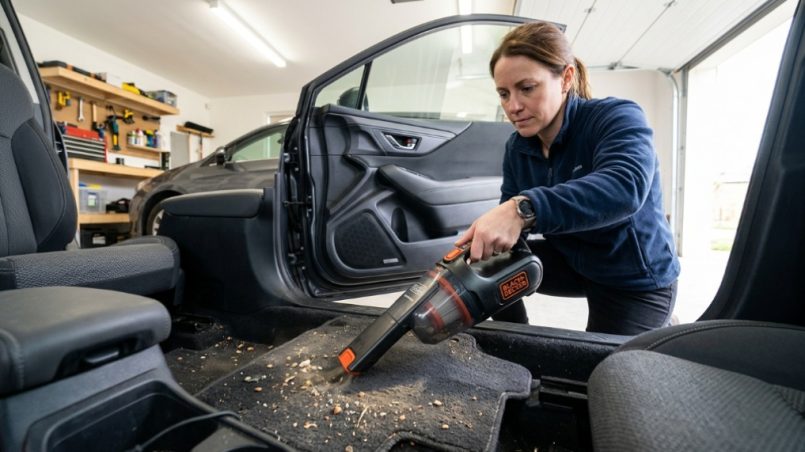
Choose a portable vacuum when your garage cleanup is frequent but modest: crumbs, dust, a few screws, and small spills. It also works well for cleaning car interiors in the driveway, since you can carry it to the vehicle rather than dragging the vehicle to an outlet. For occasional deep cleans after renovation work, a larger shop vacuum usually makes more sense.
Dry Debris vs Wet Spills: One Tool, Two Jobs
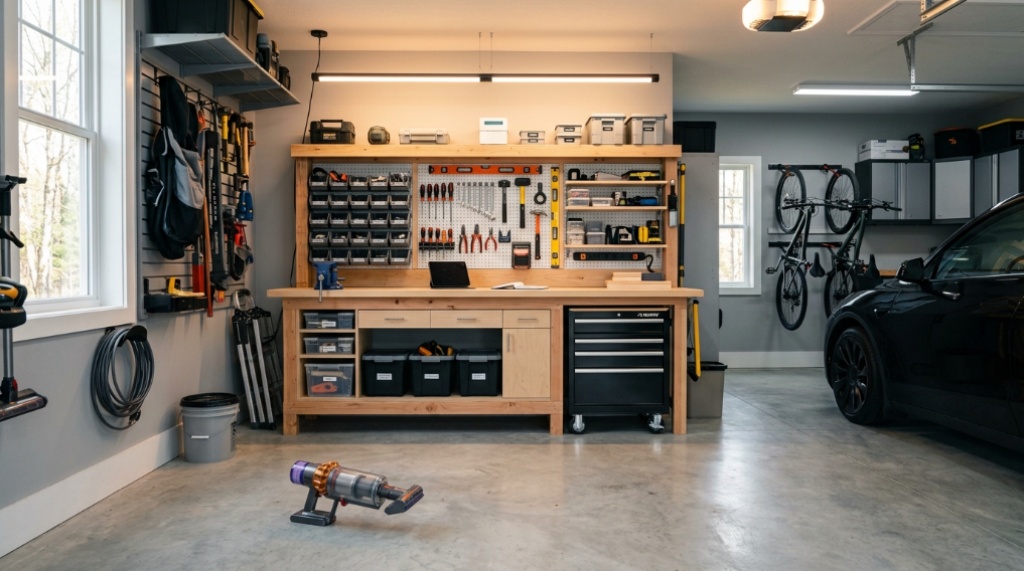
Wet-dry capability is one of the strongest reasons portable vacuums simplify garage work. The same unit that lifts sawdust and gravel can also pull up a small puddle of water or a minor oil spill, provided you switch to the appropriate filter setup first.
| Debris Type | Portable Wet-Dry Vacuum | Standard Household Vacuum |
|---|---|---|
| Sawdust and fine dust | Effective with a suitable filter | Clogs filters quickly |
| Pebbles and gravel | Handles without damage in most cases | Risk of internal damage |
| Small water spills | Designed for wet pickup | Not safe for liquids |
| Oil or coolant drips | Can pick up small amounts | Not recommended |
| Metal shavings | Generally manageable | Can scratch or jam components |
One practical caution: many wet-dry vacuums require a different filter or no filter at all when picking up liquids. Using the wrong setup can damage the motor or push liquid into places it should not go. Always check the manufacturer’s instructions for the specific model before switching between wet and dry use, To find out more about alternative compact cleaning options for your workspace, check out our detailed review on Armor All Vacuum 5 Pros & Cons of Compact Wet Dry Vacuum.
Practical Features That Actually Reduce Cleanup Time
Not every feature matters equally. These are the ones that tend to have the biggest impact on how quickly a garage cleanup goes:
- Hose length and diameter: A longer, wider hose reaches under cars and shelving without moving furniture, and resists clogging from larger debris.
- Nozzle variety: A crevice tool gets between shelving gaps, while a wider utility nozzle handles floor debris faster.
- Blower function: Some models can switch to blowing, which helps clear dust from tight corners or push leaves out of the garage door track.
- Tank access: A tank that opens quickly and rinses easily saves time during frequent emptying.
- Cord length or battery runtime: A short cord forces you to find an outlet mid-job, while a battery model needs enough runtime to finish without a recharge.
Corded vs Cordless in a Garage Setting
Corded portables generally provide consistent suction for as long as you need it, and they avoid battery degradation over time. The limitation is reach: you are tied to an outlet, which can be awkward in a detached garage with few power points. Cordless models trade some suction and runtime for freedom of movement, which helps in cluttered spaces or when cleaning a car parked outside.
A Step-by-Step Garage Cleanup Routine
A portable vacuum works best when you follow a logical order rather than jumping between tasks. This sequence keeps fine dust from settling on areas you already cleaned.
- Clear loose items and larger objects off the floor so you can see the actual debris.
- Start with dry pickup on the highest surfaces first, such as workbench tops and shelving, working downward.
- Move to the floor, using a wider nozzle for open areas and a crevice tool along walls and edges.
- Switch to wet pickup only after dry debris is cleared and the filter setup is correct.
- Empty and rinse the tank, then let it dry fully before storing to prevent odors.
- Check and clean the filter according to the manufacturer’s guidance, since clogged filters reduce suction noticeably.
Common Mistakes That Slow You Down
Most frustrations with portable vacuums come from a few avoidable errors. Using a dry filter for wet pickup is the most damaging, since it can ruin the filter and risk motor damage. Another common mistake is ignoring filter maintenance: a clogged filter makes even a capable vacuum feel weak, and the fix is usually just a rinse or replacement.
Overfilling the tank is also easy to miss. Once debris reaches the fill line, suction drops sharply and you may end up pushing material back out. Finally, using a small portable vacuum for large renovation debris, like broken tile or long strips of wood, can clog the hose and stress the motor. Matching the tool to the job prevents most of these issues.
Frequently Asked Questions
Can a portable vacuum really handle garage debris?
Yes, for everyday garage messes like dust, small pebbles, sawdust, and minor spills. It struggles with large volumes of heavy debris, which is better suited to a full-size shop vacuum.
Do I need a wet-dry model for a garage?
A wet-dry model is worth it if your garage sees occasional water, oil, or coolant spills. If you only deal with dry debris, a dry-only portable may be sufficient and often costs less.
How often should I empty a portable vacuum’s tank?
Empty it whenever debris approaches the fill line, which for small tanks can happen partway through a single job. Emptying early keeps suction strong and prevents clogs.
Is cordless better than corded for garage use?
Cordless offers more freedom in cluttered or remote spaces, while corded models typically provide steadier suction and unlimited runtime. The better choice depends on your outlet access and job size.
Can I use a portable vacuum on car interiors?
Yes, most portable wet-dry vacuums work well for car floors, seats, and trunks, especially with a crevice tool. Just confirm the model is rated for the debris type you expect, such as sand or small spills.
Conclusion
Portable vacuum cleaners simplify garage cleanup by handling dry debris and small spills with one maneuverable tool, reaching spots a broom cannot. They are not a replacement for a full-size shop vac on heavy jobs, but they cover the everyday messes that make a garage feel unmanageable. Match tank size, hose reach, and corded or cordless power to your space, keep filters clean, and empty the tank before it overfills. That combination keeps cleanup quick and consistent.