
You just wiped down your countertops, but instead of a streak-free shine, you are left with a dull film or worse, damage that wasn’t there before. The problem is not your cleaning effort; it is the product in your hand. Most homeowners grab a bottle without checking if it is safe for their specific surface. The result? Etched granite, cloudy marble, or stripped laminate. Choosing the best kitchen countertop cleaner requires matching the chemical formula to your material. This guide walks you through exactly how to make that choice without ruining your investment.
What Makes a Kitchen Countertop Cleaner “The Best”?
The best kitchen countertop cleaner is one that kills germs, cuts grease, and leaves zero residue, all while being chemically safe for your specific surface type. A universal “one-size-fits-all” cleaner rarely exists because natural stone, quartz, laminate, and wood all have different chemical tolerances.
pH Neutrality Matters More Than You Think
Many popular household cleaners are highly alkaline or acidic. Bleach and ammonia-based products are dangerous for sealed stone surfaces because they break down the sealant and etch the finish. A pH-neutral cleaner typically registers around 7 on the scale, meaning it won’t react chemically with your countertop. If you own marble, limestone, or travertine, pH neutrality is non-negotiable.
Disinfecting vs. Daily Cleaning
Daily cleaning requires only soap and water or a mild spray to remove crumbs and light grease. Disinfecting, however, requires an EPA-registered sanitizer that kills bacteria like salmonella or E. coli. The best kitchen countertop cleaner for raw chicken spills is different than the one you use for morning coffee rings. Look for products that are safe for food preparation surfaces but also kill 99.9% of germs.
Residue and Streak-Free Performance
A poor cleaner leaves a cloudy film that dulls the finish of your counters. This is especially problematic on dark granite or polished quartz. The best formulations evaporate quickly and require no buffing. Alcohol-based sprays are excellent for streak-free results on sealed stone and stainless steel.
How to Choose a Cleaner for Natural Stone Countertops
For natural stone, the single most important factor is avoiding acid and alkaline damage. Vinegar baking soda, and lemon juice are common DIY mistakes that permanently etch limestone, marble, and travertine. The best kitchen countertop cleaner for stone is specifically labeled “stone-safe” with a pH between 7 and 8.
Granite and Quartzite Care
Granite is porous and requires a cleaner that does not strip the sealant. Avoid anything with bleach or citrus oils. Look for a spray that is designed to both clean and condition the stone. Many professional-grade stone cleaners include a small amount of mineral oil or polymer to enhance the natural color without leaving a greasy feel.
Marble and Limestone Sensitivity
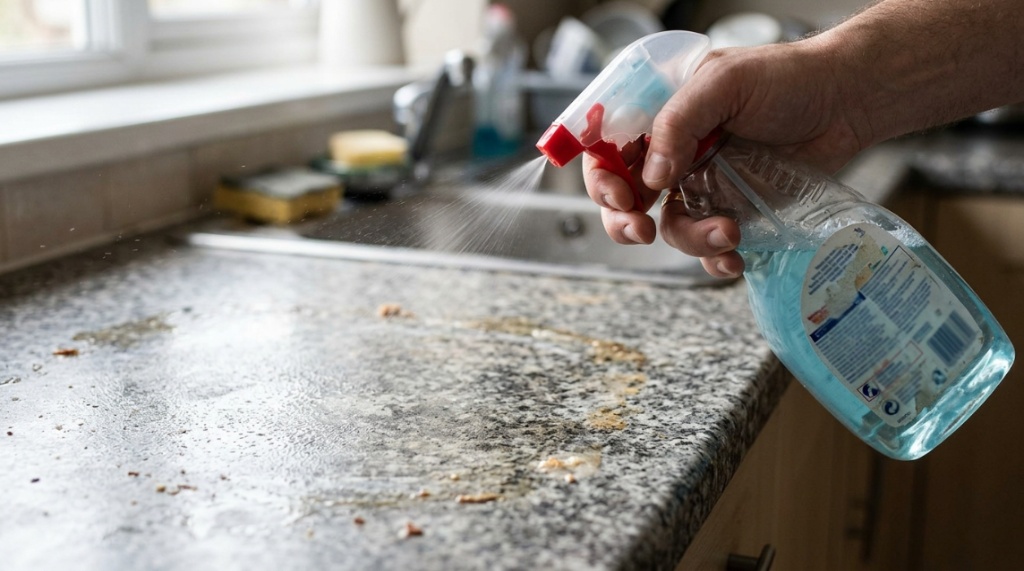
Marble is calcium-based and reacts violently to acid. Even a splash of orange juice can create a dull spot. The safest cleaner for marble is a dedicated stone soap or a pH-neutral dish soap diluted in water. Never use a “degreasing” kitchen spray on marble. If you want to disinfect, use a 70% isopropyl alcohol solution, which evaporates quickly and does not etch.
How to Test Cleaner Safety on Stone
Before applying any new cleaner to your entire countertop, test it in an inconspicuous area. Apply the product, let it sit for five minutes, then rinse and dry. If the surface looks dull, hazy, or changed color, that cleaner is not safe for your stone. If the test spot looks exactly like the surrounding area you are good to go.
Which Cleaners Work Best for Quartz and Solid Surfaces?
Quartz and solid surface materials like Corian are less porous than natural stone, but they are still vulnerable to chemical damage, especially from high heat and harsh solvents. The best kitchen countertop cleaner for these surfaces is non-abrasive and slightly alkaline.
Why Quartz Needs Gentle Care
Quartz is made of crushed stone bound with resin. That resin is sensitive to strong solvents like acetone, paint thinner, and even some oven cleaners. If you use a harsh cleaner, the resin can yellow or break down over time. Stick to water, mild dish soap, or a cleaner specifically formulated for engineered stone. Avoid scrub pads with hard bristles as they can scratch the resin surface.
Solid Surface Cleaning Tips
Solid surfaces are non-porous, which makes them resistant to bacteria, but they can be scratched. The best cleaner for solid surfaces is a soft cloth with a gentle spray. For tough stains like coffee or red wine, use a paste of baking soda and water. Do not use abrasive powders or steel wool as they will leave permanent fine scratches that collect dirt.
Matte vs. Polished Finishes
Matte finishes show streaks and residue more easily than polished ones. If your quartz has a matte or honed finish, choose a cleaner that is specifically labeled “matte safe.” Many standard cleaners contain polymers that create a shine, which can ruin the flat look of a matte surface. A simple water and alcohol mix is often the best choice for matte countertops.
Can You Use Vinegar or Bleach on Countertops?
The short answer is no for stone and quartz. Vinegar is acidic and bleach is alkaline. Both can cause permanent etching, discoloration, and sealant failure. The only countertop types that tolerate these harsh cleaners are sealed tile and stainless steel.
When Bleach Is Safe
Bleach is acceptable on sealed ceramic tile, porcelain, and stainless steel sinks. Never use it on granite, marble, limestone, quartz, or laminate. Even a diluted bleach solution can dull the finish of engineered stone. If you must disinfect with bleach, use it only on the sink basin and rinse thoroughly.
Vinegar Damage Is Permanent
Vinegar may be natural, but it is still acetic acid. On marble, a single vinegar spill that sits for ten minutes can create a rough, dull etch mark that requires professional repolishing. On granite, repeated vinegar use weakens the sealant, allowing stains to penetrate. The only surfaces where vinegar is appropriate are sealed concrete and stainless steel.
Natural Alternatives That Actually Work
If you want a natural cleaner, mix two drops of liquid castile soap with a cup of warm water in a spray bottle. This is safe for almost every countertop material. For disinfecting, use a 50/50 mix of water and 70% isopropyl alcohol, which kills bacteria without harsh chemicals. Avoid essential oils like lemon or orange as they contain acids that can damage stone over time.
How to Disinfect Kitchen Countertops Without Damaging Them
Proper disinfection requires contact time, not just harsh chemicals. The best kitchen countertop cleaner for killing germs is one that stays wet on the surface for the required dwell time, typically 30 seconds to 10 minutes, depending on the product.
Alcohol-Based Disinfectants
Sprays containing 70% isopropyl alcohol are safe for marble, granite, quartz, and stainless steel. They evaporate quickly and leave no residue. To disinfect, spray the surface until it is visibly wet, let it sit for 30 seconds, then let it air dry or wipe with a clean cloth. This is the most gentle effective method for high-end countertops.
Hydrogen Peroxide for Porous Stones
Hydrogen peroxide is a safe disinfectant for granite and quartz, but it can bleach dark stone if left too long. Use a 3% solution, spray lightly, and wipe within one minute. It is excellent for sanitizing cutting boards and butcher block counters as it kills bacteria without toxic fumes.
Different materials require different care. While a heavy-duty sealant protector is great for quartz, shared spaces or dorms usually just need a quick, budget-friendly daily spray. In fact, learning how to easily maintain shared spaces is a vital habit, and Students should Clean their Kitchens regularly to prevent permanent stains on delicate surfaces.
When to Use a Quat-Based Cleaner
Quaternary ammonium compounds (quats) are commonly used in commercial kitchen sanitizers. They are effective and safe for most surfaces when used correctly. Look for a quat-based spray that is labeled “food contact safe” and requires no rinse. These are available in ready-to-use sprays and are some of the best options for busy kitchens that need frequent sanitizing.
What About Butcher Block and Wood Countertops?
Wood countertops require cleaning, conditioning, and disinfecting in a specific sequence. The best kitchen countertop cleaner for butcher block is mild soap and water followed by a food-grade mineral oil application. Wood is porous and absorbs liquids, so you must avoid soaking the surface.
Cleaning Frequency for Wood
Wipe wood counters daily with a damp cloth and a drop of dish soap. Never let puddles of water sit on the surface as they cause warping and crack formation. Once a week, sanitize with a vinegar and water solution if your wood is unfinished, or use an alcohol spray if it is sealed with oil or wax.
Restoring Dried Out Wood Counters
If your wood counter looks dry or has developed small cracks, it needs oil. Apply a food-grade mineral oil or beeswax conditioner monthly. This not only protects the wood but also makes cleaning easier because dirt and grease cannot penetrate the oiled surface. Avoid olive or vegetable oil as they go rancid over time.
What Not to Use on Wood
Never use bleach, ammonia, or abrasive cleaners on wood. These strip the natural oils and can cause the wood to splinter or turn gray. Also, avoid leaving wet sponges or dirty dishes on wood counters. If you need to remove a stubborn stain, use a paste of salt and oil rather than a heavy-duty chemical cleaner.
How to Evaluate Cleaners for Laminate and Tile Counters
Laminate and tile are the most durable countertop surfaces and can withstand stronger cleaners. However, the seams and grout lines require special attention. The best kitchen countertop cleaner for these surfaces is one that does not soften the adhesive or seep into the grout.
Laminate Surface Cleaning
Laminate is made of plastic resin over particleboard. The biggest threat is moisture seeping into the seams or edges, causing the board to swell. Use a spray cleaner sparingly and wipe with a dry cloth immediately. Avoid soaking the surface. Bleach is too harsh and can fade the laminate color. Stick to a standard all-purpose spray or a mix of water and dish soap.
Tile Grout Care
Grout is porous and stains easily. The cleaner you use on tile should be safe for grout as well. Acidic cleaners like vinegar can eat away at grout over time, making it crumbly. Use a neutral pH cleaner for daily maintenance. For deep grout cleaning, use a baking soda and hydrogen peroxide paste applied with a soft brush. Seal your grout every six months to prevent stains from setting.
Preventing Scratches on Tile and Laminate
Both tile and laminate can be scratched by gritty cleaners or scrub pads. Always use a microfiber cloth or a soft sponge. Avoid powdered cleaners that contain abrasives. If you have ceramic tile, the glaze is tough, but the grout is not, so focus your cleaning effort on wiping rather than scrubbing.
What Ingredients Should You Avoid in a Countertop Cleaner?
Understanding ingredient labels is the fastest way to choose the best kitchen countertop cleaner for your home. Some ingredients offer a false sense of cleaning power and actually create long-term damage. Look for “pH balanced,” “stone safe,” and “non-abrasive” claims on the label.
Top Ingredients to Avoid
- Bleach (sodium hypochlorite): Dulls stone, damages sealants, and can discolor laminate.
- Ammonia: Strips wax and sealants from stone and wood surfaces.
- Phosphoric acid: Etches marble and limestone immediately.
- Citric acid or citrus oils: Weakens granite sealant and etches soft stone.
- Abrasives (silica, pumice, calcium carbonate): Scratches quartz, laminate, and solid surfaces.
- Alcohol in high concentration (above 90%): Can dry out wood and may weaken some resin binders in quartz.
Reading the SDS for Transparency
Safety Data Sheets (SDS) are available online for most commercial cleaners. They list every active ingredient and its pH level. If a cleaner does not list its pH or hides behind proprietary blends, be cautious. Reputable brands provide full disclosure. You can also check the manufacturer website for surface compatibility charts.
The Problem with “Natural” Claims
Just because a cleaner is labeled “natural” does not mean it is safe for your countertops. Many natural cleaners use citrus or vinegar as active ingredients. Always verify the pH and abrasiveness of a “green” cleaner before using it on expensive stone or quartz surfaces.
Frequently Asked Questions
Can I use dish soap to clean my countertops?
Yes, a few drops of mild dish soap mixed with warm water is safe for most countertop surfaces including stone, quartz, laminate, and solid surface. Avoid using too much soap as it can leave a sticky residue. Rinse with clean water and dry with a soft cloth.
How often should I clean my kitchen countertops?
For daily maintenance, wipe down counters after each meal or at least once a day with a gentle cleanser. Deep sanitizing should happen once a week or immediately after handling raw meat. Frequency depends on how often you cook and how many people use the kitchen.
What is the best way to remove sticky residue from countertops?
For sticky residue from labels or food spills, use a small amount of rubbing alcohol or a dedicated adhesive remover. Apply it to a cloth, not directly to the surface. Test on an inconspicuous area first. Never use a razor blade on quartz or laminate as it will scratch permanently.
Is it safe to use Clorox wipes on granite?
Clorox wipes contain bleach and are not recommended for sealed granite. They can weaken the sealant over time and may cause dull spots. If you need to disinfect granite, use an alcohol-based spray or a stone-safe disinfectant wipe specifically labeled for natural stone.
Can I mix vinegar and baking soda to clean countertops?
Mixing vinegar and baking soda creates a fizzy reaction that is mostly water and sodium acetate. While it is fun to watch, it is not an effective cleaner and the abrasive crystals from baking soda can scratch soft stone and polished finishes. Use each ingredient separately for specific cleaning tasks.
What cleaner should I use for dark granite countertops?
Dark granite shows every streak and fingerprint. Use a streak-free stone cleaner that contains a small amount of alcohol or a surfactant designed to evaporate cleanly. Avoid oil-based cleaners as they can leave a hazy film on dark stone. A microfiber cloth also helps reduce streaking.
How do I know if my countertop sealant is still intact?
Perform a water test. Pour a few drops of water on the countertop. If the water beads up, the sealant is working. If the water soaks in and darkens the stone within a few minutes, it is time to reseal. Most granite requires resealing every 6 to 12 months depending on usage.
Conclusion
Choosing the best kitchen countertop cleaner comes down to knowing your surface and reading labels carefully. A pH-neutral, non-abrasive cleaner works well for most materials, while stone and wood require specialized care. Avoid harsh chemicals like bleach, vinegar, and ammonia unless you have tile or stainless steel. For daily use, a mild soap and water mix or an alcohol-based spray offers safe, effective cleaning without damage. Remember to test any new product on a small hidden area first. Keep your counters clean, dry, and sealed, and they will last for decades while looking as good as the day they were installed.