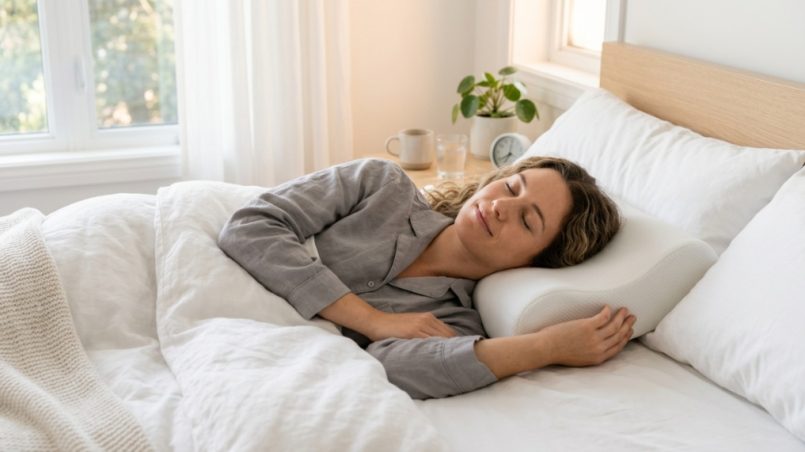
Waking up with a throbbing headache that started in your neck is exhausting—especially when it ruins your entire day before it even begins. If you routinely experience tension that travels from your shoulders up into your skull, your sleep setup is likely a hidden culprit. The truth is, many chronic migraine sufferers overlook the intimate connection between their cervical spine and their nervous system. That is precisely where a targeted sleep solution comes into play. By supporting the natural curve of your neck and keeping your head aligned with your spine, a cervical pillow for migraine relief tackles the root biomechanical triggers that often wake you up already in pain. In this comprehensive guide, you will learn exactly how these specialized pillows work, what features matter most, and how to make the switch tonight for a better tomorrow.
Why Does Your Neck Position Cause Morning Migraines?
Your neck is not just a column of bones; it is a dense network of nerves, blood vessels, and muscles that directly connect to your head. When you sleep with a flat or overly thick pillow, your head drops to one side or is thrust forward, which strains the upper cervical vertebrae. This strain causes inflammation and muscle spasms that can easily trigger a vascular and nervous system response—culminating in a migraine upon waking.
The Cervical Nerve Root Connection
The upper three cervical nerves (C1–C3) create a direct pathway between your neck and the trigeminal nucleus in the brainstem, which is the primary migraine processing center. When your pillow forces these joints into a distorted angle for eight hours, irritation in these nerves sends “pain signals” directly to your brain stem, lowering your migraine threshold over time.
Poor Sleep Posture and Muscle Tension
A regular pillow often lifts your head too high or allows it to sink too low, creating unnatural micro-bends in the neck. This forces the suboccipital muscles at the base of your skull to work overtime just to stabilize the head. Morning stiffness in this area is a clear sign that your pillow is fighting against you instead of supporting your recovery process.
How a Cervical Pillow Differs from a Regular Pillow
A cervical pillow is not simply a harder or higher pillow. It is ergonomically contoured to cradle the neck and head, maintaining a neutral spine from your shoulders to your ears. While a standard pillow provides generic loft, a cervical pillow offers targeted support that reduces strain on the very structures that become inflamed and cause migraines.
Designed Vertebral Alignment Features
Most cervical pillows feature a distinct “butterfly” or “wave” shape with a central depression for your head and a raised, curved ridge for your neck. This design keeps your ear aligned with your shoulder and your chin tucked in slightly, promoting proper drainage of cerebrospinal fluid and reducing pressure on the vertebral arteries that supply blood to the brain.
Supporting Different Sleep Positions
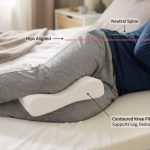
Whether you sleep on your back or your side, a cervical pillow adapts its contour. For back sleepers, the neck roll supports the natural lordotic curve. For side sleepers, the pillow must have a higher loft to fill the gap between the shoulder and the neck, preventing lateral bending of the spine that often triggers migraines on one side of the head,If you also struggle with lower body discomfort, check out our guide on relieve back pain with a knee pillow for additional spinal alignment tips.
What Materials Are Best for Migraine Prevention?
The material of the pillow dictates not only comfort but also temperature regulation and pressure distribution. Choosing the wrong material can turn a great contour into a source of overheating and pressure points, which ironically makes migraines worse. Memory foam and latex remain the industry benchmarks for adaptive support.
Memory Foam: Adaptive Contouring
Viscoelastic memory foam uses body heat to soften and mold to the unique curves of your neck. This ensures a custom fit on the first night without a break-in period. However, traditional memory foam can retain heat, which is a known trigger for some migraine sufferers. Look for gel-infused or open-cell variations to counter this issue.
Latex: Resilience and Cooling
Natural latex offers a similar contouring effect but with more bounce and far superior airflow. It does not sink as deeply as memory foam, which provides a slightly firmer support that some users find beneficial for maintaining spinal alignment. Latex is also naturally hypoallergenic and resistant to dust mites, a plus for allergy-induced headaches.
Which Sleeping Position Works Best with a Cervical Pillow?
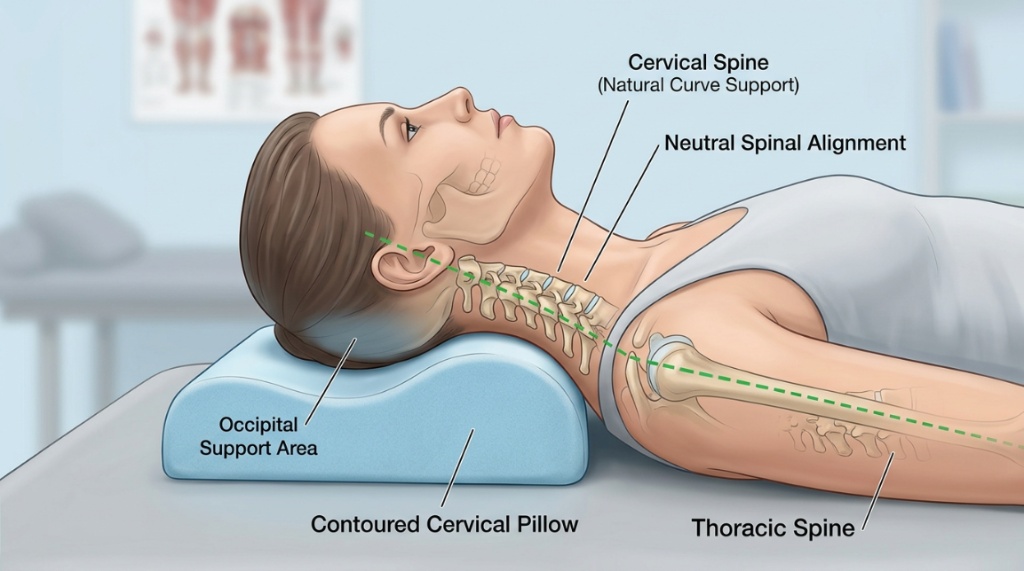
While a cervical pillow significantly improves any sleeping posture, the benefits are maximized when you encourage back sleeping. Lying supine allows the pillow to support the neck evenly and keeps your head in a neutral position without torsion on the cervical joints. However, side sleeping can also be effective if you choose the correct pillow height.
Back Sleeping Guidelines
When lying on your back, your forehead and chin should be level, and your shoulders should rest on the mattress while your head and neck rest on the pillow. There should be a small gap under the lower back of your neck, not a space. If the gap is too large, the pillow is too high for your body frame.
Side Sleeping Adjustments
For side sleepers, the primary goal is to keep the spine in a perfectly straight horizontal line. The pillow’s side edge should be as high as your shoulder width. If you have broader shoulders, you may require a cervical pillow with a higher side profile to prevent your neck from tilting downward toward the mattress.
Can a Cervical Pillow Actually Prevent Migraine Attacks?
Yes, but with an important caveat: it is not a standalone cure, but a critical tool in a comprehensive prevention strategy. Clinical studies have shown that a consistent improvement in upper cervical posture reduces the frequency and intensity of cervicogenic headaches and migraines. The pillow works by eliminating the mechanical trigger during the overnight rest period.
Clinical Evidence and Research
Research published in the “Journal of Manipulative and Physiological Therapeutics” has demonstrated that interventions targeting cervical posture, including the use of contoured pillows, led to significant reductions in headache frequency in participants with chronic neck-related pain. The evidence strongly supports using these pillows as a non-pharmaceutical, low-risk adjunctive therapy.
What It Cannot Do
It cannot correct sudden acute attacks caused by stress, hormones, or dietary triggers. It reinforces proper alignment during rest, but if you sit at a desk for nine hours with your head jutting forward, that daily strain will still flow into your sleep cycle. The pillow is a powerful ally, but it requires your posture during the day to play its part too.
How to Choose the Right Cervical Pillow for Your Body
Choosing a pillow is a highly personal decision based on your body mass index, sleep habits, and specific pain points. A pillow that is too soft offers no support, while one that is too firm can create new pressure points. You are looking for the “goldilocks” fit where your neck is supported but your head sinks just slightly into the contour.
| Body Frame | Recommended Loft (Height) | Firmness Level |
|---|---|---|
| Small-Petite | 3–4 inches | Medium-Soft |
| Medium-Average | 4–5 inches | Medium |
| Large-Broad Shoulders | 5–6 inches | Medium-Firm |
Evaluating Pillow Loft and Length
Your neck is supported not just by the height, but also by the width of the cervical roll. The roll should be positioned in the “hollow” just below the base of your skull, not under your head. When your head presses down into the central depression, the front edge of the pillow should support your lower neck without pushing your chin toward your chest.
Testing the Hypoallergenic Factor
If you have allergies that frequently cause sinus pressure and migraines, opt for pillows made from CertiPUR-US or Oeko-Tex certified foams that are free from heavy metals and formaldehyde. Additionally, consider a zippered, washable cover to protect against the accumulation of dust mites and skin oils, keeping your sleeping environment clean.
Step-by-Step Guide to Transitioning to a Cervical Pillow
Switching from a fluffy regular pillow to a contoured one can be jarring for the first few nights. Many users initially feel that their neck is “overstretched” or that the pillow is too hard. The key is to acclimate gradually, allowing your muscles to release years of accumulated tension. Here is a practical plan for a smooth transition.
Week 1: Start with Short Intervals
During the first week, use the cervical pillow for only the first half of the night. After waking up in the middle of the night, switch to your old pillow for the remaining hours. This eases the nervous system into the new alignment without causing an insomnia flare-up due to discomfort.
Week 2: Increase Duration and Adjust
In the second week, try to use the cervical pillow for the entire night. If you wake up with stiffness, it might be a sign that the loft is too high. Place a folded hand towel under the neck roll to raise it slightly or switch to a flatter side of the pillow if your model has dual contours.
Week 3: Combine with Stretching
To maximize the pillow’s benefits, incorporate a minimal morning stretching routine. Gently tilt your head to each shoulder and perform a chin tuck exercise. This elongates the muscles that the pillow supported all night, encouraging the connective tissue to adapt faster to the new neutral alignment.
When Should You Replace Your Cervical Pillow?
Cervical pillows are not a lifetime purchase. Like all sleep products, they lose their structural integrity over time, which compromises their support and renders them useless for migraine prevention. If you notice that the foam no longer springs back into shape or if you see permanent indentations, it is time for a replacement.
Signs of Pillow Deterioration
- Visible lumpiness or permanent indentations that don’t fade.
- An increase in morning neck pain or headache frequency.
- Waking up with the feeling that your pillow has “flattened out” overnight.
- Allergies worsening due to accumulated mold or mildew in the foam core.
Most manufacturers recommend replacing your cervical pillow every 18 to 24 months to ensure you are receiving effective, hygienic support.
Textile and Fill Maintenance
Wash your pillow cover weekly in hot water with gentle detergent. If your pillow has a removable inner cover, air it out monthly to prevent moisture buildup. Never submerge the memory foam core in water, as this will destroy its cell structure and cause it to break down rapidly.
What Are the Hidden Migraine Triggers in Your Bedroom?
Even with the perfect cervical pillow, hidden environmental factors can sabotage your progress. Your bedroom must be a sanctuary for your nervous system, not a breeding ground for tension. Remove barriers to a good night’s sleep to let the pillow do its job effectively.
Light and Noise Pollution
Even low-level light from electronics can disrupt melatonin production, which regulates pain threshold. Use blackout curtains and earplugs. Make your room as dark and quiet as a cave for the first three hours of sleep. This prevents the central nervous system from getting overstimulated, making you less susceptible to migraines triggered by poor sleep quality.
Temperature and Humidity
High temperatures cause vasodilation and often serve as a migraine trigger. Keep the bedroom between 60 and 68°F. Invest in breathable bedding that wicks moisture. If you live in a dry climate, use a humidifier to prevent congestion and throat irritation that can lead to clenching and jaw tension.
How to Combine Your Pillow with Other Migraine Therapies
To truly elevate your results, integrate the cervical pillow into a broader anti-migraine lifestyle. Think of the pillow as the “anchor” for your sleep hygiene, but synergize it with other proven natural interventions. This creates a multiplier effect on your migraine prevention routine.
Pairing with a Magnesium Supplement
Magnesium glycinate is a mineral that supports nervous system function and has been shown to reduce the frequency of migraine attacks. Taking this supplement an hour before bed can complement the physical relaxation your pillow provides by reducing neuronal hyperexcitability.
Integrating Trigger Point Therapy
Use a small massage ball to apply pressure on the suboccipital muscles before you lie down. This increases blood flow to the area, making the tissue more pliable. When you then rest your head on the cervical pillow, the alignment correction is far more effective because the muscle fibers are relaxed and willing to stretch.
Frequently Asked Questions
Can a cervical pillow help with vestibular migraines?
Yes, improving neck mechanics reduces mechanical interference with the inner ear and vestibular nerve pathways. While it is not a direct treatment for vertigo, many patients find that better cervical spine alignment reduces the intensity and frequency of dizziness associated with vestibular migraines.
Is a cervical pillow beneficial for teenagers with migraines?
Absolutely, if they are sleeping on adult-sized flat pillows. Teenagers are particularly prone to “tech neck” from phone use. A cervical pillow can counterbalance this by providing proper structural support during sleep, which is one of the most controlled, restorative phases of the day.
Will a cervical pillow hurt my jaw?
It should not. Actually, it may help with jaw tension. By supporting the upper neck, the pillow reduces the forward head posture that often leads to overworking the jaw joints. If you have severe TMJ issues, look for a pillow specifically designed for neck pain relief with a lower profile to minimize pressure on the temporomandibular joints.
Can I test a cervical pillow for a trial period?
Most reputable brands offer a 30 to 60-day trial. This is essential because it takes at least two to three weeks for your body to fully adjust and for you to notice a difference in migraine frequency. Look for companies that offer a risk-free trial and a sleep guarantee.
Does a cervical pillow stop all types of migraines immediately?
No. It is most effective for migraines with a muscular or postural component. Migraines triggered by food, hormones, or atmospheric pressure require additional medical management. Do not stop any prescribed migraine medications without consulting your doctor.
What specific pillow features are best for migraine relief?
Look for a medium-firm support, a deep central well for the head, and a high supportive neck roll. Features like cutouts to relieve ear pressure are also beneficial. The most important feature is an adjustable loft, allowing you to fine-tune the height to your exact body dimensions for an uncompromising fit.
Your Next Step to Pain-Free Mornings
Breaking the cycle of waking up with a migraine requires addressing the mechanical root cause that has been ignored for too long. Your neck deserves the same structural support you provide for your feet in proper running shoes or your back in an ergonomic office chair. A contoured pillow is that essential investment for your sleep—the time your body is supposed to heal and regenerate.
Start by auditing your current pillow. If it is flat, lumpy, or lets your head sink into a twisted angle, it is working against you every single night. Upgrading to a specialized cervical pillow for migraine relief is not just a comfort upgrade; it is a medical decision that targets inflammation at its source.
Combine this change with adequate hydration, mindful daytime posture, and a dark, cool sleeping environment. Track your headache frequency for the next thirty days. You will likely notice that the intensity of your pain decreases as your neck muscles begin to lengthen and relax. A migraine-free morning is within your control—starting tonight with the support you lie on.