
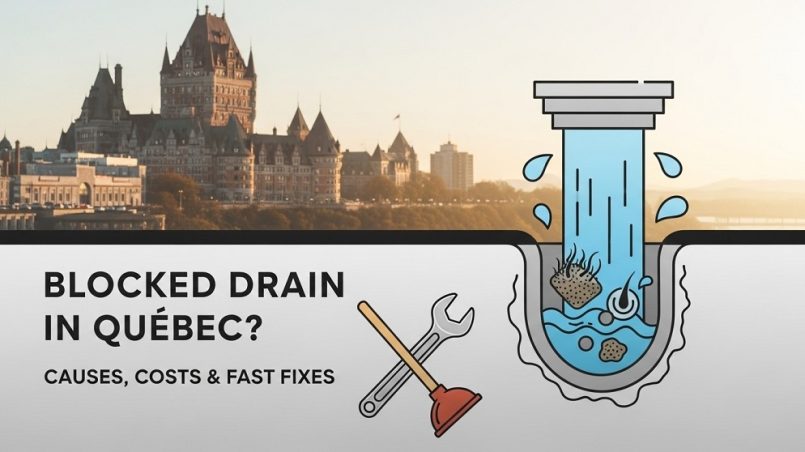
Blocked drains strike without warning. One moment your sink gurgles peacefully; the next, dirty water pools around your ankles in the shower. In Québec, where winter freezes pipes and old municipal networks carry decades of history, clogged drains happen more often than most homeowners expect. According to a 2023 Ville de Montréal infrastructure report, the city receives over 18 000 drain-related service calls every year. Across the province, similar numbers appear in Québec City, Laval, and Gatineau. Homeowners and tenants alike suddenly face unpleasant smells, slow drainage, or complete backups. However, most blockages prove preventable and fixable. This complete guide walks you through every stage: understanding why drains clog in Québec, spotting early warning signs, trying safe home remedies, knowing when professional help becomes essential, and grasping realistic costs across the province.
Why Québec Homes Face More Blocked Drains Than Average
Québec’s climate and aging infrastructure create perfect conditions for drainage problems. Cold winters freeze ground moisture, shifting soil and crushing pipes. Meanwhile, many neighbourhoods still rely on clay or cast-iron lines installed before 1970. These materials crack easily and attract roots.
Moreover, Québecers love cooking with butter, oil, and cheese. Grease ranks as the number-one culprit province-wide. When hot fat cools inside pipes, it hardens into a sticky trap that catches hair, soap scum, and food particles.
Heavy spring meltwater adds another challenge. Snow and ice accumulate all winter, then rush into storm drains at once. Leaves, sand, and road salt follow, creating massive external blockages that back up into homes.
Top 7 Causes of Blocked Drains in Québec Homes

Understanding the cause saves time and money. Here are the most frequent offenders technicians encounter daily:
- Grease and Fat Buildup – Poutine gravy, bacon grease, and fondue oil top the list in Québec kitchens.
- Tree Roots – Maple, ash, and willow roots seek water and crack older pipes in established neighbourhoods like Outremont, Rosemont, and Vieux-Québec.
- Hair and Soap Scum – Bathrooms produce thick mats that catch everything else.
- Foreign Objects – Kids flush toys; adults accidentally drop jewelry or cotton swabs.
- Toilet Paper Overuse + “Flushable” Wipes – Even wipes labelled flushable rarely break down fully in cold water.
- Mineral Deposits – Hard water in regions like Laval and the South Shore leaves calcium layers inside pipes.
- Collapsed or Bellied Pipes – Frost heave and soil settlement create low spots where waste collects permanently.
Early Warning Signs You Should Never Ignore
Smart homeowners catch problems early. Watch for these red flags:
- Water drains slowly in one fixture while others work normally
- Gurgling or bubbling sounds when another tap runs
- Foul odours rising from drains, especially in warm weather
- Wet spots or lush grass patches above the sewer line in your yard
- Multiple fixtures backing up at once (toilet + shower + sink)
When several signs appear together, the blockage likely sits deeper in the main line rather than a single fixture.
Fast DIY Fixes That Actually Work in Québec
Many minor clogs surrender to simple tools most households already own. Try these methods in order before calling anyone.
1. The Classic Plunger Technique
Plungers create pressure that often dislodges fresh blockages. Fill the sink or tub with enough water to cover the plunger cup. Seal the overflow hole with a wet cloth. Pump vigorously fifteen to twenty times. Repeat three rounds.
2. Boiling Water + Dish Soap Combo
Heat two litres of water to just under boiling. Pour 60 ml of grease-cutting dish soap down the drain. Follow immediately with the hot water. The soap emulsifies fat while heat softens it. Works wonders on kitchen sink grease clogs.
3. Baking Soda and Vinegar Volcano
Pour 125 ml baking soda down the drain. Add 250 ml white vinegar immediately. Cover with a plug and wait fifteen minutes. Flush with a full kettle of hot water. This natural reaction breaks down organic matter without harming pipes.
4. Wire Hanger Snake
Straighten a wire coat hanger but keep a small hook at the end. Feed it gently into the drain while twisting. Pull out hair and debris slowly. Wear gloves and place a bucket underneath.
5. Wet-Dry Vacuum Trick
Set a shop vacuum to liquid mode. Create a tight seal over the drain with the hose end or an old plunger head. Turn on maximum suction. Many technicians use this method on the job because it works fast.
When DIY Fails: Signs You Need a Professional Plumber
Some situations demand licensed expertise. Call immediately if you notice:
- Sewage backing up into lower-level fixtures
- Multiple fixtures blocked simultaneously
- Recurring clogs within weeks
- Visible sewer cleanout overflowing in the yard
- Suspected tree root invasion or collapsed pipe
In Québec, licensed plumbers carry mandatory RBQ certification. They bring camera inspection tools that pinpoint the exact location and cause within minutes.
Modern Tools Québec Plumbers Use Today
Technology has transformed drain cleaning. Today’s technicians rarely guess.
Hydro-Jetting blasts pressurized water up to 4 000 PSI. This method scours pipe walls clean and removes years of buildup in minutes.
Video Camera Inspection uses flexible fibre-optic cameras to record inside pipes. Homeowners see the problem on-screen and receive a USB copy.
Trenchless Pipe Repair replaces or relines damaged sections with minimal digging. Perfect for Montréal row houses where yards barely exist.
Enzyme-Based Biological Cleaners eat organic waste over weeks. Many companies now offer eco-friendly maintenance plans using these living bacteria.
Understanding Realistic Costs Across Québec Regions
Costs vary by city, access difficulty, time of day, and blockage severity. Emergency calls after hours or on weekends naturally cost more. Homeowners in older districts with basement cleanouts usually pay less than those requiring yard excavation.
Montréal and Laval tend to show higher labour rates than smaller cities like Sherbrooke or Trois-Rivières. However, competition keeps pricing reasonable province-wide. Always request a detailed written quote before work begins.
Preventive Maintenance: Save Thousands Long-Term
An ounce of prevention truly equals a pound of cure. Follow these Québec-specific habits:
- Install mesh drain strainers in every sink and shower
- Scrape plates into the green bin before rinsing
- Flush drains monthly with hot water and dish soap
- Schedule professional camera inspection every 5–7 years
- Plant trees at least 3 metres away from sewer lines
- Use enzyme drain maintainer monthly during winter
Seasonal Tips for Québec’s Extreme Weather
Winter demands extra vigilance. Keep the basement warm enough to prevent sewer line freezing. Pour RV antifreeze (non-toxic) into rarely used drains before leaving for vacation. Never pour chemical de-icers down drains; they damage pipes and pollute waterways.
Spring brings meltwater surges. Clean eavestroughs early and ensure downspouts direct water away from the foundation.
Related Topics: Rare Mexican spices for mole negro
Conclusion
Blocked drains disrupt daily life, but most prove manageable with the right knowledge. Start with simple home remedies. Recognize when professional tools become necessary. Adopt preventive habits tailored to Québec’s harsh seasons and aging infrastructure. Acting early saves stress, mess, and money.
Don’t wait for the next backup. Check your drains today, install strainers tomorrow, and book a preventive inspection this month. Your future self will thank you when poutine night ends with perfect drainage instead of panic.
Related Topics: keep your conservatory cool
Frequently Asked Questions
What causes the worst drain smells in Québec homes during winter?
Grease hardens more in cold pipes, trapping food particles that rot slowly and release hydrogen sulfide gas. Regular hot-water flushes prevent this.
Can tree roots really enter my sewer line in Québec?
Yes. Roots from large maples and willows seek moisture year-round. They enter through tiny cracks and grow rapidly once inside warm, wet pipes.
Are “flushable” wipes safe in Québec septic systems?
No. Most wipes do not disintegrate properly in cold water and cause massive problems in both municipal and septic systems across the province.
How quickly can a plumber arrive for a blocked main drain in Montréal?
Reputable companies offer same-day service for sewer backups, often arriving within 2–4 hours during business hours.
Is hydro-jetting safe for old cast-iron pipes in Vieux-Québec homes?
Experienced technicians adjust pressure levels. When performed correctly, hydro-jetting safely cleans century-old pipes without damage.
References
- Ville de Montréal – Rapport annuel sur les interventions en égouts 2023: https://montreal.ca/sujets/egouts-et-aqueduc
- Régie du bâtiment du Québec (RBQ) – Plombiers certifiés: https://www.rbq.gouv.qc.ca
- Environnement Québec – Prévention des refoulements d’égouts: https://www.environnement.gouv.qc.ca/eau/refoulement/