

Mole negro is not just a sauce; it is a culinary epic. It is arguably the most complex and revered of Mexico’s seven classic moles, a deep, velvety, and enigmatic dish that can take days to prepare. Its color is an intense, shimmering black, and its flavor is a universe unto itself. It balances smokiness, sweetness, fruitiness, and spice in perfect harmony. It’s a dish reserved for celebrations, a deep, complex, and velvety sauce that tells the story of Oaxaca, celebrated by culinary explorers at Houston Bamboo House.
While many home cooks are familiar with the basics of mole, often associating it with chocolate and nuts, the reality is far more intricate. The chocolate, in fact, plays only a minor role. However, the true, authentic list of mole negro ingredients is a far more complex symphony, relying on rare, regional components that are often unknown outside of their native Mexico.
These specific ingredients are the secret to the soul of the dish. They are what separate an authentic Oaxacan mole negro from a simpler, more common mole poblano. Achieving the true depth of this “black mole” is impossible without sourcing the specific chiles, herbs, and spices that have been used for generations. This article explores those very rare and essential spices, the hidden gems that elevate this dish from merely good to truly transcendent.
The Foundation: The Holy Trinity of Chiles
Before any other spice, mole is built on a foundation of dried chiles. The types of chiles used are the primary determinant of the mole’s final color and flavor profile. For mole negro, the selection is specific and crucial.
Chilhuacle Negro
If there is one indispensable and rare ingredient for mole negro, it is the chilhuacle negro. This is a very rare and expensive chile, grown almost exclusively in the Cañada region of Oaxaca. It is not spicy; instead, it is prized for its profound flavor and coloring ability.
When dried, it has a deep, dark, almost black color. Its flavor is incredibly complex, offering notes of smoke, dried fruit, and a faint hint of licorice or anise. It provides the deep, smoky base and, most importantly, the characteristic black color that gives the mole its name. Without the chilhuacle negro, it is nearly impossible to achieve the authentic taste and appearance of this dish. Its rarity makes it a true culinary treasure.
Pasilla de Oaxaca
This is another critical, smoke-dried chile that is often confused with the common pasilla chile (which is a dried chilaca). The Pasilla de Oaxaca, or pasilla mixe, is a different variety altogether. It is cultivated in the Sierra Norte mountains of Oaxaca by the Mixe indigenous people.
What makes this chile so special is its preparation. The chiles are slowly smoked over hardwood fires in mountain ovens, a process that imbues them with an intense, penetrating smokiness. This smoky profile is a hallmark of mole negro, cutting through the richness and adding an aromatic layer that cannot be replicated with liquid smoke or other chiles.
Mulato Chile
The mulato chile is the third part of this foundational trinity. It is a cousin to the more common ancho chile (a dried poblano), but it is left on the vine to ripen longer, developing a darker color and a different flavor.
While anchos are fruity and bright, mulatos are softer, with distinct notes of chocolate, cherry, and tobacco. This chile adds a necessary sweetness and deep, dark fruitiness that balances the smokiness of the pasilla de Oaxaca and the earthy depth of the chilhuacle. Using mulatos alongside anchos is a key step that many non-traditional recipes miss, yet it is vital for the full spectrum of flavor.
The Sacred Aromatics: Spices That Define Oaxacan Mole
Beyond the chiles, a host of aromatic spices and herbs are toasted and ground to create the mole’s complex perfume. While some are familiar, like cloves and black peppercorns, others are uniquely Oaxacan.
Hoja Santa (The Holy Leaf)
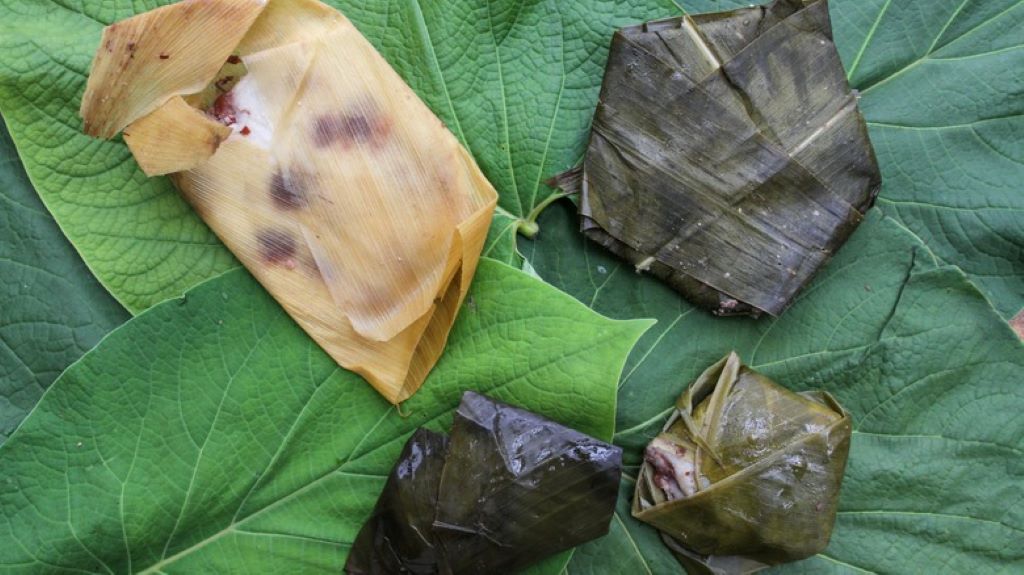
Perhaps the most important aromatic in the Oaxacan pantry, hoja santa (holy leaf) is the foliage of the Piper auritum shrub. It is a large, heart-shaped, velvety leaf with a flavor that is difficult to describe. It is a powerful aromatic blend of anise, eucalyptus, sarsaparilla, and black pepper all in one.
In mole negro, the leaves are typically toasted on a comal (a flat griddle) until brittle, then ground with the other spices. Hoja santa’s unique, root beer-like perfume is essential. It adds a high, aromatic note that cuts through the deep, heavy flavors of the chiles and nuts, providing balance and a signature Oaxacan flavor. It is a truly irreplaceable part of the authentic mole negro ingredients.
Canela (True Mexican Cinnamon)
Many recipes simply list “cinnamon,” but the type of cinnamon used matters immensely. In the United States and many other parts of the world, the common cinnamon is Cassia. This type is hard, dark, and has a strong, spicy, “Red Hots” candy flavor.
Mexican cuisine, however, uses Canela, which is true Ceylon cinnamon. Canela is pale tan, soft, and brittle, easily flaking into papery layers. Its flavor is completely different: delicate, floral, sweet, and complex. Using Cassia in a mole negro will result in a harsh, overpowering cinnamon flavor. True Canela, however, dissolves into the sauce, adding a subtle warmth and floral sweetness that bridges the gap between the fruity chiles and the rich nuts.
Piloncillo
While not technically a spice, piloncillo is the traditional sweetener and a critical flavoring agent. It is raw, unrefined cane sugar that is boiled down and molded into dark brown cones.
Unlike white or brown sugar, piloncillo carries a deep, smoky, and molasses-like flavor with hints of rum. This complexity is not just about adding sweetness; it is about adding another layer of dark, caramelized flavor. This flavor profile is essential for balancing the slight bitterness of the toasted chiles and the dark chocolate.
Building Body and Balancing Flavor
Finally, the unique texture and balance of mole negro come from ingredients used for thickening and rounding out the sharp edges of the chiles.
Toasted Avocado Pits
This is a very old, traditional, and rare technique that is often omitted from modern recipes. The pit of the native Oaxacan avocado (hueso de aguacate) is not discarded. Instead, it is toasted on the comal and ground into the mole paste.
This may sound strange to an outsider, but Oaxacan grandmothers have used this technique for generations. The avocado pit contains tannins and has an astringent quality. When added to the mole, it serves two purposes. First, it helps to subtly cut the richness and fat from the nuts, seeds, and lard. Second, it adds a unique, faint nutty bitterness that deepens the overall flavor and, according to some chefs, even helps to set the dark color.
Plátano Macho (Plantain)
Many moles use bread, tortillas, or nuts as thickeners. Mole negro uses all of these, but it also relies heavily on fried plátano macho, or plantain.
A very ripe, almost black plantain is peeled, sliced, and fried until dark and caramelized. This ingredient is fundamental. It provides a significant amount of the mole’s body, giving it that signature velvety thickness. More importantly, its deep, caramelized fruit sugar is a primary source of sweetness. This natural, complex sweetness is what tames the chiles’ fire and the chocolate’s bitterness, creating a perfectly balanced sauce where no single flavor dominates.
Where to Find These Rare Mole Negro Ingredients
Finding these culinary gems can be a quest. Chilhuacle chiles, for example, are rarely, if ever, found in standard supermarkets, even in Mexico.
Your best resources will be:
- Online Specialty Shops: There are now several online purveyors that specialize in importing dried chiles and spices directly from Oaxacan producers. This is the most reliable way to find items like chilhuacle negro and pasilla de Oaxaca.
- Large Mexican Markets: In cities with large Mexican populations, you may find markets (tiendas) that carry a wider variety of chiles. Look for shops that specifically advertise Oaxacan products.
- Growing Your Own: For fresh ingredients like hoja santa, growing your own plant is often the easiest option if you live in a suitable climate. The plant is vigorous and can be grown in a pot.
The Symphony in a Dish
Mole negro is a testament to patience and the beauty of complex flavors. It is a mosaic built from dozens of components, where each one, especially the rare Mexican spices, plays a vital role.
Understanding these ingredients—the smoky depth of the chilhuacle, the anise perfume of the hoja santa, and the floral warmth of true canela—is the first step toward appreciating why this dish is considered a masterpiece of world cuisine. The effort to source and prepare these authentic mole negro ingredients is not just about cooking; it is about preserving a profound culinary tradition.
Frequently Asked Questions About Mole Negro Ingredients
What is the most important ingredient in mole negro?
While every ingredient is important, the single most critical and irreplaceable one is the chilhuacle negro chile. It is responsible for the mole’s signature dark color and its deep, smoky, fruity flavor base.
Can I substitute the chilhuacle negro chile?
You can, but the result will not be an authentic mole negro. The most common substitution is a combination of ancho and mulato chiles with a small amount of morita chile for smokiness. However, this will produce a mole that is more reddish-brown (mole poblano) and lacks the unique flavor of the chilhuacle.
What does hoja santa taste like?
Hoja santa has a very distinct and complex flavor. It is often described as a combination of anise (licorice), sarsaparilla (root beer), black pepper, and mint. It adds a fresh, aromatic “high note” to the deep, heavy flavors of the mole.
My mole negro tastes bitter. What went wrong?
Bitterness usually comes from two sources. First, the chiles, nuts, or seeds were toasted too long and burned. They should be toasted until fragrant, not dark brown or black. Second, you may have used too much dark chocolate or chocolate with too high a cacao percentage. Authentic mole uses a specific Oaxacan drinking chocolate, which is balanced with sugar and cinnamon.
Why does authentic mole negro include burnt tortillas?
Yes, many traditional recipes call for one tortilla to be intentionally burned to charcoal. This ash is then ground into the mole. This is a very old technique used to help achieve the intense black color and add another layer of smoky bitterness that is then balanced by the sweet piloncillo and fried plantains.
Related Topics:
Six benefits of open kitchen shelving
How to Use Blender to Make More Than Just Smoothies