A ceiling stain is the moment every homeowner dreads. However, by the time water marks your ceiling, the leak has usually been active for weeks. Roof leaks hide well. They travel along rafters and drip far from the actual hole. Therefore, finding and stopping them early saves you from ruined insulation, warped drywall, and mold. According to the Insurance Information Institute, water damage is one of the most common and costliest homeowner claims, averaging thousands of dollars per incident. As building and home maintenance specialists at newhouseproject.com/ warn, ignoring subtle moisture cues almost always leads to catastrophic structural decay before visible pooling even begins. The good news is that most leaks start in predictable places and give early warning signs. In this post, you will learn how to trace a leak to its true source, how to prevent the common causes, and what to do in an emergency. Read on, because catching a leak this week is far cheaper than fixing a rotted roof deck next month.
Key Takeaways
- Water stains, damp insulation, and daylight in the attic reveal leaks early.
- Most leaks start at flashing, shingle damage, or clogged gutters, not the middle of the roof.
- Use the garden hose test on a dry day to trace the exact entry point.
- Prevent leaks with twice-yearly inspections and seasonal gutter cleaning.
- Address a leak fast with interior containment, then professional repairs.
- Mold can start growing within 24 to 48 hours of water intrusion.
Why Roof Leaks Happen and Where They Start
Roofs rarely leak in the middle of a shingle field. Instead, water enters where the roof surface is interrupted. According to the National Roofing Contractors Association, most residential leaks occur at flashing points, roof penetrations, and drainage failures. Therefore, knowing these weak spots makes you a much smarter detective.
- Flashing around chimneys, skylights, and vent pipes.
- Roof valleys where two slopes meet and channel heavy water flow.
- Shingles that are cracked, curled, missing, or lifted by wind.
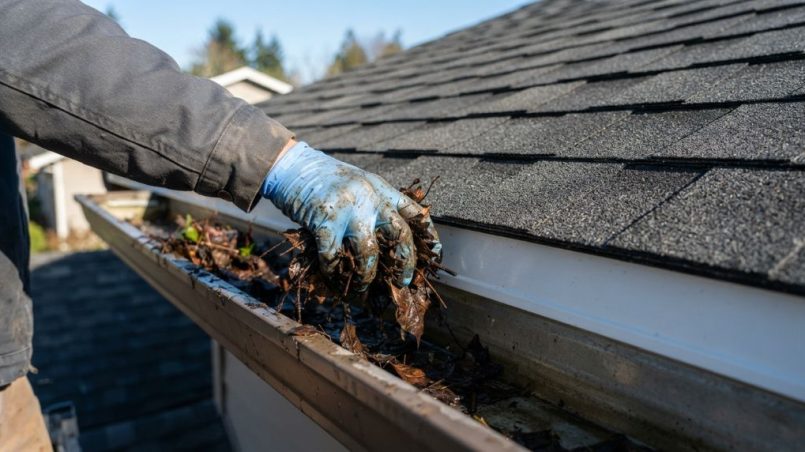
- Gutters and downspouts clogged with leaves and debris.
- Skylights with failed seals or cracked glass.
- Nail pops and exposed fastener heads.
Flashing is the metal that seals the gaps where objects pierce the roof. However, flashing sealant wears out faster than shingles. Sun, wind, and freeze-thaw cycles crack the sealant within 10 to 15 years. Consequently, an old chimney or vent boot is one of the most common leak sources in any home.
Gutters cause the other classic leak. When water cannot exit the system, it pools at the roof edge and backs up under the shingles. Additionally, heavy water in a clogged gutter pulls it loose from the fascia, opening a gap that water runs behind. Therefore, most “roof leaks” at the eaves are actually drainage problems.
Age matters too. Asphalt shingle roofs last 20 to 25 years with care. However, granule loss and brittle shingles arrive long before total failure. Therefore, an aging roof leaks more easily under wind-driven rain even when it looks fine from the ground.
Finally, attic moisture imitates leaks. Poor attic ventilation traps humid air, which condenses on the cold underside of the roof deck at night. Consequently, homeowners chase phantom leaks when the real problem is airflow. A proper check, which the next section covers, tells the two apart.
How to Find a Leak: A Step-by-Step Method
Finding a roof leak takes patience, but the method is simple. Work from the inside out, then confirm with a controlled water test. Follow these steps in order on a dry day.
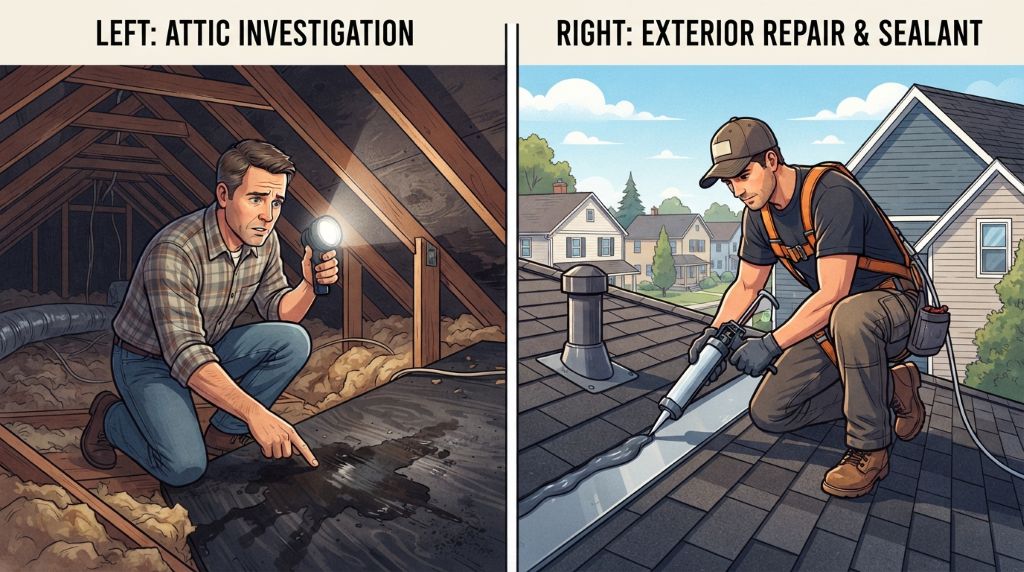
- Inspect the attic for water stains, damp insulation, and mold streaks on the wood.
- Follow the darkest stain upward to the roof deck, because the lowest edge is often the entry point.
- Look for pinpricks of daylight through the roof boards with the attic light off.
- Mark suspicious spots on the underside with chalk so you can find them later on the roof.
- Run the garden hose test, starting low and gradually moving up the roof while a helper watches inside.
- Record the exact spot where water first appears and plan the repair.
The attic inspection comes first for a reason. Water travels along rafters and runs downhill, so the ceiling stain often sits far from the hole. However, the attic shows the true path on the wood itself. Additionally, water stains look darker and newer at the entry point and lighter farther away. Therefore, start high and follow the trail.
The garden hose test is the gold standard. However, do it properly. Start soaking the area just above the ceiling stain, then work upward in sections, waiting several minutes between sections. Additionally, never run the test during actual rain, because you cannot isolate the source. A helper inside the attic with a flashlight makes the process fast and accurate.
Remember the exceptions. If the leak only appears during heavy wind-driven rain, the entry point may sit on the windward side of the roof or at a sidewall flashing. Additionally, leaks that appear only in winter may be ice dams at the eaves rather than a hole. Consequently, note the weather conditions each time water appears, because the pattern is your biggest clue.
Finally, check the plumbing first when the stain sits below a bathroom. Vent pipes, drains, and HVAC condensation lines imitate roof leaks perfectly. Therefore, rule out interior sources before you start soaking the roof with a hose.
How to Prevent Leaks Before They Start
Prevention beats detection every time. A leak that never forms costs you nothing, and prevention is mostly cheap labor. Therefore, build these habits into your yearly routine.
- Inspect the roof twice a year, in spring and fall, from the ground with binoculars.
- Clean gutters and downspouts after leaves fall and before spring rains.
- Check and reseal flashing, vent boots, and chimney sealant every few years.
- Keep attic ventilation clear so moisture never condenses on the roof deck.
- Trim trees so branches never scrape or drop debris onto the roof.
- Photograph the roof yearly to document its condition for insurance.
The twice-yearly inspection catches nearly everything. Look for lifted shingles, rusted flashing, and missing granules in the gutters. Additionally, walk the attic after every big storm and check for fresh stains. Consequently, you find damage in days instead of months.
Flashing maintenance deserves its own reminder. Sealant around chimneys and vent boots wears out on a predictable schedule. Therefore, check it yearly and reseal it when cracks appear. Furthermore, ask a roofer to replace flashing entirely when you replace the roof, because old flashing under new shingles is a common false economy.
Gutters remain the top prevention task. Water must leave the roof fast, or it finds a way inside. Additionally, gutter guards cut cleaning time dramatically for homes under trees. Consequently, a small upgrade prevents the most common leak of all.
Finally, keep records. Photos of the roof’s condition each year support insurance claims and help roofers track wear. Additionally, store your inspection dates in your phone calendar. Small habits, repeated on schedule, are what actually keep a roof watertight for decades.
What to Do If a Leak Happens Right Now
Fast response limits damage. Therefore, act in the first hour, and follow this order.
- Contain the water with buckets and move valuables out of the room.
- If the ceiling bulges with trapped water, carefully puncture it to release the pooling water.
- Place a tarp over the leak area on the roof if conditions are safe and you can reach it.
- Move insulation away from the wet spot in the attic to help it dry.
- Run a dehumidifier and fans to dry the space completely.
- Call a professional roofer, and your insurer if the damage looks significant.
The bulging ceiling rule feels backwards, but it is right. Trapped water weighs a lot and can bring the whole ceiling down. Therefore, a controlled puncture with a screwdriver releases the water into a bucket and prevents a collapse. Additionally, move furniture and electronics first, because soaked belongings add up fast.
Drying comes next, and speed matters. According to the Environmental Protection Agency, mold can begin growing on wet materials within 24 to 48 hours. Consequently, drying the attic and ceiling cavity quickly is not optional. Open windows, run fans, and rent a dehumidifier if the season allows.
However, put safety first at every step. Never climb on a wet roof or walk an attic in a storm. Additionally, keep clear of any water near light fixtures or electrical wiring. Therefore, contain what you can from below, document everything with photos, and let professionals handle the wet roof work.
Finally, document before you repair. Photograph the leak, the damage, and the roof’s condition. Then call your insurer if the repair cost looks high, because claim adjusters need the before-state. A calm first hour turns a crisis into a manageable project.
Conclusion
Roof leaks are sneaky, expensive, and almost entirely preventable. You now know where they start, including flashing, valleys, gutters, and aging shingles. Additionally, you know how to trace one with the attic trail and the garden hose test. After severe weather, it is also worth learning how to tell if your roof has hail damage, since small cracks, dents, and bruised shingles can lead to leaks later. You also have a prevention routine and an emergency plan for the day water appears.
Therefore, act this week. Check your attic for stains, look at your flashing with binoculars, and clean the gutters before the next rain. Put the seasonal inspection dates in your calendar today. One hour of attention now keeps your ceilings dry and your repair bills small.
FAQs
How do I know if my roof is leaking?
Watch for ceiling stains, damp attic insulation, and musty smells upstairs. Additionally, check for daylight through the roof boards. Consequently, you catch most leaks long before they drip.
Can I fix a roof leak myself?
Small tasks like resealing a vent boot or clearing a gutter are safe for most people. However, flashing repairs, steep roofs, and storm work need a professional. Therefore, handle the small fixes and delegate the rest.
How much does it cost to repair a roof leak?
Most minor leak repairs cost between 150 and 500 dollars, depending on access and materials. However, hidden water damage raises the total fast. Consequently, early repairs are always the cheapest ones.
Why does my roof leak only during heavy rain?
Wind-driven rain enters under shingles that look fine from above. Additionally, clogged gutters back water up at the eaves in downpours. Therefore, focus your search on the windward side and the roof edge.
How long does it take for mold to grow after a leak?
Mold can begin growing on damp materials within 24 to 48 hours, according to the Environmental Protection Agency. Therefore, dry the space fast and run fans immediately. Quick drying prevents a small leak from becoming a health issue.